
A major discovery below the North Sea is “unlike anything ever found”, authorities have said.
Norwegian scientists last month uncovered an 18th-century shipwreck containing an extraordinary cargo in the Skagerrak Strait.
The vessel was found off Norway’s southeast coast by Espen Saastad, a watch designer who runs a small remotely operated vehicle survey company.
Heritage officials described the find as remarkable for the region.
Read Also: Archaeologists discover 3,000-year-old tomb next to Ancient Egyptian necropolis
“The shipwreck’s cargo is unlike anything ever previously found in shipwrecks in northern Europe,” said Hanna Geiran, the director of the Norwegian Directorate for Cultural Heritage.
Ms Geiran told Fox News that discovering such well-preserved objects inside vessels of this era is highly uncommon.
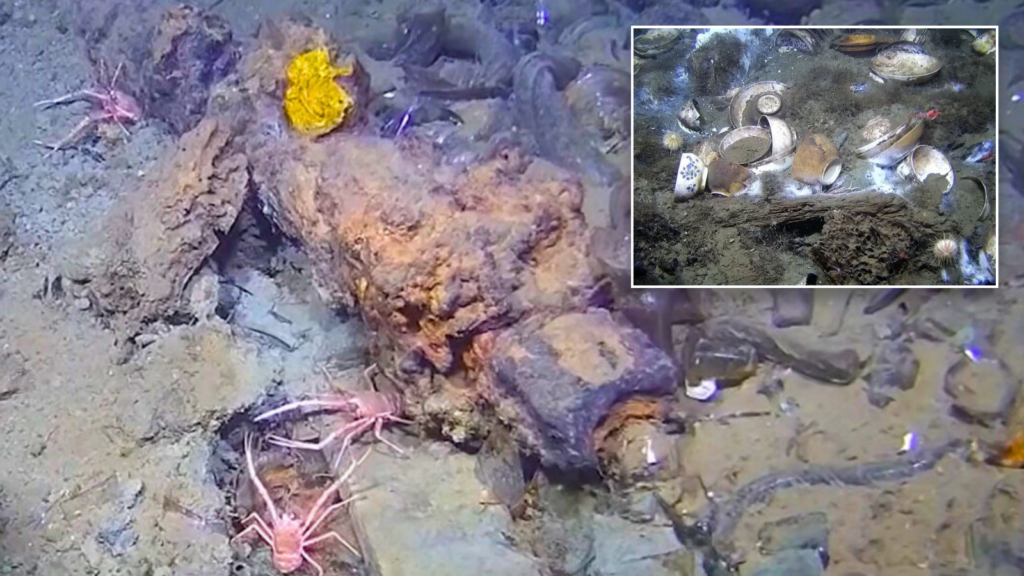
The wreck sits some 1,970 feet beneath the surface, with images revealing stacked goods and artefacts scattered among the ship’s remains – more than 5,000 miles from home.
Substantial quantities of intact Chinese porcelain have been identified, alongside parts from chandeliers and goblets.

“Rows of crates have also been discovered but have not yet been examined,” Ms Geiran added.
“One of these appears to contain textiles, while another has a range of organic material, which may include tea, herbs and medicines.”
The cargo remains in remarkable condition given its age, according to Ms Geiran, though modern trawling activity has damaged certain sections of the wreck.
Investigators are still unsure about the ship’s departure point and intended destination, though small clues from the wreck may provide answers.

“Besides the Chinese porcelain, we think that the other luxury goods may have originated in England or Germany,” Geiran said.
“One very interesting clue is a brick from the ship’s galley that bears the stamp of Lubecker Ratsziegelei, a brickworks in Lubeck that was in operation from the 15th century until 1772.”
The porcelain would have been considered a luxury item during the mid-18th century, though it had become increasingly available to Europe’s middle classes by that period.
Ms Geiran said the wreck’s primary significance lies in its protected cultural monument status rather than any cash value.

“This is a spectacular find that belongs to the public,” she added.
Researchers now hope to keep examining of the site, where they could find even more treasures below the waves.
“In the pictures from the seabed, for example, we can glimpse a spectacular lotus plant in porcelain,” Ms Geiran said.
“We are also very pleased that this amazing find will be available for everyone to see when it is eventually exhibited at the Norwegian Maritime Museum in Oslo.”
Our Standards: The GB News Editorial Charter