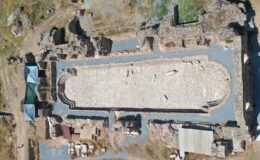
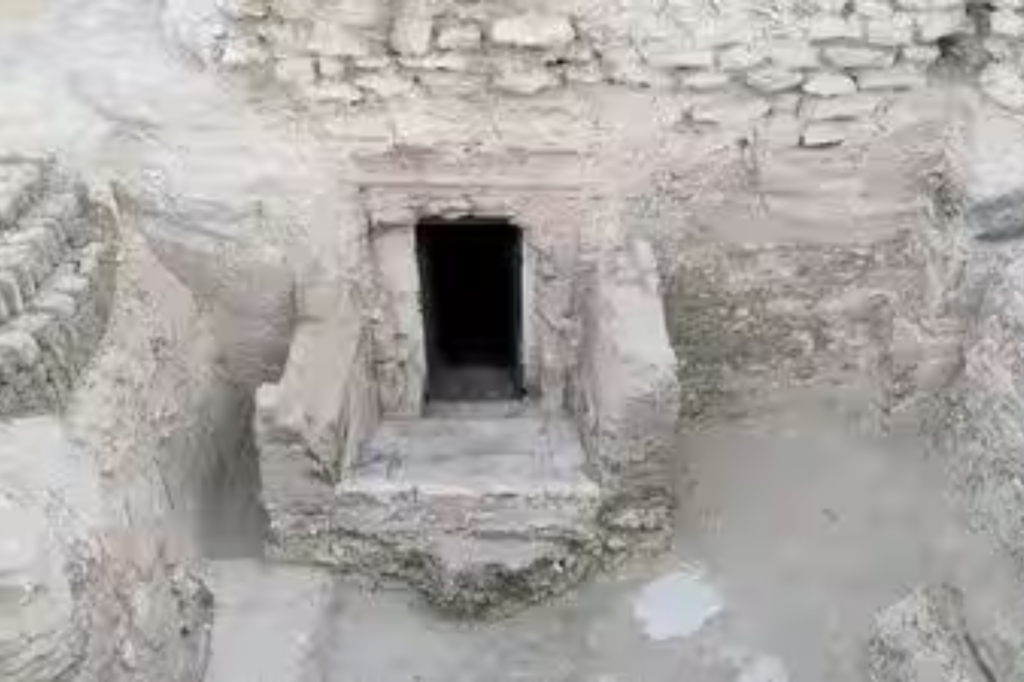

A team of archaeologists has discovered a 3,000-year-old tomb next to an ancient Egyptian necropolis.
The Dutch team of archaeologists from Leiden University has made the discovery near the city of Luxor, Egyptian authorities announced on Sunday.
The burial site belonged to an individual named Paser.
It was located within the Sheikh Abd el-Qurna necropolis on Luxor’s West Bank.
Egypt’s tourism and antiquities ministry confirmed the find, which is part of the country’s ongoing strategy to showcase archaeological discoveries to attract visitors.
Tourism represents a vital source of foreign currency for Egypt.
The tomb adheres to the conventional design of private burial sites from the New Kingdom era, which spanned from 1570 to 1069 BC.
Its structure comprises an open courtyard that leads into a rock-hewn chapel fashioned in an inverted T-shape, with burial chambers excavated below ground level.

Within the courtyard, researchers discovered numerous architectural features in excellent condition.
These include a mudbrick bench intended to support a funerary stela, as well as a staircase with sloping ramps leading to the entrance.
The tomb lies to the east of another burial site already known to archaeologists.
Inscriptions discovered within the tomb bear Paser’s name and portray him engaged in worship before various gods housed in shrines.
LATEST DEVELOPMENTS
- Strange objects ‘unlike anything ever found’ spotted lurking below North Sea by scientists
- Archaeology discovery in the Oregon mountains predating Pyramids could rewrite story of America
- Archaeologists uncover ‘massive biblical structure’ in hunt for Ark of the Covenant

Additional imagery shows him seated beside his wife before an offering table.
Experts have dated the burial site to the Ramesside period, encompassing Egypt’s 19th and 20th dynasties, based on the distinctive artistic style evident in these inscriptions.
The excavation forms part of a research initiative that has been underway since 2018, according to the ministry.
Archaeologists plan to conduct further documentation and analysis to establish the identities of those interred at the site and gain deeper insight into its historical significance.

The discovery adds to a string of significant archaeological finds across Egypt in recent months.
Near Luxor last year, authorities reopened a substantial pharaonic tomb to the public following more than two decades of restoration work, featuring depictions of Amenhotep III, who reigned over ancient Egypt from approximately 1390 to 1350 BC, alongside various Egyptian deities.
Separately, archaeologists working in the northern Beheira province, close to the Mediterranean coast, announced earlier this year that they had uncovered artefacts in a Greco-Roman burial ground more than 2,300 years old.
Those finds illustrate how funerary customs evolved across roughly six centuries.
Our Standards: The GB News Editorial Charter