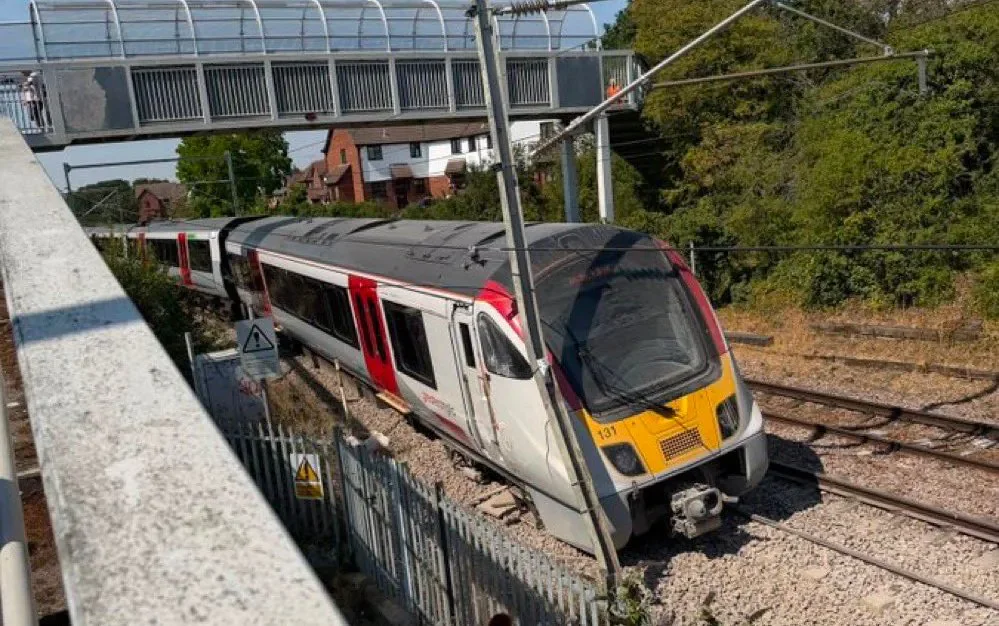

An investigation is underway after a train driver noticed a “kink in the track” just moments before their service derailed close to Wickford on August 15.
The Rail Accident Investigation Branch (RAIB), which is leading the inquiry, has confirmed that initial findings suggest the train was moving at approximately 77 mph when it left the rails.
Read Also: Travellers win long-running planning row after pitching up on picturesque rural site
The service had been heading from Southend Victoria towards Wickford when the incident occurred.
Emergency crews rushed to the location after the derailment was reported.
Around 62 passengers were believed to have been aboard at the time.
However, nobody reported any injuries, and the train stayed upright throughout.
Following the derailment, the train carried on for roughly 1.5 miles before coming to a halt.
According to the RAIB’s early report, the driver described seeing the track defect, “which rocked the driving cab as the train passed over it”.

Forward-facing CCTV footage retrieved from the train has corroborated this account, revealing a visible misalignment at the precise spot identified by the driver and where the derailment took place.
As the driver was in the process of alerting the signaller to the track condition, an emergency call came through from a train travelling in the opposite direction, prompting the driver to engage the brakes.
The derailed service suffered damage, whilst the oncoming train sustained minor harm from displaced ballast.
Substantial destruction was also inflicted on the track itself, along with signalling infrastructure and overhead electrification equipment.
LATEST DEVELOPMENTS
- Manchester Airport group hit with data breach as millions of passengers impacted
- Wethersfield migrants ‘irked by lack of pool’ despite free perks and bus services to nearby towns
- ‘Farage Fest’ organisers face fine after taking place without council permission
The RAIB’s independent inquiry will scrutinise the chain of events before and during the derailment, the conduct of those involved, and the condition and maintenance history of the track.
The derailment triggered 12 days of significant travel disruption for commuters in the region.
Rail services on the route linking Southend Victoria and London Liverpool Street were restored on August 26, once repairs to the damaged infrastructure had been completed.
Replacement bus services operated between Wickford and Southminster until today, August 28, owing to pre-planned engineering works rather than ongoing derailment-related repairs.
The Wickford-Shenfield stretch forms a vital link in the wider Southend Victoria to London Liverpool Street route, relied upon daily by commuters travelling into the capital.
For many passengers along this corridor, the line offers one of the more direct options into central London, making its closure keenly felt.
With the section shut for repairs, commuters faced a lengthy period of disruption, forced to rely on replacement transport arrangements while engineers worked to restore the damaged infrastructure.
The derailment itself struck at the heart of this route, with the train continuing for roughly 1.5 miles after leaving the rails before finally stopping.
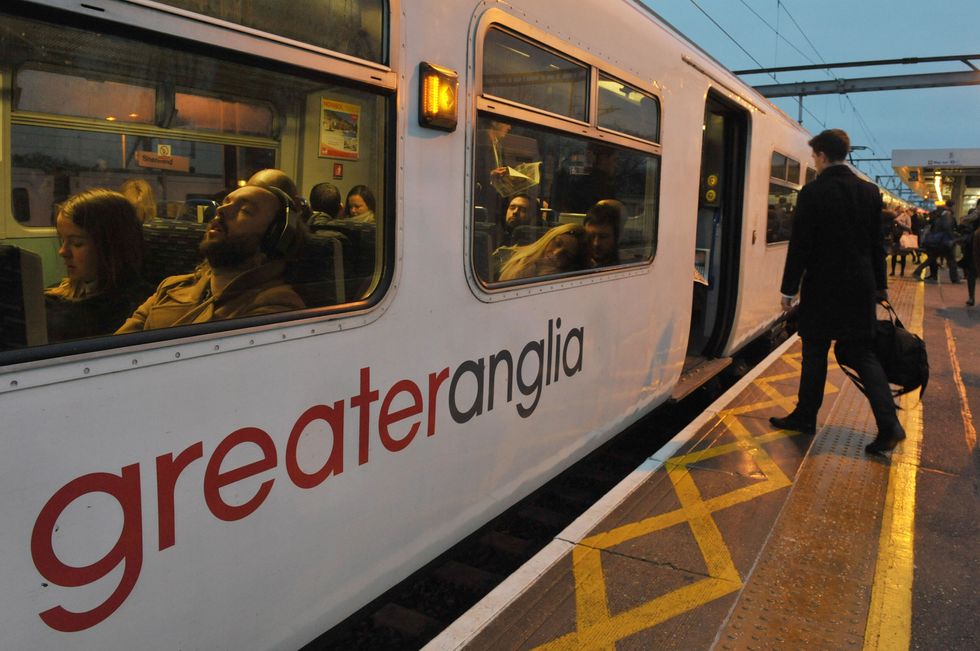
The extent of the damage, to the track, signalling equipment and overhead power lines, meant the line could not simply reopen once the derailed train had been cleared.
However, the reopening of the line between Wickford and Shenfield has brought welcome relief to passengers who endured nearly a fortnight of severely curtailed services on one of Essex’s key commuter corridors.
Jamie Burles, GBR Anglia Managing Director, said: “We are continuing to support the Rail Accident Investigation Branch (RAIB) following its announcement to investigate the incident at Wickford.”
“While the line between Wickford and Shenfield has now reopened, we are very sorry for the disruption this incident caused to our passengers and our local community.”
He added: “Safety is our highest priority. Thankfully, incidents like this are extremely rare on Britain’s railways which remain among the safest in the world but, when they do happen, we are determined to fully understand why.”
Our Standards:
The GB News Editorial Charter