
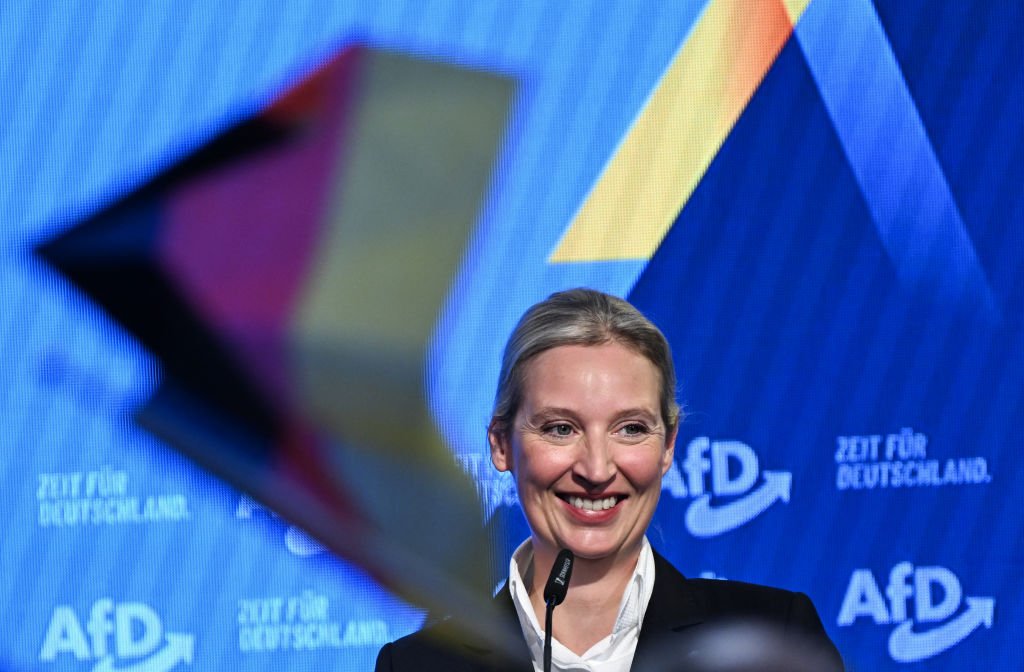

Germany spent years building a political firewall around the AfD. On Sunday, 43.8 per cent of voters in Saxony-Anhalt walked straight through it.
That should worry Europe’s political establishment. Alternative für Deutschland, led by Alice Weidel and Tino Chrupalla, did not merely win the regional election. It more than doubled its vote from 2021, securing 39 of the state parliament’s 83 seats and reducing the once-dominant Christian Democratic Union to just 17.2 per cent. Turnout was a record 77.8 per cent.
For GB News readers, it would be easy to dismiss this as a regional election in eastern Germany, of no interest except to political obsessives. That would be a mistake.
From Nigel Farage in Britain to Marine Le Pen and Jordan Bardella in France, Europe’s populists should be paying close attention. Saxony-Anhalt has given legitimacy to an argument they have been making for years: that the establishment can stigmatise populist parties, investigate them and even exclude them from power, but it cannot indefinitely ignore the voters who support them.
Much of the German and international media describes the AfD as “far-right”. Saxony-Anhalt’s domestic intelligence service goes further, classifying the state association as a confirmed right-wing extremist entity. The AfD disputes that designation and is challenging it in court.
Yet there comes a point when the cordon sanitaire collides with democratic arithmetic. Forty-four per cent is not a fringe. It was comfortably double the vote share of the next most popular party, the CDU, led by German Chancellor Friedrich Merz.
Nor can the result be explained away with another familiar caricature: that AfD supporters are simply stupid, uneducated or politically unsophisticated voters who do not understand what they are voting for.
The party’s support now reaches across generations and social groups. It performed strongly among workers, but its appeal was by no means confined to the poorly educated. It led among younger and middle-aged voters alike.
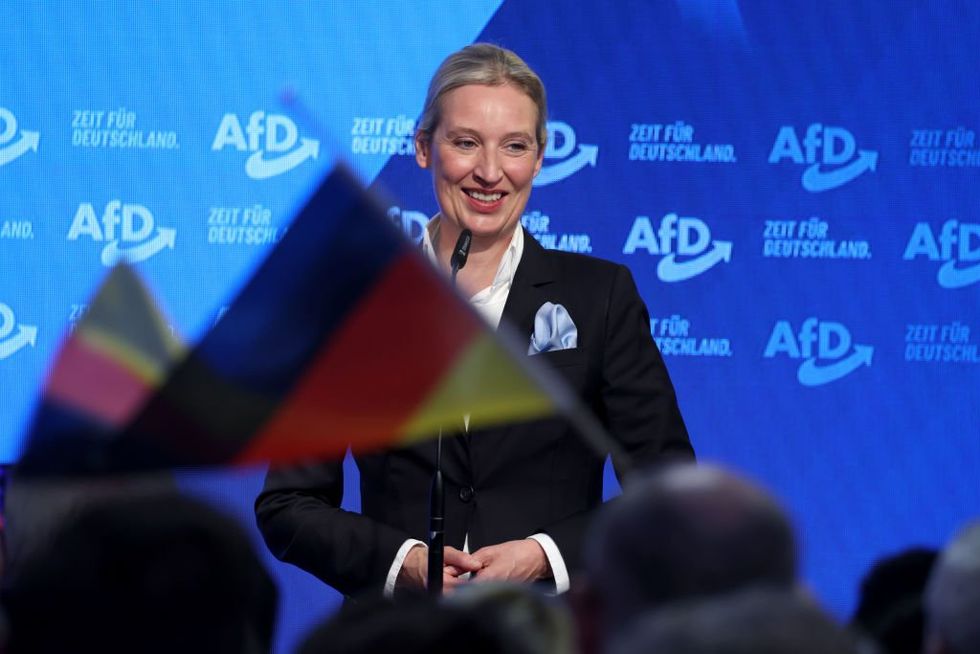
That matters because one of the comforting assumptions of establishment politics has been populism would eventually hit a demographic ceiling. Younger and better-educated generations, the theory went, would naturally gravitate towards the liberal political centre. Instead, every age group below the age of 70 voted primarily for the AfD.
The stigma attached to voting AfD is plainly losing its power. Winning such a large share of the vote means claims voters are ignorant, manipulated, or extremist no longer hold up.
The centre-right CDU’s collapse makes the point even more brutal. It won 37.1 per cent here in 2021. Now it has fallen to 17.2 per cent, its worst result in the state’s history.
Perhaps these voters do not want to be “won back” with better messaging, as one CDU politician suggested in the aftermath. Perhaps they understand perfectly well what the AfD represents and are choosing it anyway.
LATEST DEVELOPMENTS
- AfD sweeps to historic victory in Germany as voters deliver crushing blow to Friedrich Merz’s CDU
- Germany claims Russia responsible for explosive drone attack on major airport
- Madeleine McCann suspect faces retrial over rape and could be jailed for life

There is, however, one enormous catch. Despite its landslide, the AfD is three seats short of an absolute majority. Most other parties still refuse to cooperate with it, meaning their main candidate Ulrich Siegmund could dominate an election without becoming minister-president.
That may ultimately prove a blessing for the AfD. Leading a state government could be a poisoned chalice. The party has little governing experience, while Saxony-Anhalt lacks the powers necessary to address many of the national issues motivating AfD voters, such as on the economy or immigration.
Opposition offers something potentially more valuable. If rival parties construct an unwieldy coalition principally to keep the election winner from power, they will validate the AfD’s claim Germany is governed by a political “cartel” prepared to cooperate with anyone except them.
Germany was supposed to possess Europe’s strongest firewall against the populist right. It is now discovering that a firewall can become a campaign tool for the people it was designed to exclude.
Britain should pay attention.
Our Standards: The GB News Editorial Charter