
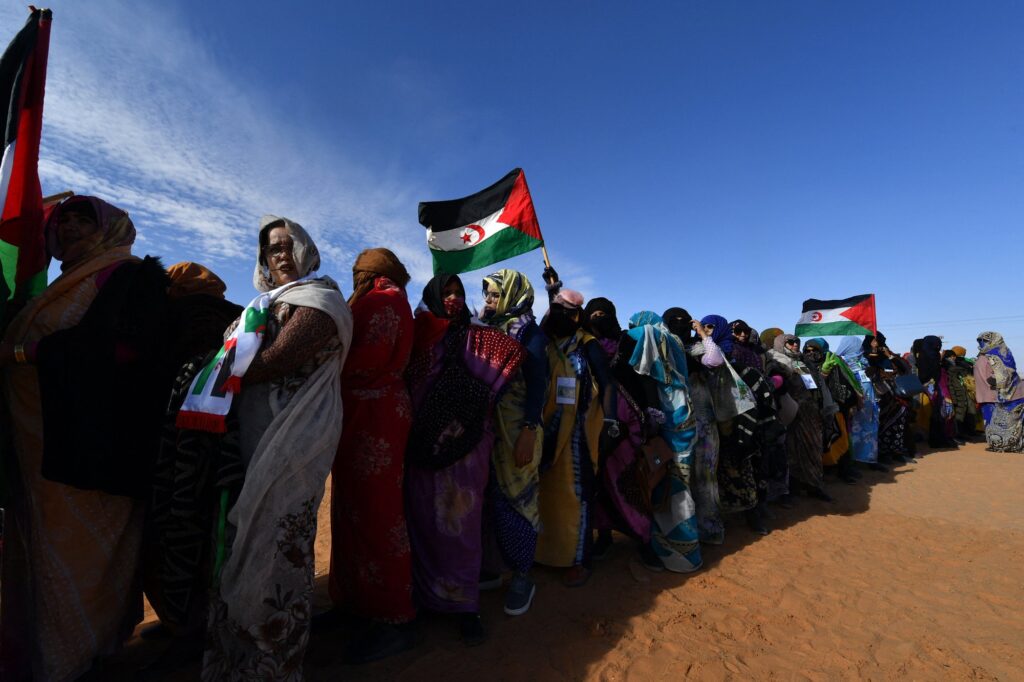

Spain is moving to hand Spanish citizenship to potentially hundreds of thousands of Africans in what has been billed as a “historic reparation”.
The legislation would offer nationality to some of the Sahrawi people, who were born when the territory of Western Sahara was administered by Spain, as well as their direct descendants.
Up to 200,000 people living across Western Sahara, refugee camps in neighbouring Algeria and the Sahrawis’ European diaspora could ultimately be eligible, according to Spanish newspaper El Pais.
Western Sahara, on Africa’s Atlantic coast, was controlled by Spain until Madrid withdrew from the territory in 1976.
Read Also: Urgent probe launched after Southport attack victims' files accessed in major data breach
Most of the former Spanish colony is now controlled by Morocco, which regards it as part of its sovereign territory.
The Polisario Front, however, campaigns for an independent Sahrawi state and controls a smaller part of the territory, while tens of thousands of Sahrawis live in refugee camps in Algeria.
The legislation is being presented by supporters as reparations for Sahrawis who were born under Spanish rule but were left without Spanish nationality following Madrid’s withdrawal.
Bucharaya Bahi, the president of the Collective of Sahrawis Born under the Spanish Flag and Administration, said: “This law represents a very important step towards rectifying a situation that has persisted for decades.

“People who were born when the Sahara was under Spanish administration and who, due to subsequent historical circumstances, were left in a state of uncertainty regarding their nationality.”
Many Sahrawis still possess Spanish documents belonging to themselves, their parents or grandparents, according to campaigners.
Brahim Hameyada, director of the Unamuno Academy in Dakhla, said: “This isn’t a normal administrative concession, like in other cases of acquiring nationality, but rather a historical reparation.
“Although belated, because the Sahrawi people have been waiting for more than 50 years. The Sahara was a Spanish province.”
Spanish citizenship would give successful applicants freedom of movement across the Schengen Area as well as wider rights to live, study and work in the EU.
SPAIN – READ THE LATEST:
- Spain’s Socialist PM branded ‘traitor’ over Ceuta migrant crisis in fiery parliamentary stunt
- Spanish intelligence warned of Ceuta invasion despite PM’s claim migrant flood was ‘unexpected’
- Gunman who shot Spain’s oldest orca faces staggering €2MILLION fine

The proposals could prove significant for Sahrawis living in Algeria’s Tindouf refugee camps, many of whom have been stateless for decades.
But the citizenship push comes amid rising tensions in Spain following the mass migrant invasion of its North African enclave of Ceuta.
More than 72,000 migrants surged across the border from Morocco during the crisis, piling pressure on Pedro Sanchez’s Government and triggering furious protests across the country.
Demonstrators have been heard calling for the socialist leader to resign, alongside demanding tougher border controls and deportations.

The legislation also risks opening another diplomatic fault line with neighbouring Morocco.
Rabat claims sovereignty over Western Sahara and could view the granting of Spanish nationality to Sahrawis as strengthening a separate identity among people it considers Moroccan citizens.
The dispute over Western Sahara has remained unresolved for decades, with Rabat controlling around 80 per cent of the territory and the Polisario Front holding the remainder.
Supporters have insisted the nationality legislation should be regarded as recognition of individual rights rather than an intervention in the sovereignty dispute.
Our Standards: The GB News Editorial Charter