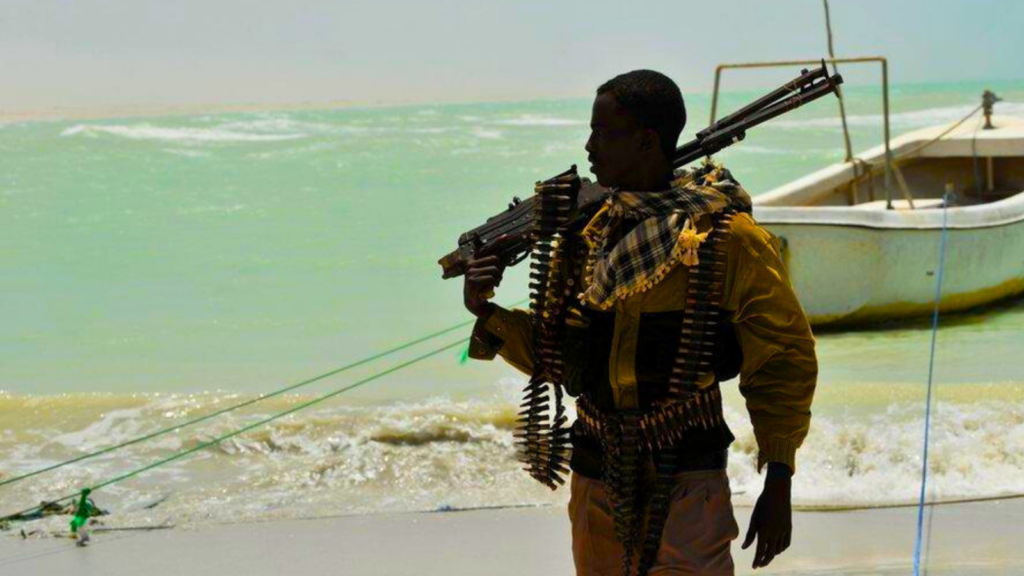

Six armed men boarded and seized control of the tanker Sibu 1, shipping news site Lloyd’s List has revealed.
Tanker tracking data showed the Eritrean-flagged tanker put out ‘PIRATE ONBOARD HELP’ in a distress message.
Read Also: Travellers win long-running planning row after pitching up on picturesque rural site
The tanker then changed course towards Somalia.
The piracy seizure comes amid a sudden surge in tanker attacks.
The cargo vessel Lutuf was boarded and seized on August 17 off the Somali coast.
A Tanzanian-flagged tanker was seized by pirates in the Gulf of Aden in July.
Since the Iran war, the Red Sea route towards the Suez Canal has been a critical lifeline amid the sudden decline in traffic through the Strait of Hormuz.
The Iran-backed Yemen Houthi terrorist group has menaced shipping in the region, firing drones and missiles at tankers and Western navies.

But there are now fears that the Houthis have established closer links with Somalia-based terrorists.
The UN has warned that the Houthis have shared tactics and intelligence, along with weapons, with Somali groups, including Islamist terrorists Al-Shabab.
Tanker crews have been seen redirecting away from Yemen and closer to Somalia due to the Houthi threat.
However, with Somali terrorism and piracy incidents spiking, tanker captains will be caught between a rock and a hard place in choosing the ideal route through the Gulf of Aden and into the Red Sea.
LATEST DEVELOPMENTS
- Illegal migrant chaos in Germany could ‘destroy the EU’ warns security expert
- North Korea caught stockpiling up to 120 nuclear warheads after Donald Trump reveals atomic arsenal
- Russian nursery children held at gunpoint under Vladimir Putin’s orders
The declining maritime security situation also poses a threat to the British economy.
Energy bills now appear at risk of further shocks if tankers continue to reroute via the South African Cape of Good Hope.
The rerouting could add weeks to tanker transits.
Today’s hijacking in the Red Sea came shortly after the UK’s inflation rate rose to 2.9 per cent.
The figure, which was up 0.3 per cent compared to June, was fuelled by housing and household services and furniture.
However, households are now enduring the sharpest summer rise in energy bills in four years.
The increase has been exacerbated by the crisis in the Middle East and subsequent shocks to the global energy markets.
Before the two seizures this week, Somali pirates seized tankers carrying oil and fertiliser, among the most expensive commodities affected by price spikes since the US-Israel-Iran war.
In May, the MT Eureka tanker was seized by Somali pirates near the Yemeni port of Qana.
The nearby Indian Ocean is patrolled by an EU naval operation. But the Gulf of Aden has more limited counter-piracy deployments.
Somali piracy hit a peak in 2010, with an estimated $18billion in damages caused by piracy activity annually between 2005 and 2011.
Insurance prices and private security costs could now surge on an already understrain maritime trade industry.
Our Standards:
The GB News Editorial Charter