
Hundreds of migrants have been prevented from breaching the border into Spain’s North African exclave of Ceuta.
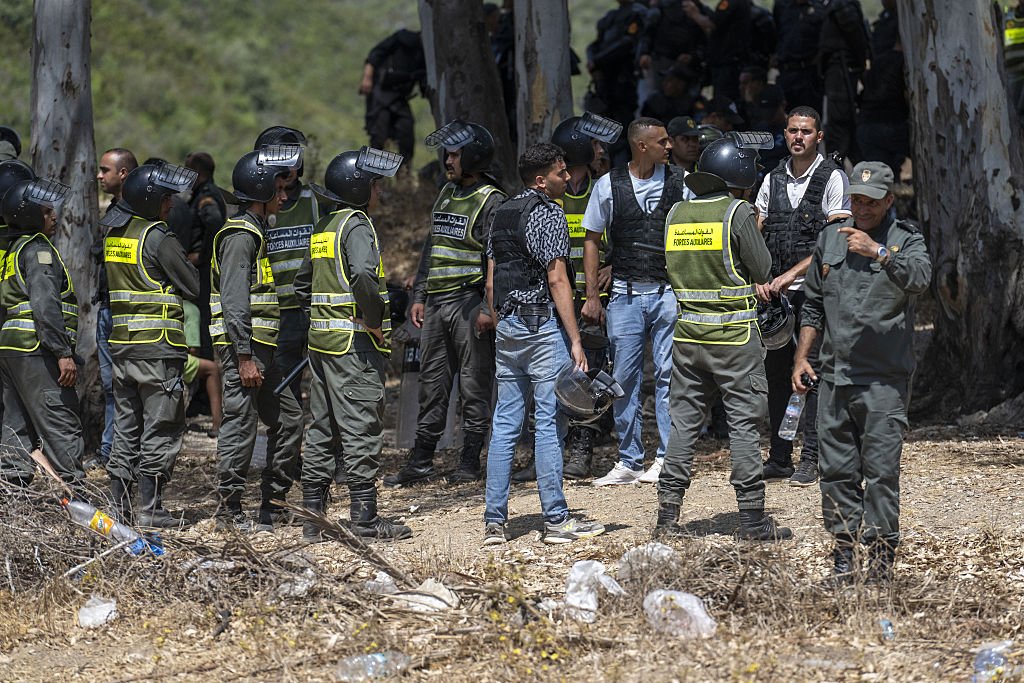
Moroccan riot police were stationed at the frontier as large crowds assembled in the nearby town of Castillejos, responding to social media appeals urging another surge.
Read Also: Travellers win long-running planning row after pitching up on picturesque rural site
Those who tried to cross were detained and transported away on buses by officers.
The confrontation came just a fortnight after the catastrophic events of July 30, when approximately 72,000 people flooded across the border in what has been called the single largest illegal influx into the European Union.
That earlier crossing claimed at least 88 lives, with victims either drowning or being crushed in the chaos.
While most were subsequently sent back to Morocco, a number remain in the exclave.
Video footage captured crowds of people sprinting towards the border crossing in Castillejos, but Moroccan reinforcements – including armoured vehicles and a surveillance helicopter – ensured no one made it through.
Officers charged at the group and hemmed them in roughly three kilometres from the exclave.

The first attempts began at around 6am today.
On the Spanish side, army troops and armoured vehicles were also positioned along the frontier.
The fresh attempt was sparked by messages spreading across social media platforms.
One widely shared post read: “The Ceuta border will be open on the 15th [of August], a public holiday in Spain.”
LATEST DEVELOPMENTS
- Migrant plunges to his death from mountain while trying to paraglide his way into Ceuta
- Spanish protesters vent fury at British tourists…while second Ceuta invasion looms
- EU demands Spain accept being placed under special measures in bid to end internal row over Ceuta migrant crisis

All military leave in the territory was cancelled in response.
The crisis on July 30 was precipitated by a Spanish court decision on June 29 that ruled migrants could be turned back from Ceuta only if they had crossed a physical barrier, a provision that did not extend to those arriving by sea.
Madrid blamed criminal networks for spreading disinformation about the ruling, but trade unions representing border staff had sounded the alarm well in advance.
The AUGC Civil Guard Union wrote to Ceuta’s police chief on July 23, warning of “constant arrivals by sea” and inadequate infrastructure.

As early as July 10, the union had publicly cautioned that the ruling “has opened a legal loophole which only well-defined protocols can close.”
The police union SUOP issued a similar call for reinforcements three days later, demanding a “coherent and effective” immigration policy.
A floating sea barrier was only installed on August 1, the day after the disaster.
Rachid Sbihi, a spokesman for the AUGC in Ceuta, acknowledged that nobody foresaw the sheer scale of what unfolded.

He said: “We understood the ruling would trigger more arrivals. The ruling, the criminal gangs, and social media networks were an explosive cocktail.”
Accusations have mounted that Morocco deliberately allowed the crossings amid diplomatic friction with Madrid.
Moroccan officials are understood to be angered by Prime Minister Pedro Sánchez’s pursuit of gas agreements with Algeria, a regional rival.
Rabat employed a similar tactic in 2021, channelling 8,000 people into Ceuta during a dispute over sovereignty in Western Sahara, which ultimately forced a policy reversal by the Spanish government.
The fallout has rippled across the continent, with Rome and Madrid imposing reciprocal border controls.
Our Standards: The GB News Editorial Charter