

Reaching for a diet fizzy drink instead of a full-sugar alternative may offer no protection against type 2 diabetes, according to new research published today in the European Journal of Nutrition.
The study, led by Sara Beigrezaei at the Julius Centre for Health Sciences and Primary Care, University Medical Centre Utrecht, examined data from 2,612 adults participating in a large cohort based in Amsterdam.
Read Also: Travellers win long-running planning row after pitching up on picturesque rural site
Participants hailed from Dutch, Surinamese, Turkish, and Moroccan backgrounds, with a median baseline age of 49 years and roughly 60 per cent being women.
Rather than confirming the widely held assumption that artificially sweetened beverages represent a safer choice, the findings pointed in a decidedly different direction — linking non-sugar-sweetened drinks to a heightened risk of developing the condition.

During a median follow-up period of just over seven years, 141 of the participants went on to develop type 2 diabetes.
Those drinking more than one serving daily of non-sugar-sweetened beverages faced a markedly elevated risk, with an incidence rate ratio of 2.26 across the full cohort.
The association proved even stronger among individuals of non-Dutch origin, where the incidence rate ratio climbed to 3.04.
Younger adults aged 18 to 49 appeared particularly vulnerable. Even moderate consumption of up to one daily serving was linked to a significantly raised risk.
Participants with a BMI of 25 or above who consumed more than one serving per day also showed heightened susceptibility.
The substitution analysis yielded equally striking results.
Swapping a single daily 250mL serving of a sugary drink for its diet equivalent was associated with a raised diabetes risk among 18- to 49-year-olds, producing an incidence rate ratio of 1.67, and among those of non-Dutch origin, where the ratio reached 2.03.
LATEST DEVELOPMENTS:
- ‘I’m a doctor – some diabetes symptoms show up at night long before a diagnosis’
- Doctor warns of missed diabetes foot symptoms – and why your shoes could be to blame
- Type 2 diabetes symptoms millions are ignoring as diagnoses surge among women in their 20s
Curiously, the reverse substitution — replacing a diet drink with a sugar-sweetened one — was linked to a lower risk in both groups.
Sugary drink consumption itself showed no association with diabetes across the overall cohort, though Dutch-origin participants drinking more than one serving daily did face an elevated risk.
Dietary intake was assessed through ethnicity-specific food frequency questionnaires completed between 2011 and 2015, with follow-up data gathered from 2019 to 2022.
The researchers acknowledged several constraints. The relatively modest sample size and the small number of diabetes cases may have curtailed the study’s ability to identify robust associations, particularly within individual subgroups.
Low levels of diet drink consumption among participants further limited statistical power, and the observational design meant no causal conclusions could be drawn.
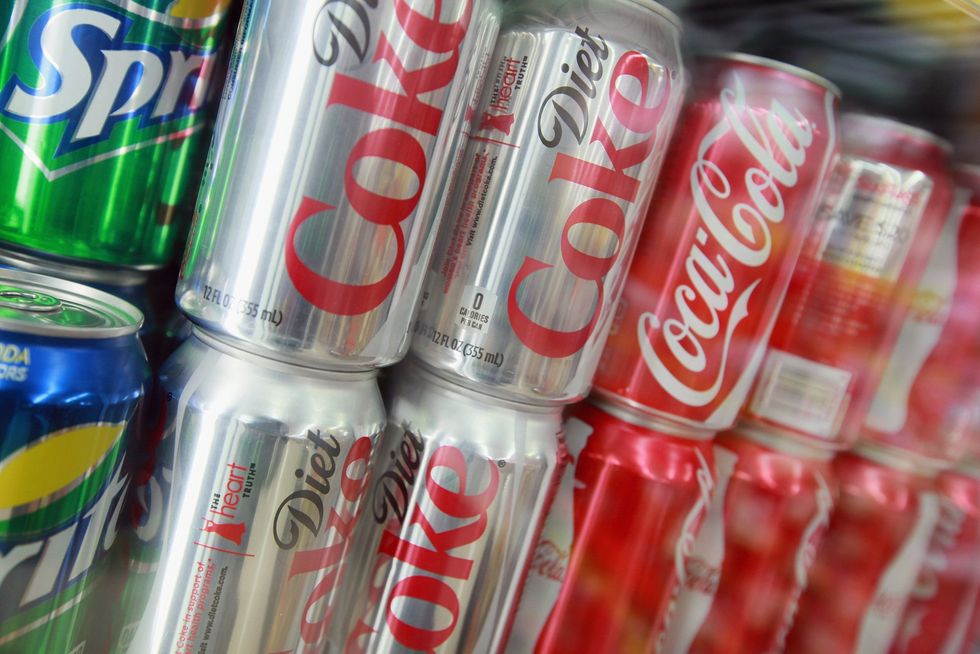
“While NSSBs are often promoted as healthier alternatives to SSBs, our findings highlight the need for further interventional and mechanistic studies to better understand their long-term health effects and to inform public health recommendations,” the authors wrote.
Funding came from the Swiss National Science Foundation, with the underlying cohort supported by Amsterdam University Medical Centre, the city’s Public Health Service, the Dutch Heart Foundation, and the EU’s Seventh Framework Programme, among others. The authors reported no conflicts of interest.
Our Standards: The GB News Editorial Charter