
The late Queen Elizabeth II overruled Prime Minister Jim Callaghan’s private objections to press ahead with her Silver Jubilee tour of Northern Ireland in August 1977, freshly declassified state papers held at the National Archives in Kew have revealed.
The Provisional IRA had threatened to give the monarch a “visit to remember,” and Mr Callaghan feared the trip, scheduled for August 10 and 11, risked sparking further sectarian violence during the volatile marching season.
Read Also: Travellers win long-running planning row after pitching up on picturesque rural site
Despite these concerns, the late Queen insisted on travelling to Ulster, arriving aboard the Royal Yacht Britannia amid what would become one of the most extensive royal security operations ever mounted.
Mr Callaghan’s Labour Government had pledged that the jubilee celebrations would encompass all four nations of the United Kingdom.

A secret document dated February 11, 1977 recorded the counsel of RAF Group Commander Michael Horace Miller, who warned ministers against using a military aircraft to transport the Queen across the province.
“All helicopters which are camouflage painted are ipso facto military helicopters and therefore ‘fair game’ at all times,” he cautioned, adding that it “could be considered wrong to so demonstrably associate members of the royal family with the armed services in Northern Ireland when they were not visiting military units.”
The following month, Sir Kenneth Stowe, Mr Callaghan’s principal private secretary, wrote to his opposite number at the Northern Ireland Office conveying the prime minister’s growing unease.
“Since he is certain, in his own mind, that it should not be on 10 and 11 August, he would be grateful if a postponement of this kind could be considered,” Sir Kenneth stated, noting that any such delay would require careful public handling.

Government analysts ultimately concluded that scrapping the tour would amount to a propaganda gift for Irish Republicans.
“Cancellation will be taken as an indication that the security forces are unable even to ensure the safety of Her Majesty in part of her realm,” one briefing paper warned.
The same assessment noted no specific intelligence suggesting a direct threat to the late Queen’s life, though it acknowledged the Provisionals were likely to intensify bombings in an effort to deter the visit, potentially exploiting tensions around the marching season and the anniversary of internment, which fell the day before her arrival.
Ministers were also told that figures with connections to the Dublin Government had cautioned the trip could prove “disastrous” and inflict “unnecessary hurt” on Catholic communities favouring Irish unity.

The visit ultimately proceeded on its original dates, though proposals for public walkabouts in Belfast and armoured car journeys through the province were quietly shelved as too dangerous.
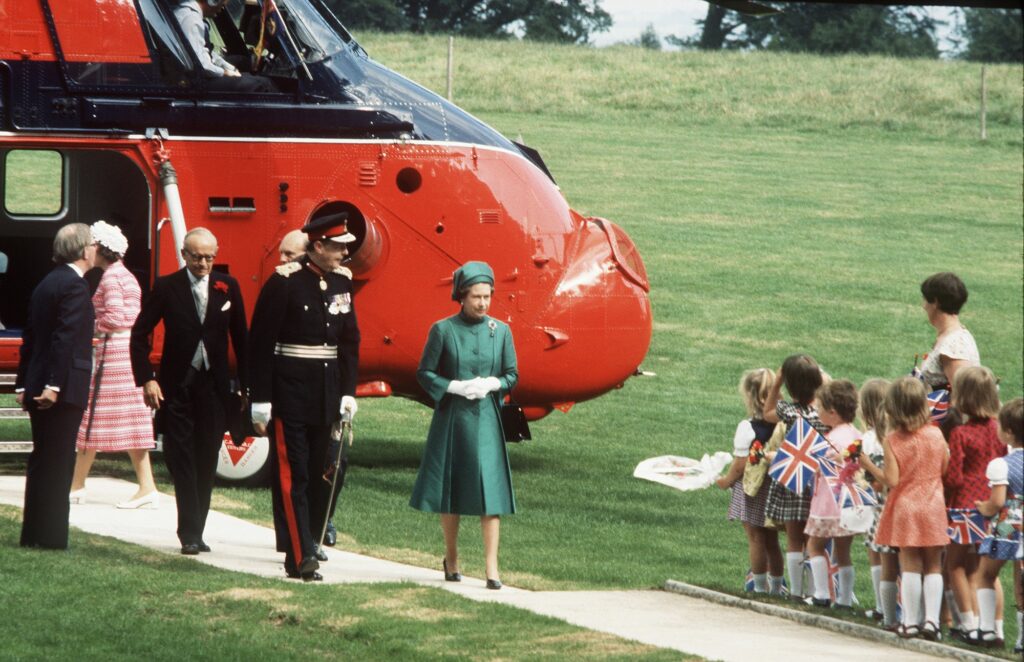
The late Queen sailed into Belfast aboard Britannia before being transferred to Hillsborough Castle by a helicopter repainted in civilian red.
Dressed in emerald green, she greeted the largely Protestant residents of the nearby village as special forces and Royal Ulster Constabulary officers kept watch.
Simultaneously, Republican demonstrators clashed with security forces on Belfast’s Falls Road. At the New University of Ulster in Coleraine, where a bomb had detonated just a week earlier, she delivered an address urging cross-community reconciliation.
One minister observed that the Queen appeared “terribly, terribly tense” throughout.
Upon completing her final engagement, the late Duke of Edinburgh reportedly patted her hand and said: “There now, it’s over. Unless they sink the Britannia, we’re safe.”
A force of 32,000 troops and police had been deployed. The day before her arrival, 16-year-old IRA member Paul McWilliams was fatally shot by soldiers, prompting a retaliatory sniper attack that killed Private Lewis Harrison, 20, from Wales.
Two years later, Lord Mountbatten was assassinated by the IRA off the Irish coast.
Our Standards: The GB News Editorial Charter