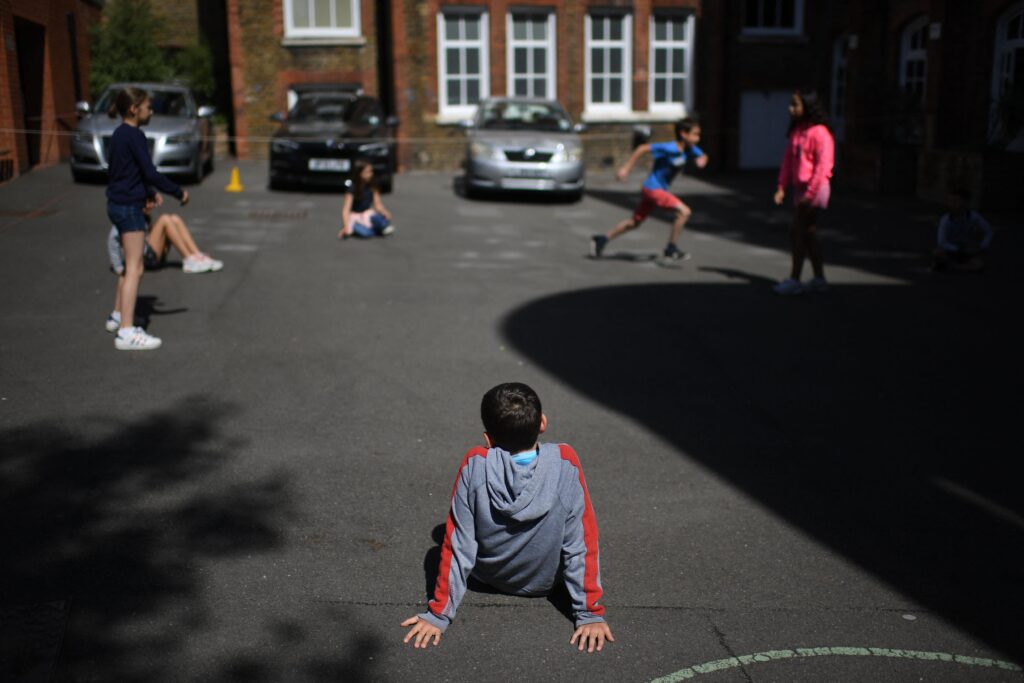

Parents are refusing to let their children out to play on the street until they reach the age of 11 – and even then it is only for less than an hour a day.
A new report, from the University of Exeter, has shown parents are now waiting an extra year before letting their children play outside the house.
Read Also: Travellers win long-running planning row after pitching up on picturesque rural site
According to the findings, the average age at which youngsters are granted independent outdoor play has risen to 10.8 years, up from 9.7 years for their parents, a shift researchers have called a “significant delay.”
The study also revealed children spend a mere 25 minutes each week playing in the street, a stark contrast to earlier generations, whose parents and grandparents recall spending hours outside the home, with many blaming technology for this trend.
More than half of respondents, 56 per cent, acknowledged allowing their children independent play at a later age than they themselves had experienced growing up.
The findings emerged from the British Children’s Play Survey, which questioned close to 2,000 parents and carers of five- to 11-year-olds across the country.
In response, the university is launching its Outdoor Play Research Centre, dedicated to examining both the advantages of outdoor recreation and the consequences of its absence.
Professor Helen Dodd, the centre’s director, said: “The generational play gap revealed in our new research provides more evidence that children across the country are missing out on opportunities for independent outdoor play.”

She added: “Many of us have fond childhood memories of playing out until the street lights came on, enjoying our first taste of freedom, yet today’s children are missing out on those same experiences.”
Professor Dodd said the centre aimed to deliver “a step change for children’s independent outdoor play” through scientific research and partnerships with a broad range of organisations.
Research conducted by the university has demonstrated independent outdoor play is associated with lower levels of anxiety and depression, as well as greater happiness among children aged five to 11.
The university’s earlier work found youngsters who played outside more often between the ages of two and four were more likely to maintain good mental health into middle childhood.
LATEST DEVELOPMENTS
- Heroic women risk their lives to rescue horses from burning land during Stourbridge wildfire: ‘The field was gone in seconds’
- Spanish holiday hotspots rocked by earthquake leaving dozens injured
- Labour urged to investigate UK websites openly advertising ‘child sex dolls’

Each extra day of outdoor play during a typical week in the preschool years was shown to boost the chances of a healthy mental health profile through to age eight by between 6 and 14 per cent.
Experts at the OPRC attributed the decline in outdoor play to several factors, including a shortage of accessible, high-quality play spaces, rising screen time, and the dangers posed by busy roads.
Sir Sajid Javid, the former Conservative health secretary who chairs the university’s fundraising campaign for the centre, said: “Time spent playing outdoors has a profound influence on mental health and wellbeing and the centre’s work has the potential to improve the lives of children and adults for generations to come.”
He described the initiative as a “philanthropic endeavour” that would help establish how to give children “the best possible start in life.”
Amber Ogunsanya-William, an inclusive play consultant and the inaugural NSPCC Champion of Childhood, said: “Play isn’t a privilege, it’s a fundamental part of development, ensuring children have the tools they need to mature into adults.”
Professor Dodd has also previously urged the removal of “keep off the grass” and “no ball games” signs from green spaces to help encourage children back outdoors.
Our Standards: The GB News Editorial Charter