
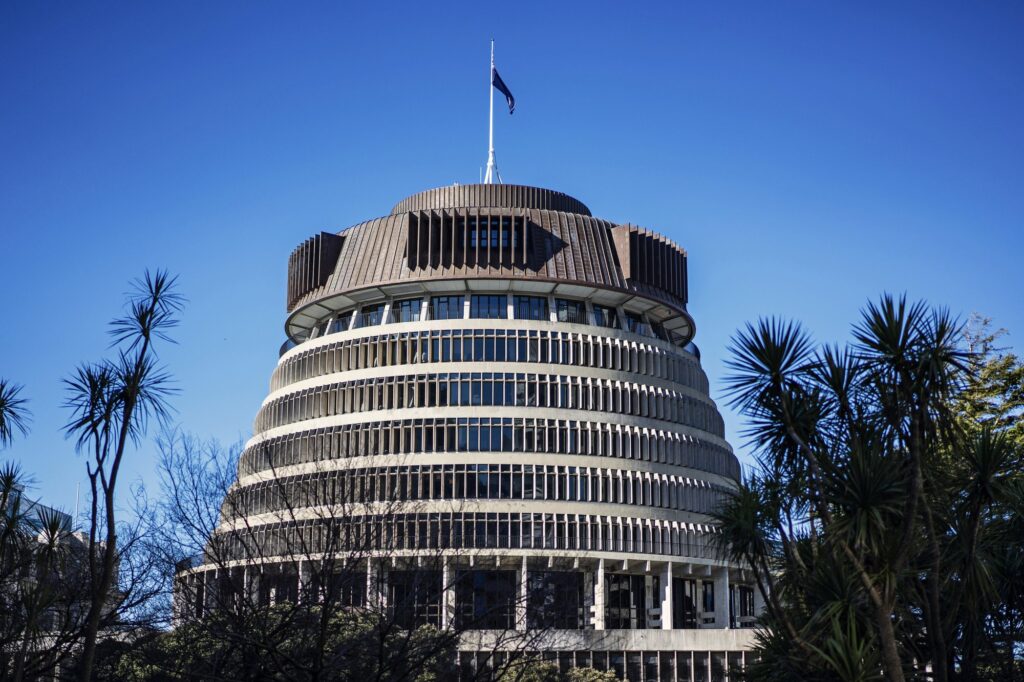

New Zealand MPs have voted to protect the English language by passing a new bill to make it one of the country’s official languages.
The Pacific Rim nation previously had Māori and New Zealand Sign Language as official languages.
Read Also: Travellers win long-running planning row after pitching up on picturesque rural site
However, more than 95 per cent of New Zealand’s population speak English as of 2023, amounting to around 4.8 million people,
Just 4.3 per cent speak Māori and 0.5 per cent use sign language.
The English Language Bill states that adding English as an official language will not require any new legislation, serving as symbolic
The law was driven by the New Zealand First party and was a mandatory condition of their 2023 coalition agreement with the ruling National Party.
Tamatha Paul, a member of New Zealand’s left-wing opposition Green Party, called English a “b*****d language” during a parliamentary debate.
Ms Paul argued that the bill was a waste of time.

She called English a “bastardisation of Greek, Old Norse, Latin” and “is a language that’s not even its own”.
Māori was the main language spoken in New Zealand before the country became a British colony in 1840.
It was only made an official language in the 1980s, when many programmes were launched to revive it.
Ms Paul argued that the Māori language has protected status “because it was beaten out of Māori systematically.”
LATEST DEVELOPMENTS
- EasyJet honeymoon holiday ruined after overbooked flight leaves groom stranded 1,400 miles away
- Father charged after son fell to his death from hotel window in Cyprus can return home for funeral
- People smugglers traffic migrants OUT of Britain and into Spain

She added: “We had to march our asses to parliament demanding that the indigenous first language of this country be recognised and not beaten out of the mouths of its native speakers.”
The bill was voted on by the nation’s parliamentary parties.
The Labour Party, National Party, New Zealand First and ACT New Zealand all supported the bill, with 101 votes being cast in favour.
Only the Green Party, the Māori Party and two independent candidates opposed the changes, amounting to just 20 votes.

In a report presented to the House in June, the country’s Justice Committee said it received written submissions from 1,601 people and groups regarding the bill, and almost two-thirds of these opposed it.
According to the report, opponents of the move argued that making English an official language would be “an unnecessary use of resources,” create “unnecessary division within society,” and would be “undermining the two other official languages”
Casey Costello, a member of the New Zealand First party, described the bill as “important”.
Our Standards: The GB News Editorial Charter