
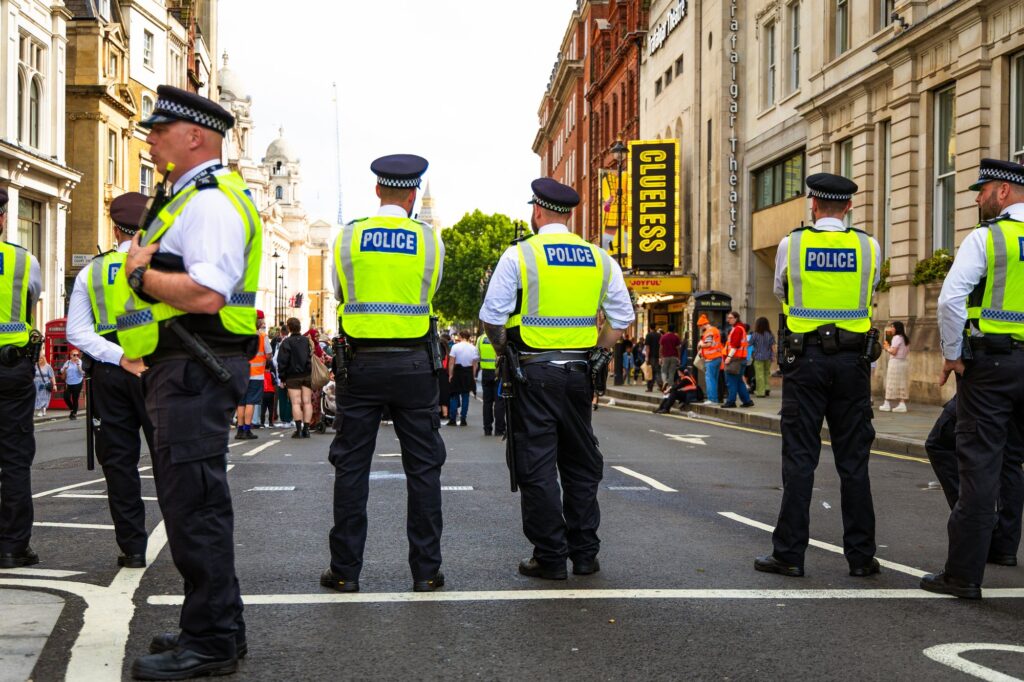

The Metropolitan Police have released a controversial 14-page internal document instructing officers to avoid language deemed “inappropriate”.
The “Language Matters Guidance” was drawn up after His Majesty’s Inspectorate of Constabulary published a damning assessment accusing the Metropolitan Police of using language that blamed victims and of letting down vulnerable children at risk of sexual and criminal exploitation.
Read Also: Travellers win long-running planning row after pitching up on picturesque rural site
A whistleblower brought the document to light, revealing that ethical concerns about the guidance are widespread within the force – but that officers feel too intimidated to voice their objections publicly.
Under the new rules, officers can no longer write that a victim was “rude and dismissive to police” and must instead describe the specific behaviour observed, according to the Daily Mail.
Noting that a victim “refused to hand over phone for examination” is also said to be replaced by language attributing the reluctance to trauma-related difficulty trusting unknown adults.
The phrase “associates with a gang” reportedly must give way to describing the child as “a victim of exploitation, likely by an organised crime group.”
Where an officer might previously have recorded that someone appeared under the influence of substances, the mandated alternative simply states that a statement will be taken on a future date to ensure the best evidence is gathered.
Nazir Afzal, the former chief prosecutor for the North-West at the CPS, told the Daily Mail: “No one should doubt the good intentions behind the Met’s guidance.”

He added: “Treating complainants with compassion is overdue. But miscarriages of justice often begin with good intentions.”
Mr Afzal warned that the document “does not merely ask officers to be humane, it tells them to abandon neutrality in records that later reach a courtroom.”
Officers are directed to drop the word “alleged,” refer to unproven suspects as “the perpetrator,” and avoid drawing attention to inconvenient material already contained in a report.
He added: “Every instruction erodes the impartial, complete record on which a fair trial depends and on which convicting the guilty depends just as much, since a slanted record is a gift to the defence.”
LATEST DEVELOPMENTS
- Police force that told women to share changing rooms with trans officers U-turns on policy
- Kent Police slammed for ‘slow’ response to anti-migrant Dover protest as force labelled a ‘failure’
- Extra £500 MILLION needed for prisoner release scheme as police can’t cope with inmates let loose

Former Conservative MP Harvey Proctor, who received a £900,000 settlement from the Met over its botched investigation into the fabricated VIP abuse claims made against him by Carl Beech, condemned the guidance as a “charter for police wrongdoing” that will “increase the number of falsely accused people in the UK.”
Beech, whose invented allegations of an Establishment child sex and murder ring were publicly described by a senior officer as “credible and true,” was ultimately convicted of perverting the course of justice and child sex offences.
Operation Midland remains one of the most disastrous police investigations in recent British history.
Mr Afzal noted that “Sir Richard Henriques warned of exactly this after Operation Midland” in his 2016 report, the 10th anniversary of which is now approaching.

A Met Police spokeswoman told GB News: “This guidance was created as a direct response to findings following a 2024 inspection by His Majesty’s Inspectorate of Constabularies (HMICFRS). Police forces are required to act on such recommendations.
“Training officers on victim-blaming language is just one initiative to improve trust in policing, ensuring victims feel they are being treated with respect.
“Increased confidence is part of the reason we’ve been able to more than double the number of arrests and charges for rape and other serious sexual offences in the past year, making us the force with the highest detection rate in the country.
“We are not aware of any serious concerns relating to this training document other than those collected by the media.”
Our Standards: The GB News Editorial Charter