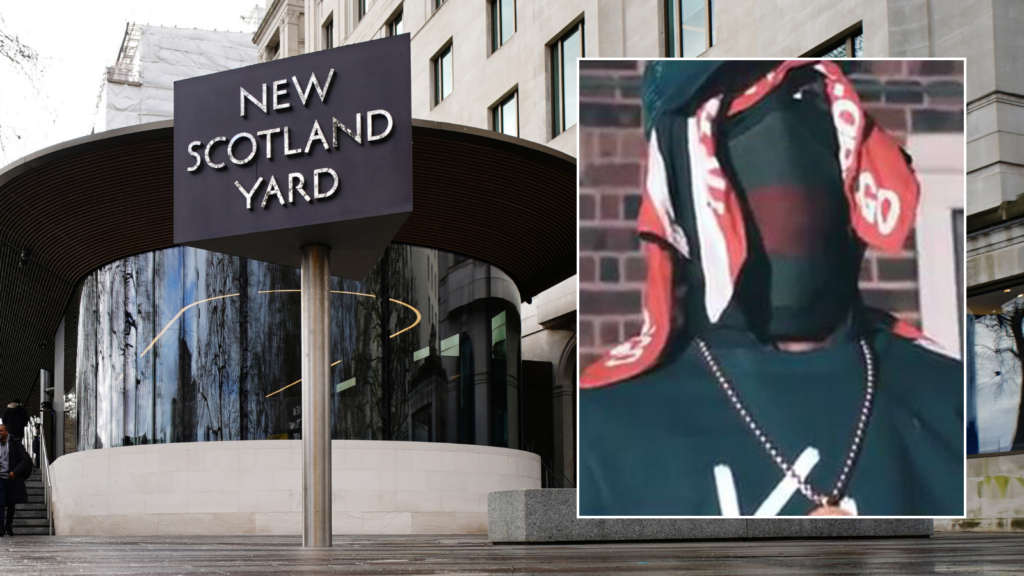

The Met Police has defended using drill rap lyrics as evidence against defendants amid claims the practice contributes to “racial disparities” in the criminal justice system.
Campaigners are lobbying the Government to change the law to restrict when lyrics and other forms of “creative expression” can be used as evidence in criminal trials.
Read Also: Travellers win long-running planning row after pitching up on picturesque rural site
Drill rap videos and lyrics have previously been presented as evidence in murder trials, with police arguing that some songs contain boasts about real-life acts of violence.
A report by the Centre on the Dynamics of Ethnicity found drill rap lyrics were used as evidence against 252 defendants between 2020 and 2023.
Campaign group Art Not Evidence, which includes lawyers and academics, wants the Government to introduce an assumption that “creative expression” is not admissible as evidence.
However, Detective Sergeant Matt Corbin, who gives evidence in court as a police drill music expert, defended the practice.
He said: “It’s really important that we can continue to use this material.
“There are people out there who unfortunately have committed horrendous and atrocious acts of violence, we want to be able to use that material to secure convictions.
“Ultimately, the message is you chose to reveal true criminal information within your music, then we will use it.”
Art Not Evidence argues that drill lyrics are being used in cases to demonstrate “gang aesthetics” which are “taken at face value and misinterpreted” by people with “a lack of knowledge of the culture of the genre”.
The group claims using lyrics to secure convictions against young black people contributes to existing racial disparities within the criminal justice system.
It has also warned that the practice creates a “chilling effect” on freedom of expression.
POLICE – READ THE LATEST:
- Former West Midlands Police chief under investigation for misconduct over Maccabi Tel Aviv fan ban
- Five more arrests in probe into A66 crash that killed seven including two police officers
- Man dies and woman in critical condition after crash involving police chase

Mr Corbin said some young people are driven to reveal genuine criminal information in their music in an attempt to gain status.
However, the officer acknowledged concerns surrounding “artistic expression”, saying “we don’t want to demonise any particular genre of music” and that drill lyrics must not be “overused”.
The mother of a 15-year-old boy murdered by gang members has also backed the use of drill lyrics in criminal trials.
Valentina Locci’s son Leonardo Reid was killed in Islington, north London, and she said drill lyrics were rightly used to help bring his killers to justice.

She described hearing lyrics about someone’s death as “the most horrifying thing” for a victim’s family.
Ms Locci said: “If it’s OK for you to write about a dead person then it should be OK for us to use them in court to help bring justice.”
A spokesman for Art Not Evidence said: “We welcome the Metropolitan Police recognising that particular care and safeguards are needed when rap, including drill, is put before juries.
“However, the question is whether the safeguards currently in place are sufficient.
“Experience has shown that creative expression is still used in ways that invite prejudicial assumptions about criminality or gang membership, despite having limited or no relevance to the offence being tried.
“This is why Art Not Evidence is campaigning for clear statutory safeguards… so that creative expression is only admitted when it is genuinely relevant, reliable and not unduly prejudicial.”
Our Standards: The GB News Editorial Charter