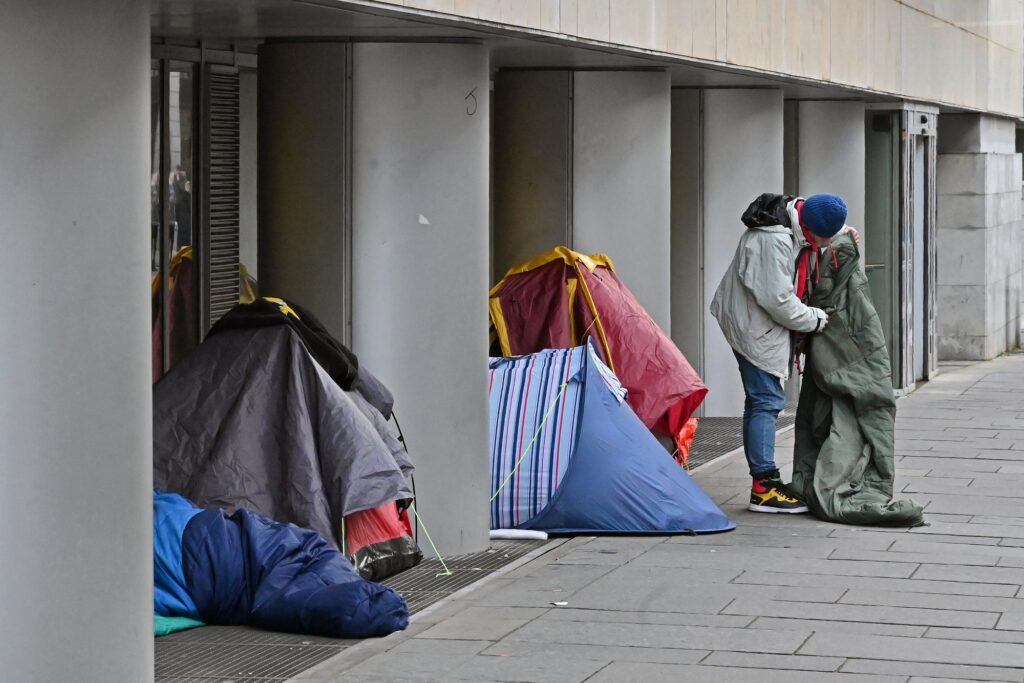

A Labour-run council has been giving priority for council housing to asylum seekers despite a deepening homelessness crisis in Edinburgh, it has emerged.
Homeless asylum seekers whose claims have been approved have been able to leapfrog local applicants under a policy introduced by the City of Edinburgh Council in April 2025, The Telegraph has revealed.
Read Also: Travellers win long-running planning row after pitching up on picturesque rural site
Since the policy came into effect, applications from local applicants who are not deemed to be disabled, homeless or at risk of violence have been put on hold as the council attempts to manage mounting pressure on its housing stock.
However, the authority has continued processing applications from asylum seekers who have been granted permission to remain in Britain and are homeless.
The council’s housing waiting list currently contains more than 31,000 applicants, with around 42,000 homes available through the authority and local housing associations.
On Tuesday, local councillors voted to reinstate the system used before April 2025, allowing applications from the wider waiting list to be processed again.
However, the change will not take effect until October.
Under SNP policy, Scotland is required to house people who are assessed as homeless, with asylum seekers automatically receiving that status once the Home Office approves their claims.
Edinburgh’s homelessness crisis has spiralled since the COVID-19 pandemic, with homelessness rising by 75 per cent over recent years.

The city’s temporary accommodation has also come under increasing pressure, with asylum seekers now accounting for more than 16 per cent of placements, according to a council report.
That figure has risen sharply from just one per cent in 2023.
There has been comparatively little change in the proportion of temporary accommodation being used to house Scottish residents.
The Scottish Conservatives have accused the SNP of allowing the housing system to become overwhelmed.
Tim Eagle MSP, the party’s housing spokesman, described the figures as a “damning indictment” of the SNP’s management of Scotland’s housing crisis.
MIGRANT CRISIS – READ THE LATEST:
- One in ten children who went missing from asylum hotels still not found
- Rhiannon Whyte’s sister shares fury after Labour blocks release of migrant crime data: ‘Outraged!’
- Council SWITCHES OFF street lights in village where 1,250 male asylum seekers will be housed

“Ordinary Edinburgh residents have been left waiting as the system becomes completely clogged,” he told The Telegraph.
“The council’s own figures show a huge increase in homeless asylum seekers using temporary accommodation, piling further pressure on a housing system that is already buckling.
“Local people should not be pushed to the back of the queue because SNP ministers have allowed Scotland’s housing system to become completely overwhelmed.
“They need to stop ignoring the consequences of their policies and put local communities first.”
Internal council documents unearthed by The Telegraph have also pointed to asylum policy as one factor placing additional pressure on Edinburgh’s housing system.

In 2022, Nicola Sturgeon removed the requirement for council homes to be allocated to applicants with a “local connection” to the area where they would be housed.
The change has subsequently been blamed by critics for contributing to Edinburgh’s housing pressures and making Scotland more attractive to successful asylum seekers seeking council accommodation.
A City of Edinburgh Council internal risk assessment warned that changes to asylum policies could result in an “increase in homelessness presentations” in the city.
The document identified asylum policies enacted by the UK and Scottish Governments as a key “risk” to the city’s homelessness crisis.
Officials are now planning to pause some council housing allocations in an effort to manage demand, while new buildings could also be converted into accommodation.

A City of Edinburgh Council spokesman said: “We continue to monitor the different reasons households require temporary accommodation; it is important to recognise that there is not always an opportunity for the council to prevent instances of homelessness.
“For example, households who have received a positive asylum decision, or who have a local connection elsewhere in Scotland, are categorised as non-preventable because there is no opportunity for the Council to intervene before they require our support.
“We therefore monitor these groups separately from areas where there is greater scope for prevention, such as tenancy loss or relationship breakdown.
“This gives us a clearer picture of both the pressures on temporary accommodation and where preventative action can make a difference.
“Despite these challenges, we continue to see progress against our emergency plan and remain focused on improving housing provision across the city.”
Our Standards: The GB News Editorial Charter