
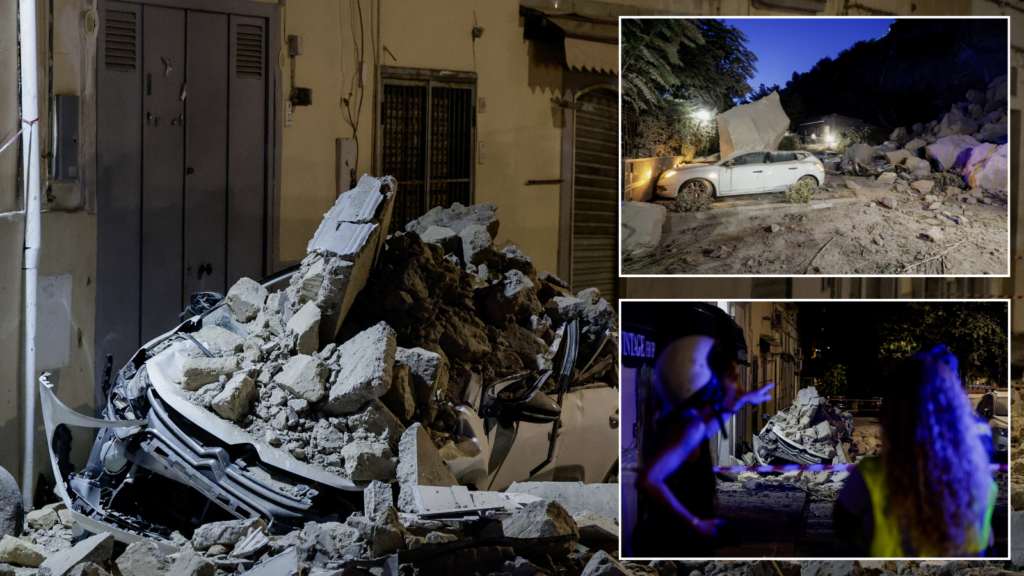

A magnitude 4.7 earthquake rocked the Campi Flegrei area close to Naples in Italy on Friday evening.
The earthquake left at least eight people hurt in what authorities have described as one of the most powerful tremors ever recorded in the region.
The quake hit at approximately 7.46pm local time, sending emergency services rushing to the scene.
Italy’s National Institute of Geophysics and Volcanology recorded the event at a depth of just 1.9 miles beneath the surface.
Read Also: Urgent probe launched after Southport attack victims' files accessed in major data breach
Read Also: Briton saves five bears from cages in South Korean camp in extraordinary rescue mission
The shallow nature of the tremor amplified its destructive force across the densely populated volcanic caldera, which spans much of western Naples.
Those injured were transported to local emergency departments for medical attention, local media reports.
Massive rocks broke away from cliffsides and tumbled into residential streets below, flattening parked vehicles on impact.
Footage circulating online captured stunned onlookers surveying the devastation as broken rubble and debris littered the ground around them.

Residents poured out of their homes as the tremors shook the area, with dense clouds of dust filling the air.
In one image, a man could be seen standing on a terrace overlooking cars that had been smashed by fallen boulders.
The scenes in Pozzuoli were particularly dramatic, with at least one vehicle completely destroyed beneath collapsed masonry.
Locals walked past enormous rocks that had come to rest on crushed cars, visibly shaken by the scale of the destruction.
LATEST DEVELOPMENTS
- Gibraltar ‘operating with heightened vigilance’ amid Ceuta migrant crisis
- British tourists told to prepare ‘evacuation grab bags’ amid wildfires raging through Europe
- Europe ‘approaching energy crisis territory’ as gas levels dip to ‘historically low’ levels

Electricity supplies were knocked out across the region, while transport networks ground to a halt in the aftermath of the initial shock.
Further tremors continued to rattle the area throughout Friday night.
Italy’s fire service reported buildings in and around Naples had sustained minor structural damage, with plaster and exterior facades crumbling away in several locations.
However, fire crews confirmed they had not received any immediate calls requesting assistance with rescuing trapped individuals.
The disruption to daily life was widespread, although the relatively contained level of building damage and the absence of fatalities offered some relief given the severity of the quake.
Police moved to cordon off areas where rockfalls and structural collapses had occurred, securing the affected streets as assessment work got under way.
Campi Flegrei is a vast volcanic caldera that encompasses a significant portion of western Naples, making it one of the most heavily inhabited seismically active zones in Europe.
While minor quakes are a regular occurrence in the area, the frequency and intensity of seismic events have been rising in recent years, leading the Italian government to enhance its monitoring efforts.
The escalating activity has revived concerns about a potential repeat of the crisis that gripped the region during the 1980s, when mass evacuations forced thousands of residents from their homes.
Italy has a long and painful history of earthquake disasters.
In 2016, a succession of major tremors devastated communities across Lazio, Umbria and the Marche, claiming roughly 300 lives.
The most catastrophic event in recent memory remains the magnitude 6.9 Irpinia earthquake of November 1980, which killed approximately 2,700 people and laid waste to hundreds of towns across southern Italy.
Our Standards: The GB News Editorial Charter