


A centuries-old tradition of mass football in Ashbourne, Derbyshire, is under threat after developers proposed building up to 250 homes on farmland used during the annual Royal Shrovetide match.
The game, a riotous two-day contest played every Shrove Tuesday and Ash Wednesday, has taken place in the town for more than 350 years.
Read Also: Travellers win long-running planning row after pitching up on picturesque rural site
It pits the Up’Ards, those born north of Henmore Brook, against the Down’Ards from the south bank.
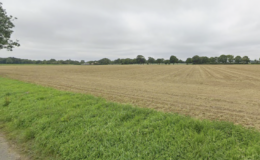
Planning applications for two separate schemes, one for 250 homes and another for 175, have been lodged for 35 acres of pastoral land off Green Road, situated near the Sturston Mill goal.
The Ashbourne Royal Shrovetide Football Committee has formally objected to the proposals.
Steve Jones, the committee’s secretary, wrote to the local council arguing that the proximity of the proposed housing to the Sturston Mill goal “would obstruct a large proportion of the gameplay area”.
He warned that a drainage system planned for the southern portion of the site could “be a deep, steep-sided and muddy pit [that] will cause injury and impede the game”.
Mr Jones described the match as “a nationally recognised and publicised event which is central to the town’s historic identity” and “an important historic relic of a sport which was once played across England”.

Building on the land would “fundamentally undermine the continued operation of the game in its historic form”, he told the Times.
Mr Jones added that the proposals risked causing “significant harm to Ashbourne’s most important cultural and economic assets” while inflicting “direct economic damage to the town through knock-on effects to the local economy and local tourism”.
A petition organised by local resident Brett O’Connell has gathered more than 670 signatures, cautioning that the housing plans represent an “irreversible threat” to Ashbourne’s heritage. According to O’Connell, the development “cuts straight across where the Royal Shrovetide game goes”.
He told the BBC that while the developers had set aside some open space, acknowledging the potential conflict, the match cannot be confined to predetermined paths.

LATEST DEVELOPMENTS
- Centuries-old British tradition banned by SNP after violent ‘animal rights’ uproar
- ‘Just the tip of the iceberg!’ GB News guest offers bleak assessment as data shows children aged five and under facing forced marriage
- Former jihadist warns Britain ‘has to change’ to cope with emerging terror threats: ‘Not everyone is our friend’

He said: “The game doesn’t stick to planned routes so I think there’ll be quite a few people if they move in, they’ll be quite shocked about what happens on the day.”
The contest sprawls unpredictably through streets, fields and waterways, with thousands participating.
Hallam Land Management, the developer behind the proposals, has defended the schemes, maintaining they would deliver a significant number of new homes in a sustainable location.
A spokesman for the developer said: “The framework for development that these proposals establish will achieve a locally distinctive design with high quality placemaking principles at its heart, delivering a sensitively designed residential addition to Ashbourne.
“This statement demonstrates that the various constraints and opportunities of the site have been carefully considered.”

Derbyshire Dales District Council is set to consider the planning application.
The Shrovetide match dates back to 1667, though its origins are thought to stretch to the 12th century.
There is no conventional pitch, fixed boundary or designated playing area, action begins at 2pm each day and runs until 10pm, with goals positioned three miles apart at Sturston Mill and Clifton Mill.
The ball itself is hand-painted, crafted from cowhide leather, stitched with seven-cord hemp and stuffed with cork shavings.
This year’s contest ended in a 3-0 victory for the Up’Ards.
Our Standards: The GB News Editorial Charter