
Germany has claimed Russia is responsible for an explosive drone attack at Leipzig/Halle Airport which took place last month.
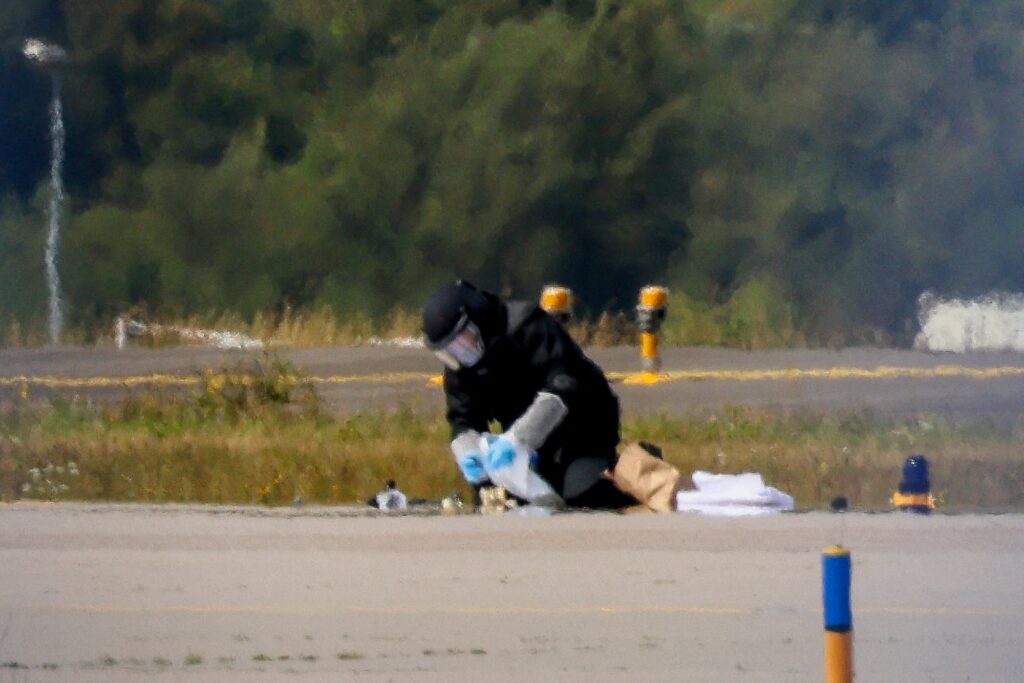
A drone carrying an explosive device was discovered near Ukrainian cargo aircraft at the airport on August 4.
Read Also: Travellers win long-running planning row after pitching up on picturesque rural site
The device failed to detonate due to what investigators believe was a faulty trigger mechanism.
A second drone is suspected to have collided with a nearby cargo plane during the same incident, with a third drone is understood to have been discovered close to the airport around 10 days later.
Interior Minister Alexander Dobrindt said today the attack matched a “well-established pattern of Russian hybrid operations” across Europe.
He added officials now expect further attempts to target Germany in future.
Mr Dobrindt said an examination of the equipment used, combined with intelligence assessments, had confirmed Russian involvement.
Foreign Minister Johann Wadephul announced Germany would close the Russian consulate in Bonn in response.

He also confirmed the contract for the Russian House cultural centre in Berlin would be terminated.
Observers have long claimed the centre was used to conduct espionage and spread pro-Kremlin propaganda.
Mr Wadephul said Germany would introduce tighter entry restrictions for Russian nationals travelling into the country.
He also pledged to increase pressure on Russia’s so-called shadow fleet of ageing tankers used to bypass Western sanctions.
LATEST DEVELOPMENTS:
- Sexual assaults occuring on daily basis in Ceuta weeks after migrant invasion
- US issues urgent warning in three Middle East nations as airspace could close imminently
- Donald Trump now reviewing US position on Falkland Islands
Russia’s ambassador to Germany, Sergei Nechayev, was summoned to the foreign ministry following the announcement.
Russian foreign ministry spokeswoman Maria Zakharova said Moscow would respond in a “mirror-image” fashion.
She accused Berlin of “sponsoring terrorism” through its continued military and economic support of Ukraine.
Leipzig/Halle Airport is used by the German military and Nato allies to transport military supplies.

It also serves as a key base for Ukraine’s Antonov Airlines, which handles the majority of the country’s aerial cargo.
Prime Minister Andy Burnham described the situation as an “egregious and reckless attack” performed by Russia.
In a statement issued by No10, he said: “The United Kingdom stands in full solidarity with Germany following Russia’s egregious and reckless attack in Leipzig.
“Russian attempts to undermine our united resolve and our willingness to support Ukraine are futile and doomed to fail.”
Mr Burnham went on to praise Germany’s response, saying: “The strong measures taken by the German government show action against any attack of this nature will be met with a clear response.
“We will not waver in our resolve to deter attacks on our freedom and security.”
Nato’s Secretary General Mark Rutte said the alliance stood in “full solidarity with Germany” following the attack.
He welcomed the measures announced by Berlin, pointing the finger at Russia, saying their involvement was “clear”.
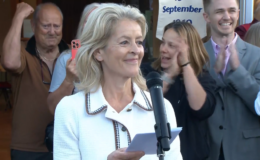
European Commission President Ursula von der Leyen said the EU remained “united” in its resolve against Russian aggression, adding further sanctions would be issued.
Donald Tusk, Poland’s Prime Minister, also weighed in, saying Russia was actively “escalating tension across the whole region”.
Germany is one of several Nato states to have announced drone incidents at airports, military bases and industrial sites over the past year.
Chancellor Friedrich Merz warned last week that those behind hostile acts against Germany would “pay a price”.
However, some within Mr Merz’s own Christian Democrats (CDU) have criticised the response as insufficient.
CDU MP Roderich Kiesewetter said measures taken so far “fall far short of what is required”, arguing Moscow “just laughs” whenever its ambassador is summoned.
The announcement comes at a sensitive political moment, with a state election in Saxony-Anhalt potentially handing the far-right AfD its first regional victory.
The AfD, Germany’s largest opposition party, has called for an end to support for Ukraine and a return to closer ties with Moscow.
Our Standards:
The GB News Editorial Charter