
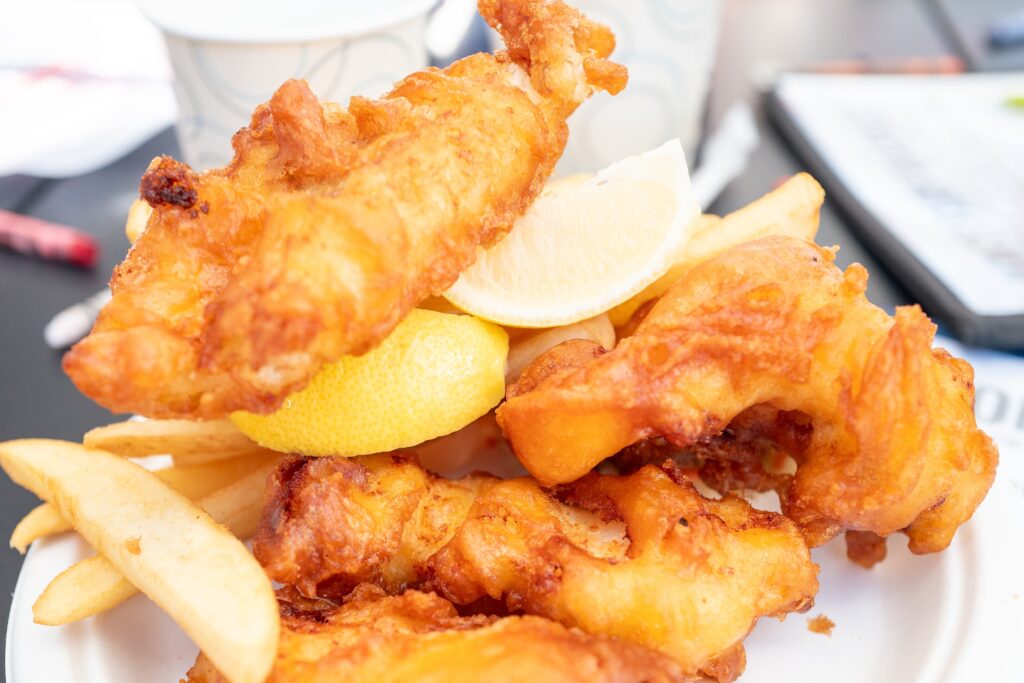

Fishermen across Devon and Cornwall are sounding the alarm that the nation’s beloved fish and chips could become significantly more expensive as the ongoing Gulf crisis sends fuel costs spiralling out of control.
Red diesel prices have surged from 55p to £1.05 per litre in just six weeks, leaving many vessel operators struggling to justify putting to sea.
Read Also: Travellers win long-running planning row after pitching up on picturesque rural site
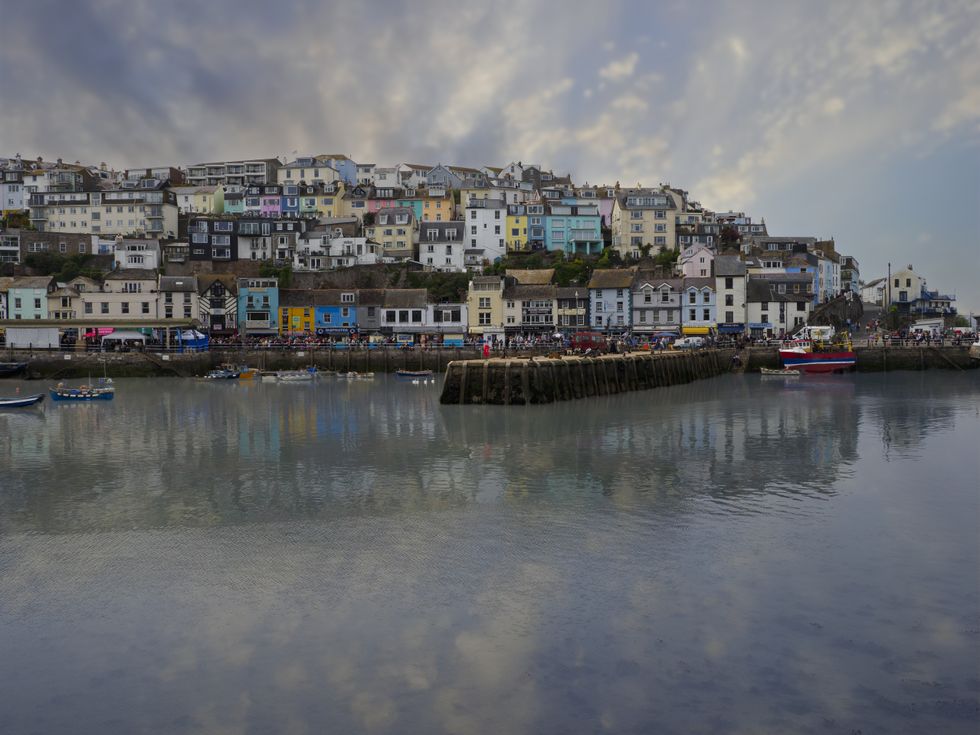
At Brixham in Devon, which holds the distinction of being Britain’s largest fishing port, boats have been photographed sitting idle in the harbour rather than heading out to work.
The near-doubling of fuel costs has created a crisis that threatens not only individual skippers but entire coastal communities and supply chains that rely on the fishing industry.
Industry representatives are now urging the Government to step in with emergency measures before the situation deteriorates further.
Andrew McLeod, who fishes out of Brixham, has seen his weekly fuel bill nearly double in a matter of weeks.
Filling up his vessel for a single trip previously set him back between £10,000 and £11,000, but his latest bill came in at a staggering £20,500.
“Six weeks ago it was 55p a litre for red diesel, last week it was £1.05,” Mr McLeod said.

“That’s an awful lot of fish you have to catch just to tread water and not make a wage.”
Should prices remain at current levels or climb higher still, he cautioned that a significant number of boats would stop fishing altogether and bring forward their annual refits.
The knock-on effects would ripple far beyond the harbour, Mr McLeod warned, with haulage firms, boat suppliers and other businesses throughout the wider industry all facing serious consequences.
Brian Tapper, a fisherman based in Plymouth, confirmed that the soaring costs would inevitably push fish prices upward.
LATEST DEVELOPMENTS
- Drivers with larger vehicles to face higher parking charges as council launches attack on SUVs
- UK hospital sparks outrage as pregnant women offered classes on how to give birth in their car
- Man dies after getting into trouble off Devon coast
“The fuel increase will cost us on average an extra £500 a week on my crabber and over a £1,000 a week on my scalloper,” he said.
Mr Tapper stressed that the industry was balanced on a knife edge. “It’s very fine line at the moment,” Mr Tapper said.
“If it goes another up by another 15p a litre we will be tying the boats up. There’s nothing we can do to save fuel other than not go out.”
Barry Young of the Brixham Trawler Agents called current fuel expenses astronomical, noting that some skippers were refusing to leave port because their catches could no longer cover the cost of diesel.
Those still venturing out were resorting to creative measures, including towing with tidal currents rather than against them, to cut daily fuel consumption.
Juliette Hatchman of the South Western Fish Producers Organisation made clear that the fuel crisis had pushed parts of the fleet past breaking point.
“When already high operating costs are compounded by fuel prices that outstrip the value of the catch, vessels have no choice but to tie up,” she said, adding that the fallout was felt immediately across markets, processors, transport operators and coastal communities.
Ms Hatchman emphasised that fishing is a pure price-taking industry with no mechanism to offset rising costs and called on ministers to introduce “a temporary, targeted stabilisation measure to prevent avoidable tie-ups and safeguard the coastal communities and supply chains that depend on our fleet”.
Chris Ranford of the Cornish Fish Producers’ Organisation echoed that assessment, explaining that because most fish and shellfish is sold at auction, prices are “dictated by the buyer and demand”.
“We don’t set the price,” he said, warning that profit margins across the sector were approaching a tipping point.
Defra confirmed it was treating the situation “very seriously” and said it was carrying out detailed analysis to understand how rising fuel prices were affecting the food sector more broadly.
Mr Ranford noted that some of the worst-hit operators were those running towed gear vessels and offshore boats, where basic daily running costs had increased by more than £1,000 simply to reach fishing grounds and carry out their work.
Our Standards:
The GB News Editorial Charter