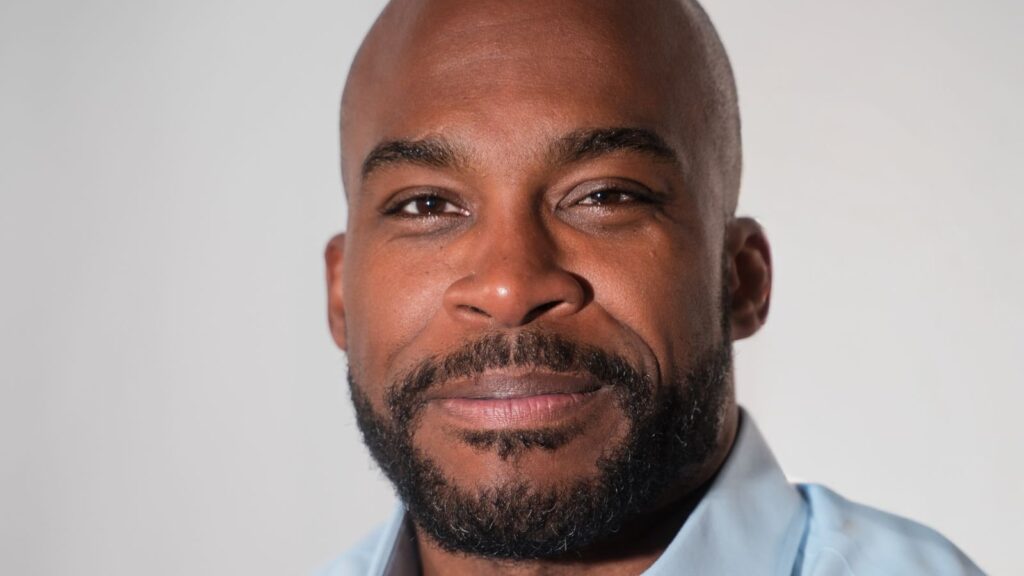

Many business people are known for their “rags-to-riches” story, but very few have wanted to openly share how they achieved it. Dean Forbes was homeless twice as a teenager. By his late teens, he was carrying debt he had run up chasing a football career.
Today he is chief executive of Forterro, a European software business that changed hands in a €1billion (£855million) transaction in 2022 and has since tripled in size, serving more than 25,000 customers from over 40 locations.
Read Also: Travellers win long-running planning row after pitching up on picturesque rural site
Mr Forbes grew up in a single-parent family in Lewisham, south London. The family was rehoused twice during his teenage years, splitting up temporarily to speed up the process. However, he is keen to emphasise that it was not a hard luck story.
Speaking exclusively with GB News, the entrepreneur shared: “I always smile when people describe my upbringing as difficult because that’s never really how I experienced it.

“My mum, despite being disabled, did an incredible job raising my two brothers and me. She taught us to stay positive, work hard, and take responsibility for our own future.”
The staggering amount of debt came much later, and Mr Forbes pulls no punches in taking aim at who was to blame for his financial dilemma. The debt came later, and he blames himself for the “self-inflicted” hurdle that had to be overcome.
He was on the books at Crystal Palace and spent years pursuing a professional contract, while trying to keep pace with friends already earning football money. Then his agent sat him down and told him it was not going to happen.
“At the time it was disappointing. Looking back, it was probably the best thing that could have happened. The debt focused me; it meant I had no choice but to go to work. Had I not had that debt, I would have likely spent more time chasing this dream.”
The same agent found him a telesales job at Motorola. As many readers can imagine, the adjustment was abrupt.
“One day you’re spending all your time on a football pitch and the next you’re sitting in an office selling technology. But I quickly realised that a lot of the qualities that make people successful are the same. Discipline, resilience, teamwork and competitiveness all mattered.”
Mr Forbes left Motorola for Primavera Software as a sales representative. The company was building out its international arm and handed him responsibility well ahead of his experience, eventually making him vice president and general manager of what became Primavera’s international business.
Over three years, he grew revenues sharply in the division he ran. When Oracle bought Primavera for $550million in 2008, he arrived at the enterprise giant as part of the deal.
LATEST DEVELOPMENTS
- High street giant crashed into administration with £46m in debt and 1,800 jobs cut
- Historic UK department store closes as ‘old fashioned’ business leaves high street
- Beloved UK fashion retailer returns to high street after wave of store closures

Mr Forbes was appointed its youngest vice president in almost three decades, taking global commercial responsibility for the PPM Global Business Unit.
“When people look at the Oracle title, they’re seeing the outcome. The important part was helping to build a business that Oracle wanted to buy.”
The business mogul insists there was no formula beyond taking responsibility early, focusing on commercial results and working for leaders who judged output rather than years served.
Mr Forbes took over Forterro in February 2021, inheriting a business with customers who had stayed loyal for decades — in some cases across generations.
Investment followed in leadership, product, customer success, cloud and now artificial intelligence. However, he claims he pays little attention to the valuation that made headlines.
“The measures that matter to me are customer retention, customer satisfaction, employee engagement, product adoption, revenue growth and profitability.
“If we’re retaining customers, helping them become more successful, attracting good people and continuing to innovate, the financial results tend to take care of themselves.”
His operating principle for scaling without breaking things is speed. He calls it “continuous forward motion”.

“A lot of companies spend too much time trying to reach the perfect decision. My view has always been that making a good decision quickly is often better than making a perfect decision too late.
“One thing I pride myself on is never punishing failure in my teams. If good people are taking intelligent risks in pursuit of better outcomes for customers, some things won’t work. That’s part of growth.”
Mr Forbes now runs the Forbes Family Group, which he says has positively impacted more than 200,000 people through mentoring, networks and skills programmes.
He is candid that organisations like his can only do so much while background still shapes income, education and career outcomes, and regional disparities across the UK remain wide. What has changed his outlook is AI, which he also names as the single biggest challenge of his career.
“I’ve lived through the rise of the internet, cloud computing, mobile technology and software-as-a-service. I’ve never seen a transformation move as quickly as AI is moving today. What’s challenging is that there isn’t a playbook.
“Many of the traditional advantages that sat behind university credentials, professional networks and conventional career pathways are becoming less important than a person’s ability to learn, adapt and use these tools effectively.”
Both the Forbes Family Group and Forterro are now investing heavily in AI training for their people.
“If we approach it correctly, AI has the potential to create opportunities for people based far more on capability and ambition than on background or circumstance.”
Our Standards:
The GB News Editorial Charter