
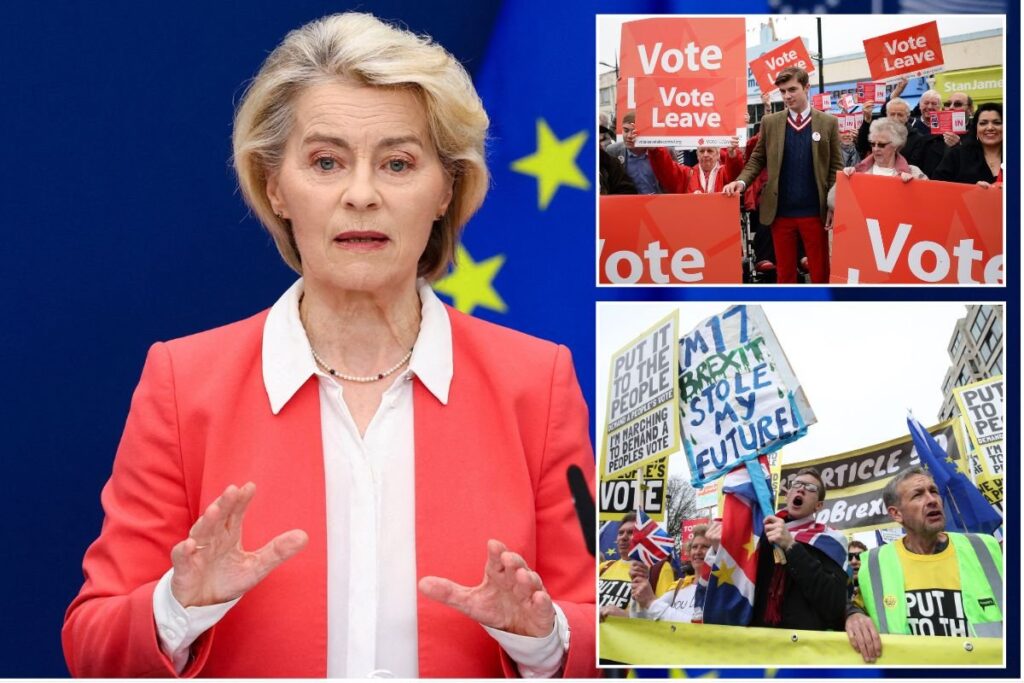

The European Union has claimed Brussels “never intervenes in referendums” after being told to keep its nose out of Iceland’s Brexit-style vote later this month.
Iceland, which first expressed an interest in joining the EU in 2009, will vote on whether to restart stalled negotiations with the bloc on August 29.
Read Also: Travellers win long-running planning row after pitching up on picturesque rural site
Polling suggests the vote remains on a knife-edge, with a recent Maskina survey suggesting 44 per cent would vote in favour of accession to the EU and 39 per cent would vote against.
Despite Icelandic Prime Minister Kristrún Frostadóttir’s Social Democratic Alliance backing EU membership, two officials in Brussels have told Euractiv that Reykjavík does not want the European Commission to intervene on the matter.
At least seven senior European political figures have visited the Nordic nation in 2026 so far, with most of them openly urging Icelanders to vote in favour of joining the Brussels bloc.
French foreign minister Jean-Noël Barrot, who visited Iceland just last month, claimed voters had “nothing to lose” from voting ‘Yes’.
Iceland would still likely need to hold a second vote on joining the EU if voters decide to proceed with negotiations.
However, European Fisheries Commissioner Costas Kadis suggested earlier this year that Iceland would need to make concessions on its coastal waters to secure a deal to join the EU.
Responding to the slapdown from Iceland, a spokesman for the European Commission said: “The Commission never intervenes in national elections or in referenda in any way.”
“The Icelandic authorities have called this referendum and it is for the Icelandic people alone to decide.”
Despite dismissing the suggestion the EU has intervened in votes, Brexiteers have accused Brussels bureaucrats of attempting to undermine national sovereignty.
Brussels’ then-Brexit negotiator Michel Barnier held direct meetings with figures pushing for a second referendum on EU membership, including Sir Sadiq Khan in October 2018.
LATEST DEVELOPMENTS
- Hundreds of migrants taking trains from Calais to small boat launch locations across French coast
- EU civil war erupts as Spain issues ultimatum to Italy over Schengen suspension after Ceuta crisis
- Syrian fugitive jailed for attempted murder found living in UK council home and claiming benefits
Meanwhile, ex-European Council President Donald Tusk claimed there was a “special place in hell” for the architects of the Vote Leave campaign.
However, the EU has also intervened in votes held in other corners of the bloc.
Despite Danish voters rejecting the 1992 Maastricht Treaty, the EU forced another vote on the matter the following year.
Ireland was also encouraged to hold second referendums after voters opted against adopting the Nice Treaty in 2001 and Lisbon Treaty in 2008.
The subsequent votes, which were held in 2002 and 2009, resulted in two votes in favour of greater EU integration.
However, there have also been examples of the EU dismissing public concern about integration.
France and the Netherlands voted against establishing a European Constitution in 2005, with the Dutch doing so by 62 per cent to 38 per cent.
Brussels ultimately decided against letting voters have a say again and instead sought parliamentary approval after repackaging the proposed sovereignty-pooling measures under the Lisbon Treaty of 2007.
Greece also held a referendum in July 2015 on bailout terms proposed by the EU, ECB and IMF.
Voters rejected the deal by 61 per cent to 39 per cent, despite banks being shut and capital controls in place.
Jean-Claude Juncker warned Greeks that a vote against the deal would be interpreted as Athens wanting to leave the Eurozone.
The EU eventually offered Greece an even tougher deal and the public was not consulted on the terms of the agreement in a referendum.
Our Standards:
The GB News Editorial Charter