
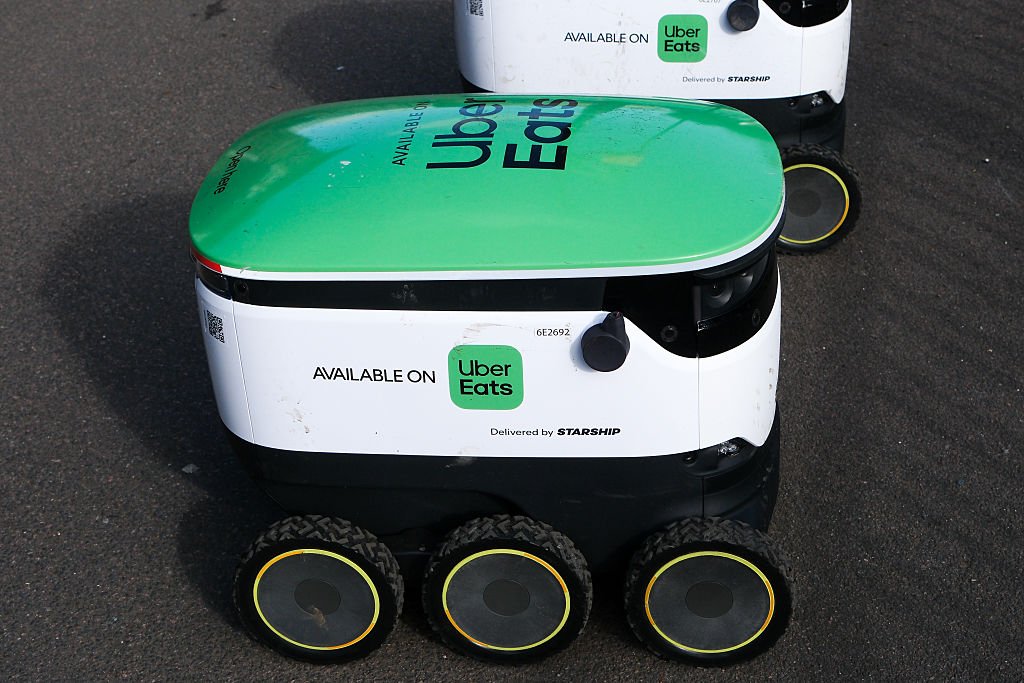

Six in ten Britons believe delivery robots should not be permitted on pavements due to their effect on people living with mobility impairments or visual disabilities, according to a new YouGov opinion survey.
The poll, carried out on behalf of walking charity Living Streets, found 60 per cent of respondents expressed concern about those with disabilities navigating the pavement and associated risks.
Living Streets, which campaigns to protect pedestrian environments and encourage daily walking, published a campaign video yesterday, calling for an outright ban on the robots operating on footpaths.
The charity highlighted that AI infused delivery devices currently function in a legal grey area, with no explicit legislation regulating their presence on public walkways.
Read Also: Earl Charles Spencer's new book on Princess Diana stolen in Dutch lorry raid
Dr Amit Patel, a Living Streets trustee, disability campaigner and registered blind person, said the machines present a distinct challenge for disabled people.
“We don’t have the infrastructure for robots to be on our pavements and for people to get around safely at the same time,” Dr Patel said.
“If you can see, walk or hear, you probably won’t be affected by delivery robots, but for those of us who’ve worked so hard to get our independence back, this is yet another hurdle.”
He added that some people have told him they feel safer taking a taxi to an out-of-town shopping centre, rather than navigating their local high street.

“If we want to boost our local economies, we need to fix the legislation around delivery robots,” he said.
The charity has also sent an open letter to transport secretary Heidi Alexander, seeking clarity on the legal standing of delivery robots.
Representatives are seeking to work with the government, pressing for the introduction of nationwide regulations.
According to Living Streets, the government has indicated that it plans to establish a legal framework to govern the broader deployment of delivery machines across the country.
LATEST DEVELOPMENTS
- PIP claims SOAR as number of Britons on DWP sickness benefits hits record high
- Deaths of 3 babies ‘preventable’ had hospital acted when Lucy Letby suspicions raised
- Two dead and four injured after horror crash in Doncaster as driver arrested
The absence of specific rules has become an increasingly pressing issue as the robots expand into more towns and cities, operating on footpaths shared with pedestrians, wheelchair users and people with guide dogs – all without any formal regulatory oversight.
Starship Technologies, one of the primary providers of pavement delivery robots, has been running its fleet across the UK since 2018.
The company further expanded its operations by entering into a partnership with Uber towards the end of 2025.
The robots have not been free from controversy, however.
Starship pulled its machines out of Sheffield in August after a trial lasting roughly five months.
The Sheffield Star reported that the withdrawal came in the wake of repeated acts of vandalism targeting the devices, highlighting the tensions that can arise when the technology is introduced into local communities.
The robots can complete deliveries in under 30 minutes for distances of up to two kilometres, and operate at high autonomy.
According to Starship Technologies, the robots had prevented more than 700 tonnes of CO2 from being released into the atmosphere in Europe as of December 2025, with an average delivery consuming as much energy as it takes to boil water for a cup of tea.
Starship Technologies currently operates the largest autonomous delivery network globally, with around 2,700 robots operating across more than 270 locations in eight countries.
Our Standards:
The GB News Editorial Charter