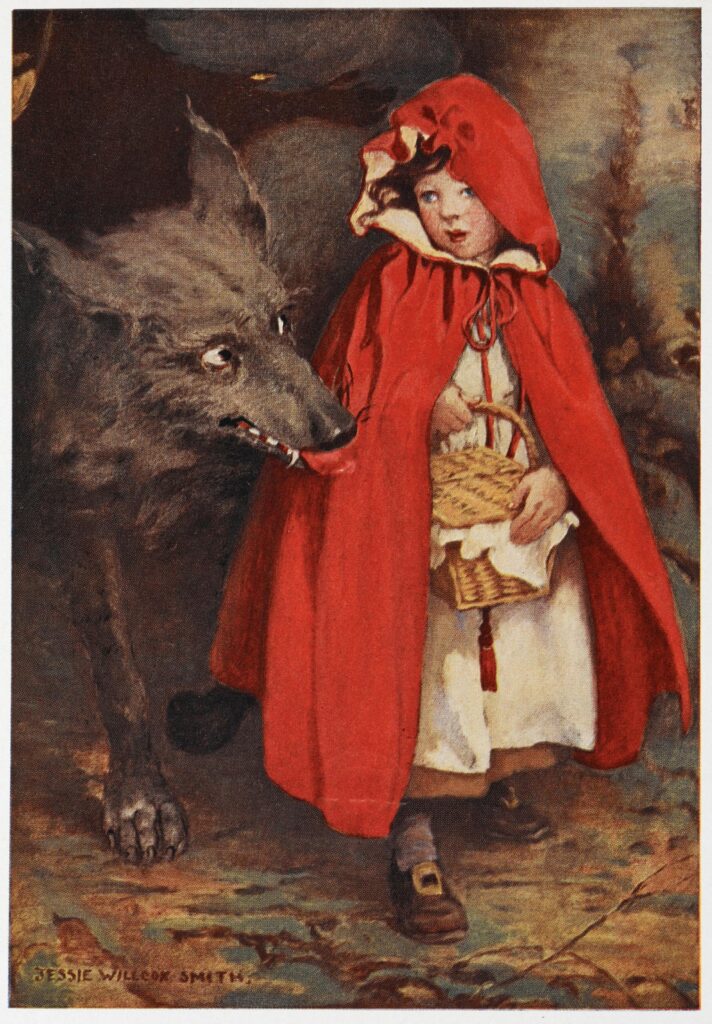

A Cambridge University college has slapped Little Red Riding hood with a trigger warning over “themes of violence”.
Students were also told to brace for “adult content” before a lecture exploring the story and the broader history of bedtime stories
Read Also: Travellers win long-running planning row after pitching up on picturesque rural site
Clare College organised the free session for state school pupils as preparation for university-level studies.
Pupils studying for their GCSEs and A-levels were invited to analyse childhood tales critically and look “beneath the surface.”
The course materials guide carried a content warning which said the session would involve discussion of adult themes, including “themes of violence with reference to fairytales”.
In some grisly early versions of the tale, Riding Hood unwittingly eats her own grandmother’s flesh after the wolf kills her and leaves it for the girl to eat.
While in others, the wolf has been known to ask her to take off her clothing and throw it into the fire – or the wolf eats her after she gets into bed with him, and the story ends there.
Though the fairytale dates back to the 17th century, the Brothers Grimm would adapt the story 200 years later, keeping its violent elements but giving it a more hopeful conclusion.

Their version told of how the girl and her grandmother were eventually saved by an axe-wielding huntsman who was after the wolf’s skin.
While the Red Riding Hood warning was issued to sixth-formers, Cambridge has come under fire in the past for warning university students how the works of Shakespeare contain gore and violence which might “upset” them.
Shakespeare’s Titus Andronicus was flagged for “discussion of sexual violence, sexual assault.”
While a lecture on The Bacchae by the Greek dramatist Euripides also received a warning, given its depictions of women ripping apart cattle and people.
READ MORE FROM BRITAIN’S UNIVERSITIES:
- UK university offers ‘woke gobbledegook’ degree training up students for ‘meaningful careers in DEI’
- Cambridge professor at heart of plagiarism row RESIGNS after university investigation launched
- ‘Britain’s first halal-only university flats’ handed to Muslim students in Scottish city

Any English lecture deemed potentially upsetting was slapped with a red triangle warning sign on students’ timetables.
Asked about the warnings at the time, a Cambridge academic admitted their “duty as educators was to prepare students for the world not protect them for three years”.
Though Derby University professor Dennis Hayes said: “Once you get a few trigger warnings, lecturers will stop presenting anything that is controversial.
“Gradually, there is no critical discussion,” Prof Hayes, who is also the director of the campaign group Academics For Academic Freedom, said.

Lecturer Dr Ian Burrows would go on to slap down critics, insisting he was teaching students that “traumatic experiences can be treated in art… in comic or frivolous ways”.
“In the lecture timetable sent to students before term starts, I signalled that the way this discussion was conducted might be particularly difficult for those who had personally encountered abuse or assault,” Dr Burrows wrote in The Guardian.
“Very few lectures offered to students by my faculty are accompanied by such trigger warnings, but I attached mine in the knowledge that I’d be discussing these issues extensively, and that I’d be considering how the playwrights in question demean their victims by theatrical means.”
Our Standards: The GB News Editorial Charter