

BP’s decision to offload its North Sea assets must serve as a “wake up call” to ministers and herald a new approach to the offshore sector, industry leaders say.
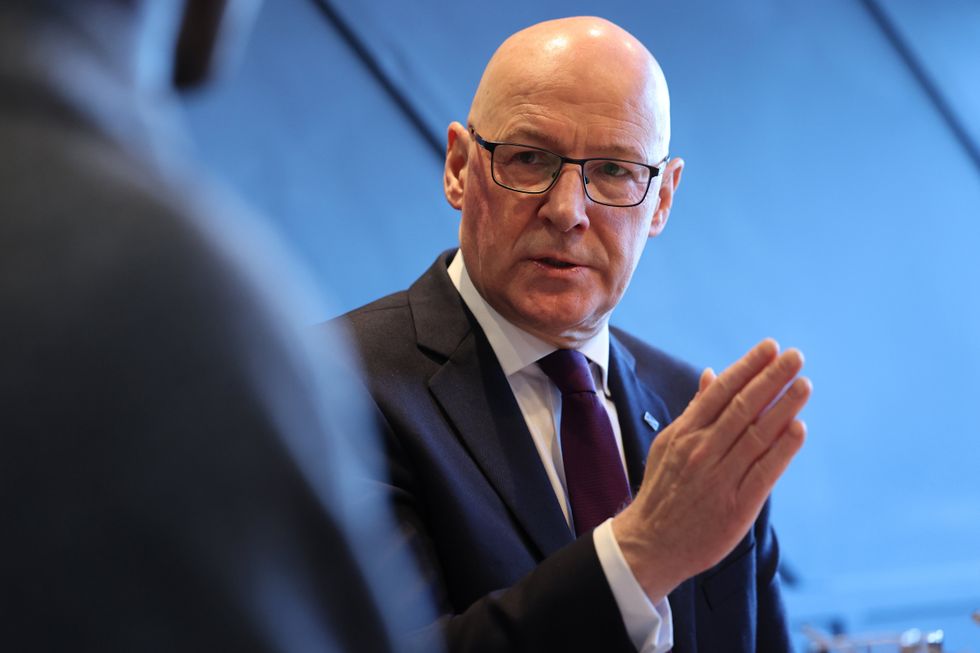
Scotland’s First Minister, John Swinney, said it was “crystal clear” that a windfall tax on the North Sea was harming jobs and investment and called for Westminster to scrap it.
Read Also: Travellers win long-running planning row after pitching up on picturesque rural site
It came as a former BP exec pointed out that Norway was investing in its offshore sector at a rate ten times higher than the UK. He said the windfall tax, along with a ban on new licences, had “effectively shut down investment” in the UK offshore market.
Mr Swinney was speaking after a roundtable conference, hosted by the Aberdeen & Grampian Chamber of Commerce and attended by senior figures from Scotland’s offshore energy sector.
It followed news earlier this week that BP was putting its North Sea business up for sale after more than 60 years of operations.
Mr Swinney called for the Energy Profits Levy [EPL], or windfall tax, which sees North Sea operators pay a total of 78 per cent on profits, to be ditched.
Mr Swinney said: “It is crystal clear that the UK Government’s destructive tax regime is harming investment and jobs in Scotland – and the new Prime Minister must look at this issue as a matter of urgency.
“Speaking to industry leaders today, I promised that the Scottish Government will do everything within our powers to work together with business, trades unions and the UK Government.

“What we need, above all, is for the new Prime Minister to end the unfair EPL and put in place a sensible tax regime to protect the workers of Scotland and the North-east.”
Ryan Crighton, Policy Director at Aberdeen & Grampian Chamber of Commerce, said that the BP news had dominated the debate.
He welcomed Mr Swinney’s words but added that work at Jackdaw and Rosebank, a gas and oil field, should re-start. Drilling at both sites has been paused pending legal challenges on climate grounds.
Mr Crighton said: “BP’s decision to market its North Sea business featured prominently throughout the discussion and should serve as a wake-up call.
LATEST DEVELOPMENTS
- John Healey given warning over promise to re-industrialise Britain as Labour set lofty goals
- BP confirms plan to sell UK North Sea oil business
- Labour told to tackle sky-high electricity costs ‘head-on’ as businesses miss out on support
“When one of the basin’s largest and longest-standing investors concludes that the UK is no longer the right place to deploy capital, it underlines the urgent need for governments to restore investor confidence through stable policy, competitive taxation and a predictable regulatory environment.
“The message from around the table was unequivocal. We need a stable, internationally competitive fiscal regime, timely regulatory decisions and a clear long-term commitment to homegrown energy production.
“Without that certainty, investment, jobs and expertise will continue to migrate to other parts of the world.”
Speaking separately from the AGCC conference, Brian Gilvary, chairman of INEOS Energy, said there was “significant potential” in the North Sea basin but that it needed support from the Government to be realised.
He said the windfall tax, along with a ban on new licences – a policy promised in the Labour manifesto – had “effectively shut down investment”.
Mr Gilvary, who is the former CFO of BP, said: “The challenge for the UK is that unless the Government of the day can create stability around the fiscal regime, the UK North Sea remains unattractive.
“The Energy Profits Levy, coupled with the ban on drilling, has effectively shut down investment, while the Norwegian sector continues to grow, investing at ten times the rate of the UK.
“More pointedly, Norway exports gas to the UK, with British consumers and taxpayers ultimately footing the bill.
“The UK still has significant potential to grow production from the basin, supporting jobs, tax revenues and energy security. That is a choice for the Government.”
He said BP’s decision to sell its North Sea assets “underlines the consequences of the current approach”.
He said: “When companies reduce their exposure to the UK basin, the impact goes far beyond the energy sector.
“It means less investment, fewer high-quality jobs, lower tax revenues and a greater reliance on imported energy.
“The UK’s demand for oil and gas has not disappeared, but increasingly we are choosing to import what we could produce ourselves.
“If this trend continues, the country risks losing not only production but also the skills, supply chains and economic value that have supported the UK economy for decades.”
New Energy Secretary Miatta Fahnbulleh has promised “pragmatism” on the North Sea. Her first trip following her appointment was to Aberdeen, home of the offshore sector.
In a video recorded on the visit, she said: “We need to make sure that we are building renewables, that we are building nuclear but that we also are really clear, that oil and gas will be part of the energy mix for years to come.”
Workers would be central to her vision, she said, pledging “good jobs that pay a wage that people can raise a family on”.
She told business leaders: “This part of the world has been at the very heart of home grown energy for the UK and it must continue to be the case.
“We are really clear that oil and gas will be part of our energy mix for years to come.”
Our Standards:
The GB News Editorial Charter