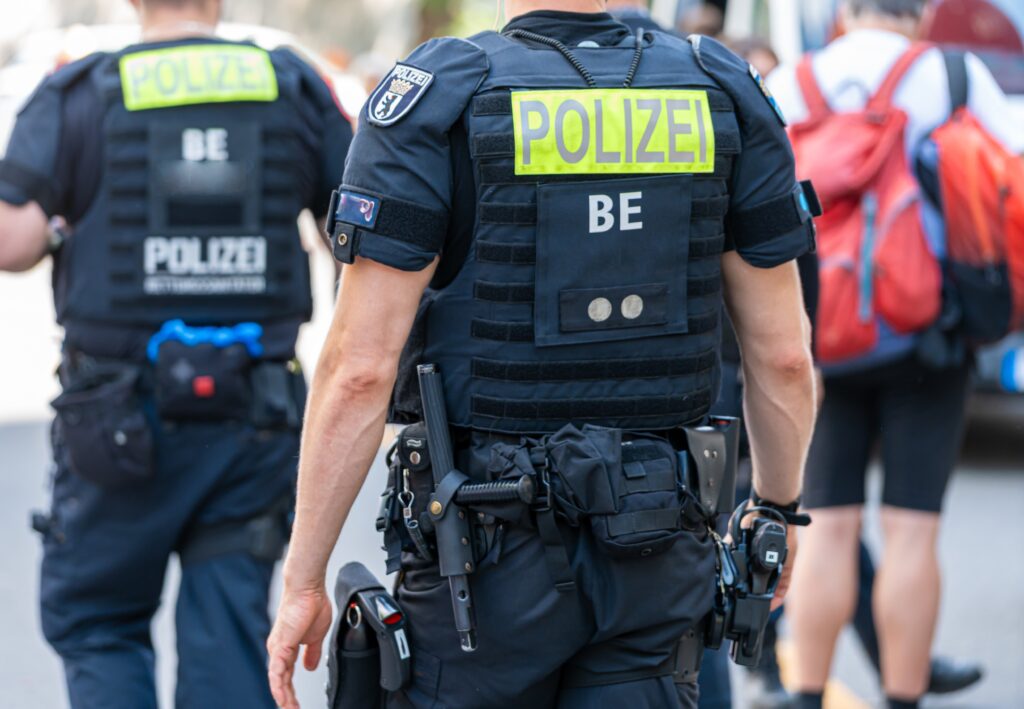

Berlin’s police force is facing a deepening recruitment crisis, with four in ten candidates failing German language proficiency tests, the city’s top police officer has disclosed.
Police president Barbara Slowik Meisel attributed the growing shortfall to an increase in applications from migrants who lack sufficient command of the language.
Read Also: Travellers win long-running planning row after pitching up on picturesque rural site
The situation has left the force caught between maintaining its entry standards and an acute need for new officers.
“We have applicants, but we also have high standards that we cannot lower,” Ms Slowik Meisel told German broadcaster RBB.
“[As police officers] we have to explain our police actions day in and day out … and also possibly document things in writing.”
She described “extremely fierce competition for suitable applicants, and the emphasis is on suitable”.
Roughly a quarter of Berlin’s 1,200 entry-level posts remained vacant in 2025, Ms Slowik Meisel confirmed.
Among the 240 recruits who commenced training in spring that year, more than half – 132 people – were found to require additional German language tutoring, according to official police data.

Prospective officers must complete a computer-based writing assessment, a dictation exercise and a separate evaluation of their grammatical competence.
Beyond linguistic ability, candidates are expected to demonstrate a thorough understanding of Germany’s legal foundations.
Crucially, they must also prove capable of explaining those principles to members of the public in straightforward, accessible terms.
Berlin already has the highest proportion of police officers from migrant backgrounds of any force in Germany, at 37 per cent, according to figures from research service Mediendienst.
GERMANY – READ THE LATEST:
- Madeleine McCann suspect faces retrial over rape and could be jailed for life
- Volkswagen could axe 100,000 jobs as company prepares for crunch talks
- ‘Crazy’ German councillor plans sex party inside City Hall to create ‘swinger’s paradise’

The recruitment difficulties have emerged amid a fierce national debate over mass migration and its consequences for integration in German society.
Figures released by Germany’s Federal Statistical Office (Destatis) in May show that 15.5 million people predominantly or exclusively speak a language other than German at home.
The figures, drawn from the 2024 microcensus, found that 77 per cent of people in private households spoke only German at home.
A further 17 per cent spoke German as well as another language, while six per cent did not speak German at home.
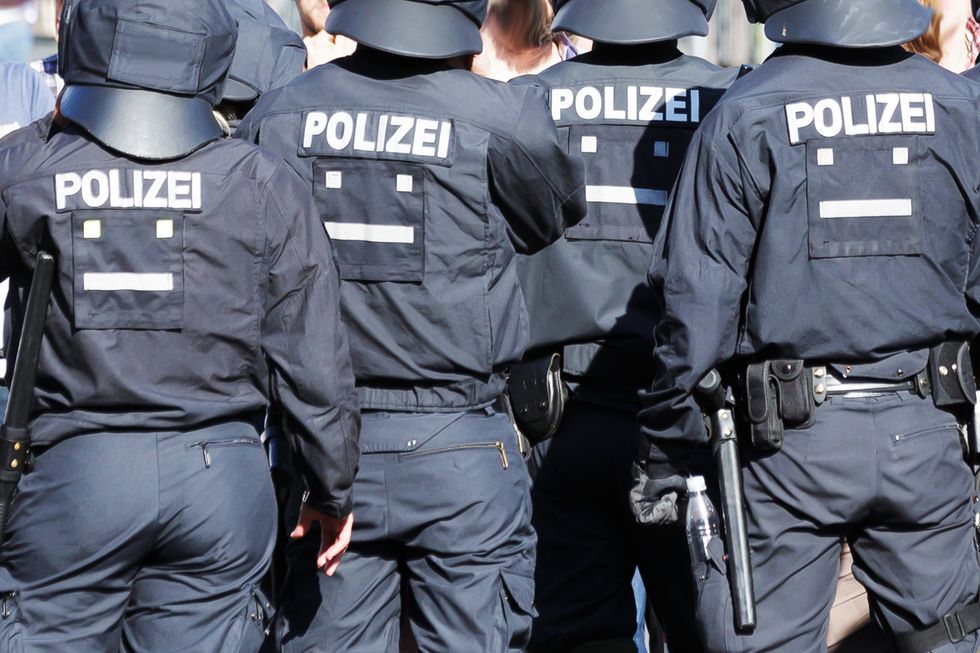
Among languages other than German, Turkish was the most widely spoken, accounting for 14 per cent, followed by Russian at 12 per cent and Arabic at nine per cent.
The figures also show a significant difference among Germany’s 21.4 million first and second generation migrants.
Just 22 per cent spoke only German at home, while 55 per cent used German alongside another language.
Within that latter group, German was the main language in 22 per cent of households, while another language was spoken predominantly in the remaining 78 per cent.
A further 23 per cent said they did not speak German at home.
The Alternative for Germany (AfD) has placed migration at the heart of its campaign ahead of pivotal elections in the country’s eastern states this September.
Our Standards: The GB News Editorial Charter