
A beach-goer claims she was left violently ill with a parasite after taking a dip during the heatwave – after “swallowing contaminated seawater”.
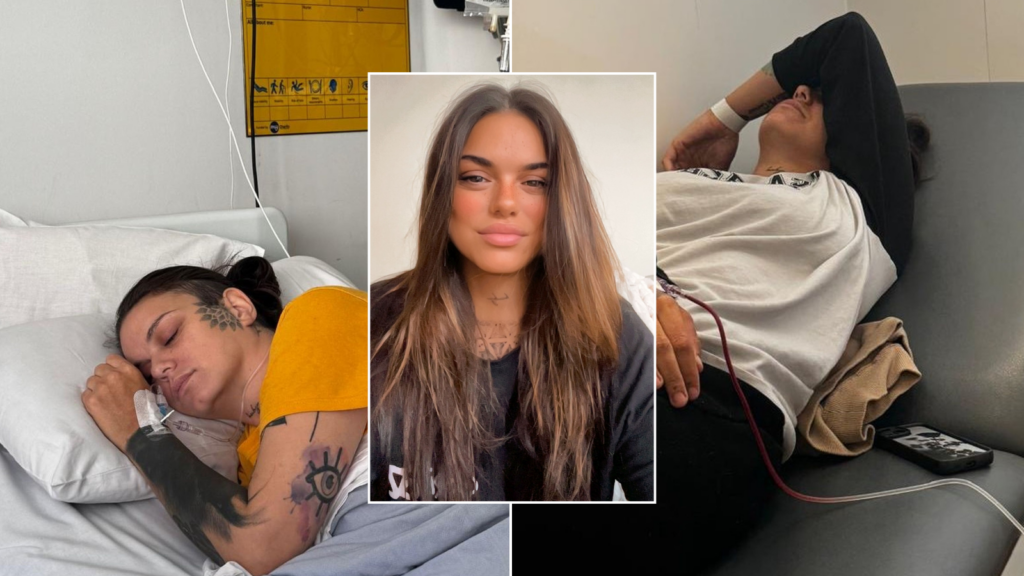
Katherine Hopkins was hospitalised for a month just days after enjoying a swim in the sea at Hove Lawns, Brighton, East Sussex.
Read Also: Travellers win long-running planning row after pitching up on picturesque rural site
The 35-year-old swam in the water for four consecutive days from May 23, as well as enjoying one quick dip in Lancing Beach in West Sussex.
Ms Hopkins, a former tattoo artist, said she was swimming for “three to four hours at a time” and did splash her face with seawater – but didn’t ever put her head beneath the water.
About 10 days after her first beach swim, Ms Hopkins began experiencing agonising stomach cramps – and had to use the toilet as much as 30 times a day.
As her symptoms worsened, Ms Hopkins decided to go to hospital where tests revealed that she had contracted cryptosporidium – a microscopic, single-celled parasite that causes an intestinal illness called cryptosporidiosis.
Ms Hopkins, who was a particularly vulnerable patient after undergoing a kidney transplant in 2010, believes she ingested the parasite by swallowing seawater when splashing her face – which she fears could have been contaminated.
Following a month in hospital, she was discharged home two and a half stone lighter after surviving on a liquid diet.

Ms Hopkins, who is still experiencing symptoms now, believes she got the infection from dirty seawater and fears more people could fall ill if they swim in it.
Earlier this month on July 17, Southern Water was fined £7.1million at Canterbury Crown Court after repeated illegal sewage pollution incidents forced the closure of beaches off the Kent coast.
The court heard how preventable equipment failures and poor operational oversight led to repeated discharges of untreated sewage between 2019 and 2021, some at the height of summer.
The prosecution comes almost exactly five years after Southern Water received a record £90 million fine for nearly 7,000 illegal sewage discharges across Hampshire, Kent and Sussex.
Across five major pollution incidents, Southern Water repeatedly failed to maintain critical pumping equipment, delayed reporting pollution to regulators and allowed untreated sewage to enter coastal waters, the court heard.
LATEST DEVELOPMENTS
- Elderly woman fed dog food just weeks before dying after carer ‘couldn’t read label’
- Man, 28, arrested on suspicion of raping woman, in her 20s, on Brighton Beach
- Children send heartbreaking letters to Andy Burnham over plan to put 1,250 migrants in tiny village

Southern Water said that these incidents were five years ago and pointed out that Hove’s bathing water is now rated ‘Excellent’ by the Environment Agency.
Ms Hopkins, who lives in Hove, East Sussex, said: “I went in the sea for the majority of each day. I loved it.
“It didn’t look visibly dirty. Brighton sea always looks a bit murky. There were no signs saying ‘don’t swim here’. There were kids in the water.
“I splashed my face and got water in my eye. I was in and out between three to four hours at a time.”
But around 10 days after her first swim, she developed stomach cramps.
Ms Hopkins said: “I was going to the toilet 20 to 30 times and I was so dehydrated. When I tried to drink water, it would just come straight out.
“I was nearly fainting, I was hot and feverish. I threw up once. I thought I had food poisoning but I hadn’t eaten anything to cause that.
“I genuinely thought I was going to die. I just felt really helpless.”
After her symptoms failed to improve, she went to Royal Sussex County Hospital in Brighton on June 16 where tests revealed she had contracted a parasite known as cryptosporidium that causes the diarrheal disease cryptosporidiosis.
Symptoms of cryptosporidiosis generally begin two to 10 days after infection, which Ms Hopkins says a specialist doctor suggested was likely picked up from swimming in the sea.
The parasite lives intestines of infected humans and animals and then excreted out, often then being caught by people who come into contact with contaminated water sources.
It can enter the water from agricultural run-off via streams and rivers, storm overflows or from sewage discharges.
In 2024, a cryptosporidiosis outbreak in Brixham, Devon, resulted in a utility company being fined £1.85million after hundreds of people fell ill and thousands had to boil their drinking water.
Ms Hopkins said: “I came in looking yellow and grey and my kidney function was deteriorating really rapidly.
“I was becoming more and more unwell.
“They gave me 15-20 litres of water in the first three days because I was that dehydrated.
“After four or five days in hospital, the doctor told me I had cryptosporidium.
“They told me it was a parasite caused by sewage and symptoms take normally 10 days after you contracted it and then it hatches in your stomach.
“It’s microscopic. I ended up getting a bacterial infection as well.
“I believe it was from the sea. A gastric consultant told me that it makes sense it was contracted through swimming in the sea.
“I was basically on a liquid diet. I lost two and a half stone within a month in hospital.
“I’ve still got symptoms now. I’m still on a restricted diet. It’ll take a few months for my stomach to go back to normal.”
After a month in hospital, Ms Hopkins was discharged home on July 6 – and has vowed never to swim in British waters again.
Ms Hopkins said: “I was really angry. I’m never going swimming in the sea in the UK again.
“I think the beach should be shut off – there were so many kids swimming in there and god forbid if they were to get this.
“I was really shocked – I never thought I’d go in the sea and contract a parasite.
“People should be able to go in the sea without getting ill.”
Councillor David McGregor, Cabinet Member for Economy, Culture, Heritage and Tourism at Brighton & Hove City Council, said: “We have high expectations as to the quality of our bathing water – expectations we regularly communicate to Southern Water.
“During the summer bathing season, the Environment Agency carries out weekly water quality testing for a range of bacteria, across three sites along our 13 kilometres of seafront, including in Hove.
“All of the most recent recordings for Hove have put the quality of our bathing water there as excellent.
“We have the upmost sympathy for what this resident is going through, but the regular, independent water quality testing should provide reassurance to residents and visitors that our beaches are safe to swim in.”
Adur District Council, who manage Lancing Beach, said that it was a matter for the Environment Agency.
An Environment Agency spokesperson said: “Our seas, rivers and lakes naturally contain bacteria, some of which can cause illness. Additional bacteria can enter from farm runoff, sewage works and storm overflows, especially after heavy rain.
“This bathing water is regularly monitored, and, on this occasion, there were no signs of any impact on water quality.
“We encourage people to follow UKHSA swimming advice and check Swimfo before visiting a designated bathing water.”
Southern Water said there were no storm overflow releases at either of the nearest locations during the times Ms Hopkins swam.
A spokesperson from Southern Water said: “Hove’s bathing water is rated ‘Excellent’ by the Environment Agency, with the nearest storm overflow more than two miles offshore and five miles north west of Hove.
“Local waters are further protected by Brighton’s super-sewer, which can store 150,000 tonnes of rainwater and wastewater for treatment at Peacehaven.
“No overflow took place on the days in question and samples taken by the EA on the 15th, 21st and 27th May showed no so-called faecal indicators.
“We are sorry to hear someone became unwell after swimming. Southern Water is committed to protecting bathing water quality and works alongside local authorities and other partners to safeguard our coastline.”
Regarding the £7.1million fine for sewage pollution, Southern Water said they were ‘deeply sorry’ but pointed out the events took place between 2019-21.
They admitted pollution incidents are ‘unacceptable’ but that since then they have made significant changes.
Our Standards:
The GB News Editorial Charter