
A 48-year-old man from Bedfordshire has had his sight saved in what is being hailed as the world’s first successful AI-assisted brain tumour removal, carried out by neurosurgeons in London.
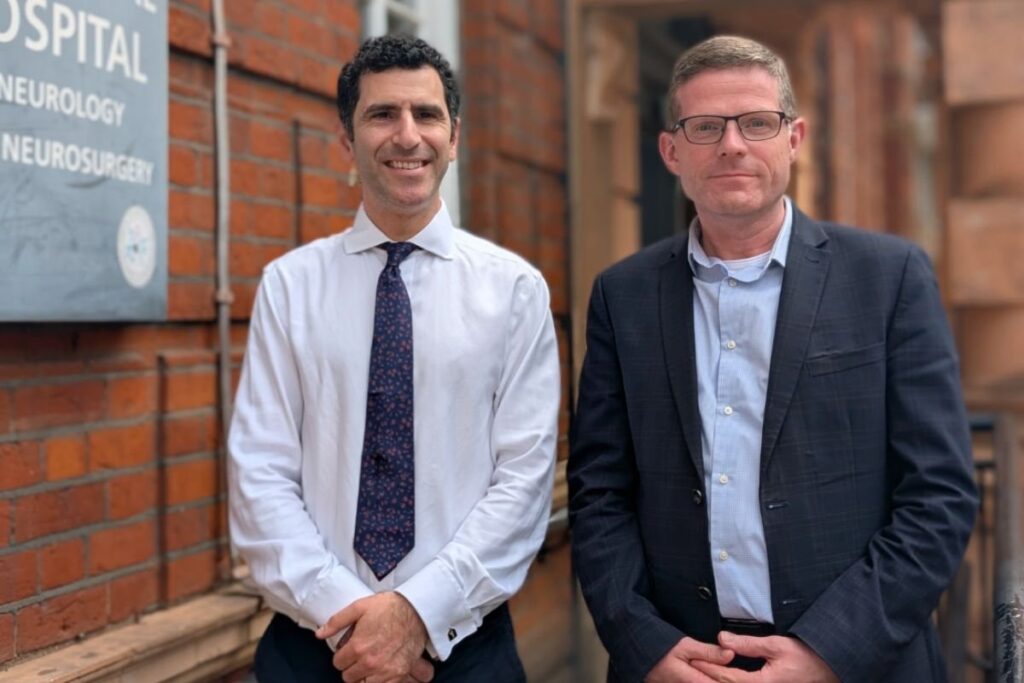
The groundbreaking procedure took place in May at the National Hospital for Neurology and Neurosurgery (NHNN), which forms part of University College London Hospitals NHS Foundation Trust. Details were only made public on Thursday to allow the patient, Rhys Hibbert, time to recover.
Read Also: Travellers win long-running planning row after pitching up on picturesque rural site
The surgical team used artificial intelligence to analyse live camera footage during the operation, identifying critical structures including nerves and blood vessels surrounding an 11mm tumour on Hibbert’s pituitary gland. Surgeons retained full control throughout, with the AI colour-coding delicate anatomy in real time to guide them safely.
Health officials warned that straying even a millimetre in this tightly packed area could result in blindness, stroke or death.

The technology had previously been deployed solely as a research tool at the hospital, making this the first occasion it was applied during a live patient procedure.
Dr Sophia Bano, an associate professor in robotics and AI at UCL who served as technical lead for the system, explained how it was trained.
“By learning from hundreds of surgical videos, [the system] has been exposed to a breadth of surgical examples that would take a surgeon many years to encounter,” she said.
“It is designed to help recognise critical anatomy, surgical instruments and tissue interactions in real time, supporting the surgeon during highly delicate procedures.”
LATEST DEVELOPMENTS:
- Shingles vaccine linked to 24% lower dementia risk in major US study
- How to live longer: Scientists warn organs age faster outside of a specific sleep window
- ‘I brushed off my symptoms for two weeks – then I had a stroke and ended up in hospital for a month’
The AI essentially functions by highlighting minute anatomical features through colour-coding, enabling surgeons to distinguish vital structures that might otherwise prove difficult to identify during complex operations.
Hibbert was first diagnosed in 2024, and his condition was initially managed without surgical intervention.
However, his symptoms – which included severe hormonal imbalance and deteriorating eyesight – progressively worsened. Without an operation, he faced the prospect of losing his vision entirely.
“When I came round, I could see everything in the room clearly,” Hibbert said. Within a week of the procedure, he was walking unaided, requiring neither glasses nor sticks.
The results were transformative, allowing him to resume his role as a customer service manager.
“It feels like I’ve got a 360degree panoramic view of everything around me,” he said, describing the dramatic improvement in his sight following the operation.
The operation was funded by the National Institute for Health and Care Research (NIHR) as part of a clinical trial.
Prof Mike Lewis, the NIHR’s scientific director for innovation, described the “pioneering surgery” as a demonstration of how advanced AI could support surgeons and enhance patient outcomes.

Hibbert himself reflected on the historical significance of the location of his operation.
“The NHNN was founded in 1859 and was the world’s first dedicated neurosurgical hospital,” he said.
“So to me, it seems very fitting that the same hospital should also be the world’s first to carry out an AI-assisted neurosurgery.”
Our Standards: The GB News Editorial Charter