
Woolly Mammoths Revival : Scientists in the United States are pushing the boundaries of genetics like never before, inching closer to bringing back the woolly mammoth—a shaggy behemoth that roamed the frozen tundras thousands of years ago.
Colossal Biosciences, a Dallas-based biotech powerhouse, leads this audacious quest, blending ancient DNA with cutting-edge editing tools to create a cold-hardy elephant hybrid that walks, looks, and thrives like its extinct ancestor.
Table of Contents
The Spark of De-Extinction
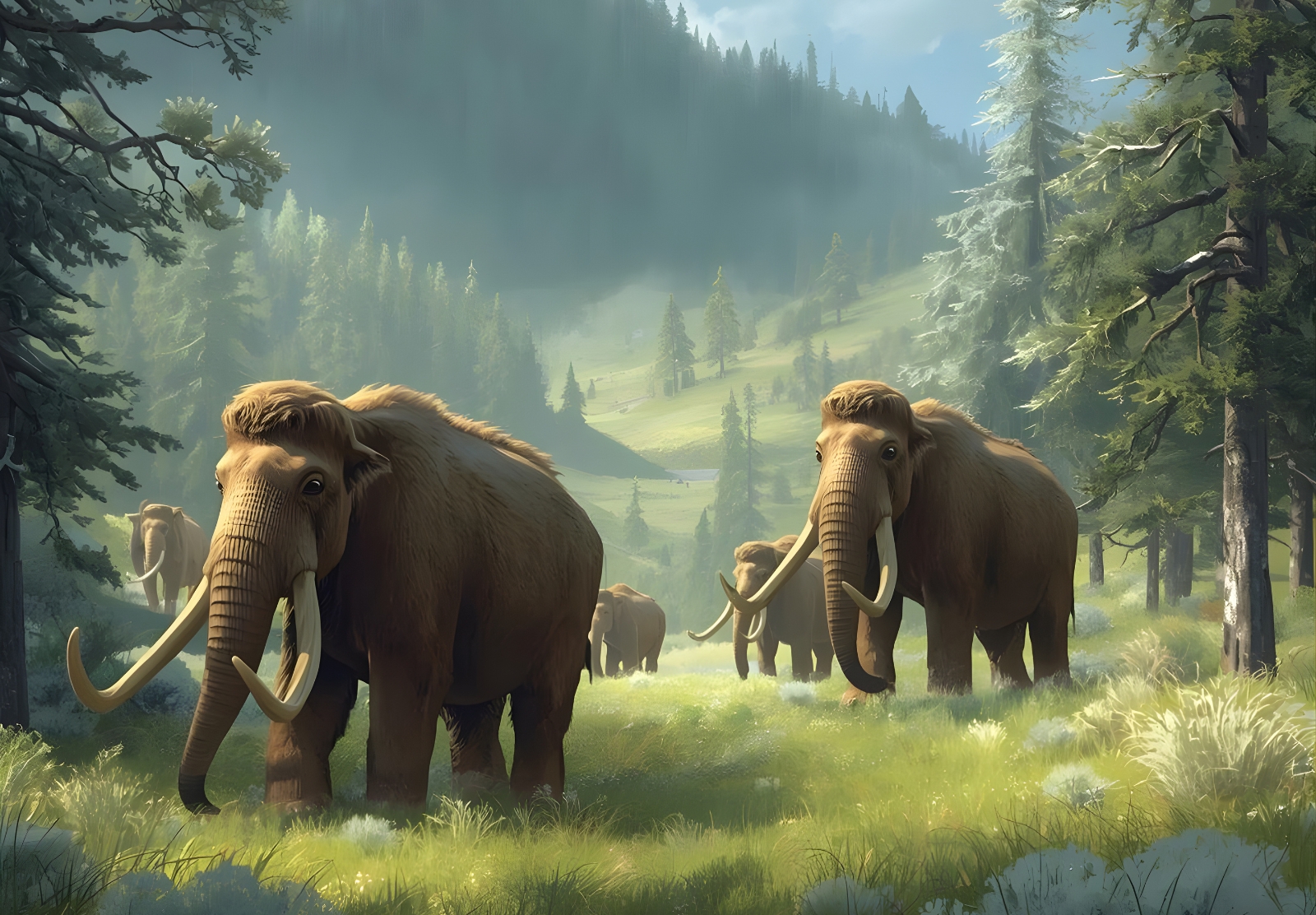
It all kicked off in 2021 when entrepreneur Ben Lamm teamed up with Harvard geneticist George Church to launch Colossal Biosciences.
Their mission? Tackle extinction head-on, starting with the woolly mammoth, which vanished around 4,000 years ago amid climate shifts and human hunting.
Unlike dinosaurs, whose DNA crumbled to dust eons ago, mammoth remains frozen in permafrost yielded viable genetic material—over 60 partial genomes, to be exact.
The team zeroed in on the Asian elephant, sharing 99.6% DNA with mammoths, as their base model. Using CRISPR—a molecular scissors for genes—they snip in mammoth traits: thick woolly fur, curved tusks, fat-packed humps for insulation, and compact ears to trap heat. Picture editing a blueprint, swapping elephant subtlety for mammoth ruggedness, all in lab-grown cells.
Breakthroughs That Turned Heads
Fast-forward to early 2025, and Colossal dropped jaws with the “woolly mouse”—genetically tweaked rodents sporting mammoth-like shaggy coats, proving their edits work in living animals.

These fuzzy critters weren’t just cute; they validated genes for cold resistance, texture, and color straight from permafrost samples.
By mid-2025, the company acquired ViaGen, a pet-cloning outfit, bolstering their embryo tech for bigger beasts.
They also pumped funds into artificial wombs at Harvard’s Wyss Institute, eyeing a surrogate-free path to mass-produce calves without stressing endangered elephants.
Church called stem cell advances from Asian elephants “the most significant step” yet, unlocking iPS cells for endless embryo trials.
How the Magic Happens in Labs
The process unfolds like a high-stakes recipe. First, scientists map mammoth genomes from frozen tusks and hides, pinpointing key edits—maybe 50-60 genes for that iconic look and Arctic prowess.
They zap these into elephant cells using CRISPR, grow stem cells, then craft embryos.Next, implant into surrogate elephants or artificial wombs.

Calves emerge not pure mammoths, but hybrids: elephant bodies bulked up for tundra life, trampling snow to shield permafrost.
Colossal’s Northeast Science Station in Russia—though geopolitics might shift rewilding spots—stands ready for testing.
Why Bring Back the Beast?
Mammoths weren’t just spectacle; they shaped their world. Herds of millions pounded the mammoth steppe, a grassland carpet from Spain to Siberia, knocking back shrubs, packing snow for winter chill, and fertilizing soils with dung.
Their absence turned vibrant plains into mossy bogs, thawing permafrost and belching carbon—fueling today’s climate woes.
Revived herds could reverse that: graze to rebuild grasslands, reflect sunlight, lock away greenhouse gases.
Colossal argues it’s ecosystem engineering at scale, with halo effects for endangered kin like elephants. Lamm boasts projects are “on track or ahead,” eyeing first calves by 2028.
Hurdles on the Tundra Path
Not everyone’s cheering. Critics like Yale’s Oswald Schmitz warn of hubris—unleashing thousands of gene-tweaked giants risks disease, aggression, or ecosystem mayhem.

Asian elephants, already scarce, can’t spare surrogacy duties forever. What if hybrids roam amok, chomping farms or sparking human-wildlife clashes like African elephants do?
Genetic bottlenecks loom too; limited DNA means inbreeding risks. And ecology’s changed—post-ice age warming might not suit these cold specialists. Skeptics say fund living species instead; de-extinction’s a billionaire distraction from proven conservation.
Ethical Tightrope and the Bigger Picture
This isn’t Jurassic Park fantasy; it’s real science weighing playing God against planetary repair. Colossal insists tech spin-offs—like better CRISPR for endangered red wolves—justify the push.
They’ve birthed dire wolf pups and boosted genetic diversity in at-risk packs, proving dual benefits.Public reaction mixes awe with dread.
Cave art from France shows ancient humans etched mammoths 20,000 years back, hinting coexistence potential. Yet, liability—who pays if a herd sparks disaster?—remains fuzzy.
Woolly Mammoths Revival The Dawn of a New Era
As February 2026 unfolds, Colossal’s labs hum with promise, edging us toward history’s rewrite. Woolly mammoths thundering across revived steppes?
It sounds wild, but science says it’s within grasp—offering tools to heal a battered planet while pondering our power over life itself. Success could spark a de-extinction boom, from dodos to thylacines, reshaping conservation forever.
SCIENCE MARVELS – READ MORE : Voyager Spacecraft Nears Historic Milestone: NASA’s Legendary Explorer on Verge of Crossing Another Major Boundary Beyond Our Solar System in Deep Interstellar Space Journey
FAQ
When will the first woolly mammoth calves be born? Colossal targets 2028 for hybrid calves via elephant surrogates or artificial wombs.
Is this a pure woolly mammoth or a hybrid? A cold-resistant elephant with mammoth traits like fur and tusks, not 100% identical due to DNA gaps.
Will mammoths fight climate change? Potentially, by restoring grasslands that insulate permafrost and store carbon.
What are the main risks? Genetic issues, ecosystem disruption, human conflicts, and ethical dilemmas.
How does Colossal get mammoth DNA? From well-preserved permafrost fossils yielding viable genomes.





Latest Comments