
Viking Skull Discovery : Archaeologists digging near Cambridge have stumbled upon a gruesome Viking-era mass grave that paints a vivid picture of violence from over a millennium ago. Among the bones lies a striking skull from an exceptionally tall young man who survived a daring ancient surgery.
Table of Contents
The Eerie Find at Wandlebury Hillfort
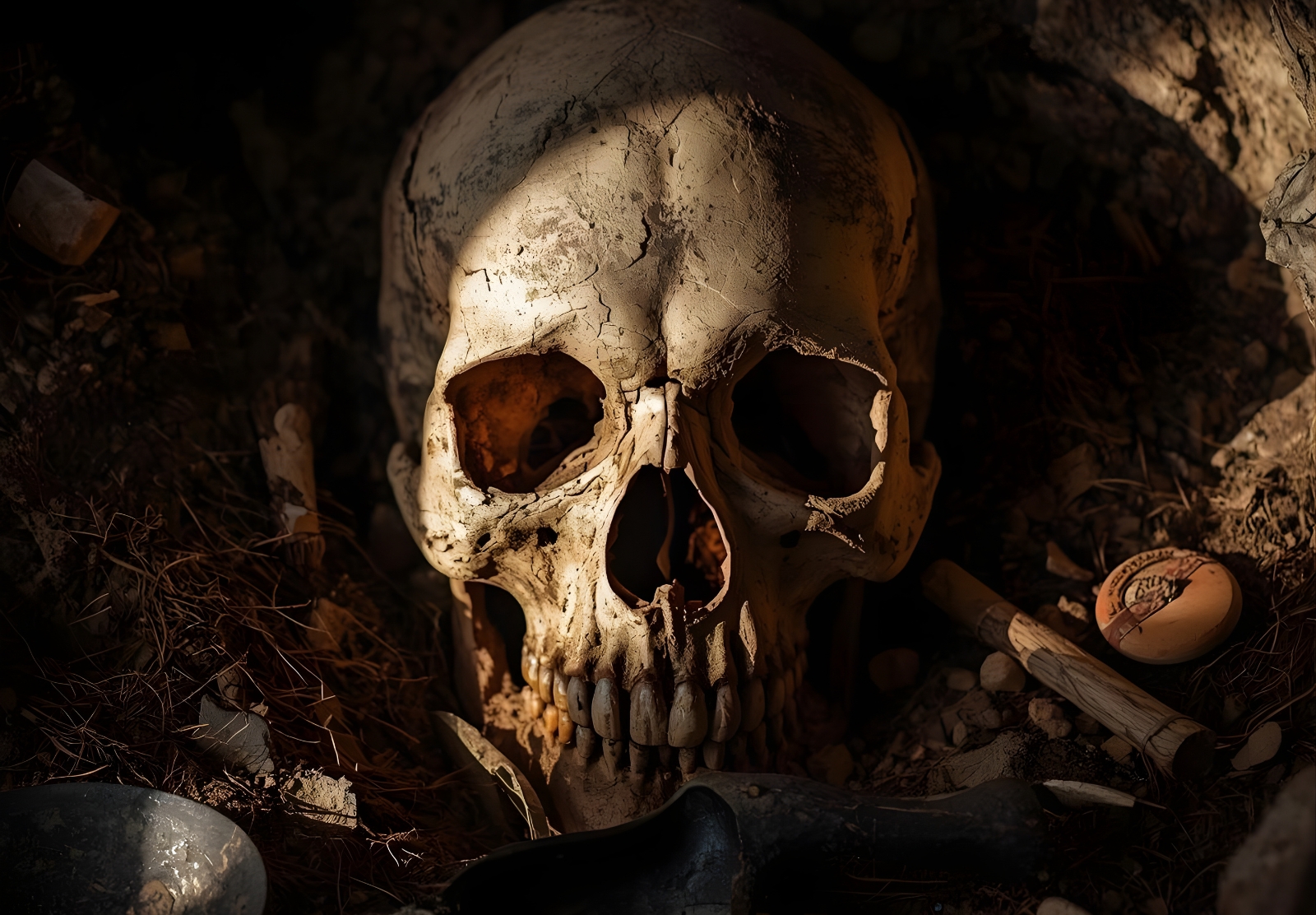
The discovery happened at Wandlebury Country Park, just south of Cambridge, during a routine training dig led by University of Cambridge students and the Cambridge Archaeological Unit (CAU).
This Iron Age hillfort, with its ancient banks and ditches, was already a known landmark, but no one expected human remains like these—first found since 1976.
The pit, about four meters long and one meter wide, held the remains of at least 10 young men, all roughly the same age.
What made it chilling was the mix: four complete skeletons, some posed as if bound, plus a cluster of skulls without bodies and a literal stack of leg bones. One skeleton showed clear decapitation marks on the jaw, hinting at execution rather than random battle carnage.
Spotlight on the Giant with the Trepanned Skull
Standing out amid the horror is the skeleton of a man aged 17 to 24, who would have towered at around 6 foot 5 inches—giant-like compared to the era’s average male height of 5 foot 6 inches.
His skull bears a 3cm oval hole drilled into the back left side, a procedure called trepanation, with clear signs of healing, meaning he lived through it.

Experts like Dr. Trish Biers from Cambridge’s Duckworth Collections suggest a pituitary tumor might have spurred excessive growth and skull pressure, prompting the surgery to ease headaches or seizures.
Trepanation wasn’t rare globally—seen in Greek, Roman, and even Peruvian remains—but this Viking-age example is a rare glimpse into early medieval medicine.
Flung face-down into the pit, this “giant” embodies the tragedy: a young warrior or victim who endured pain, only to meet a violent end.
Clues to a Bloody 9th-Century Clash
Radiocarbon dating places the pit between 772 and 891 AD, smack in the Viking invasions of England. Cambridge sat on the frontier between Saxon Mercia and Viking-controlled East Anglia, sacked around 870 AD by the Great Heathen Army.
Dr. Oscar Aldred, the dig leader, speculates the men were executed or slaughtered, possibly at this sacred meeting spot.
Dismembered parts might have been trophies displayed before burial, some already decomposing. No grave goods or battle wounds en masse point away from a straight-up fight, leaning toward punishment or ritual killing.

The site’s history adds layers—1976’s storm unearthed five similar skeletons nearby, suggesting Wandlebury was a hotspot for such grim events.
Why This Grave Stands Apart
Mass graves aren’t new for Vikings—think Ridgeway Hill’s 54 dismembered bodies from 2010—but Wandlebury’s blend of whole and chopped remains is odd. Stacks of similar bones imply deliberate sorting, perhaps by killers in haste.
Student diggers like Olivia Courtney called it sobering: “We were separated by only a few years in age, but over a thousand years in time.” Grace Grandfield echoed the shock, contrasting the peaceful park with unearthed suffering.
Peering into the Victims’ Lives
Upcoming tests promise revelations: DNA for Viking vs. Saxon origins, isotopes for diet and origin, and refitting bones to count exact victims. Kinship studies could link them to the 1976 finds.
The tall man’s growth anomaly fascinates—long limb bones confirm it, possibly tied to his brain condition. Were they local Saxons punished by Vikings, or invaders felled by locals? Answers loom.
Echoes in a Turbulent Era
This find spotlights England’s chaotic 9th century, when Vikings carved out the Danelaw through raids and settlements. Wandlebury’s hillfort likely drew crowds for gatherings, markets—or judgments.
Historic England’s Tony Calladine hailed it: “It speaks to the story of our nation and the lives of ordinary people during turbulent times.” Featured on BBC’s “Digging for Britain,” it’s captivating experts and public alike.

Modern Tech Meets Ancient Bones
Geophysical surveys now scan for more pits, funded by Historic England. The remains head to Cambridge labs for high-tech scrutiny—no easy task with fragmented, weathered bones.
Preservation in the chalky soil helped, but analysis demands care to avoid contamination. Results could rewrite local Viking history.
Broader Viking Brutality Patterns
Viking graves worldwide show violence: Denmark’s 50 skeletons with trade goods, Sweden’s 139 ship-shaped burials. But execution pits like this reveal the human cost of conquest.
Trepanation hints at sophisticated—if crude—medical knowledge amid barbarity. It humanizes these long-dead men, turning statistics into stories.
Viking Skull Discovery A Window to Forgotten Warriors
Imagine the fear: bound youths watching comrades hacked apart, heads piled high. The tall survivor, drilling his own skull for relief? These weren’t myths but flesh-and-blood people in a brutal world.
As digs continue, Wandlebury transforms from picnic spot to portal on the past.
SCIENCE MARVELS – READ MORE : Unidentified Mars Rock Baffles Experts — Is It Alien Artifact or Rare Mineral? NASA Rover Captures Astonishing Image Shaking Space Science Community
FAQ
What exactly was found in the mass grave? A mix of four complete young men’s skeletons, dismembered skulls, leg stacks, and other bones from at least 10 individuals.
Who was the man with the skull hole? A 17-24-year-old standing 6’5″, likely with a pituitary tumor; trepanation relieved brain pressure, and he survived it initially.
When and where did this happen? 9th century AD at Wandlebury near Cambridge, during Viking-Saxon wars.
Vikings or Saxons? Too early to say; DNA tests pending to check ancestry.
Why the weird mix of whole and chopped bodies? Possibly executions with trophy displays later buried together.
What’s next for the bones? DNA, isotope analysis, and refitting to uncover origins, health, and exact count.







Latest Comments