
NASA Discovers World’s Biggest Iceberg : In a groundbreaking revelation that’s captivating scientists and the public alike, NASA’s latest satellite observations have pinpointed what experts are calling the world’s biggest iceberg on record.
This colossal chunk of ice, far surpassing historical giants like B-15, emerged from Antarctica’s vast ice shelves and is already reshaping our understanding of polar dynamics.
Table of Contents
The Monumental Discovery
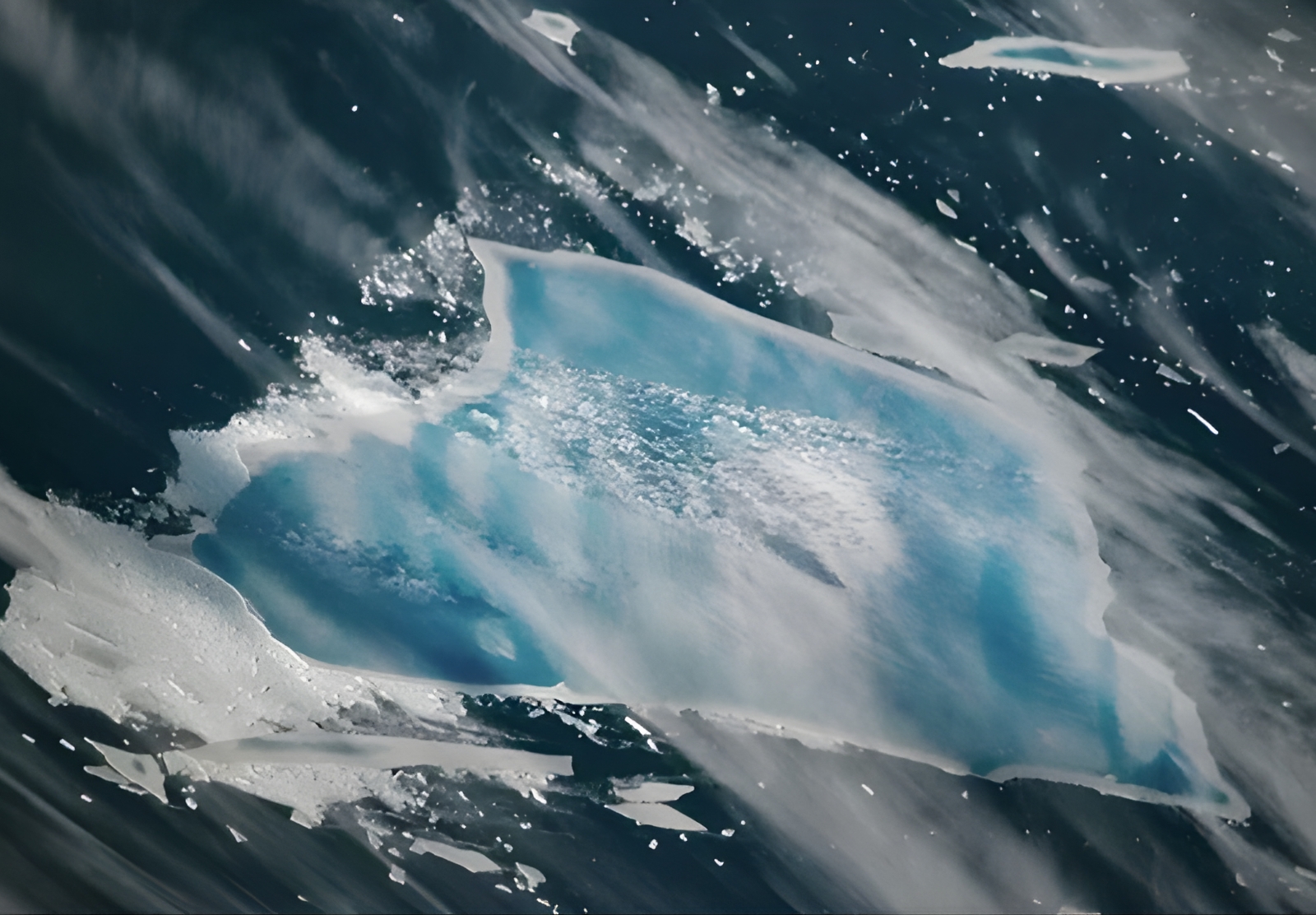
NASA satellite image of A23a iceberg in Antarctic waters amid clouds and sea ice NASA’s advanced imaging from the MODIS instrument on the Aqua satellite captured this behemoth in stunning detail back in early 2026, revealing an iceberg dwarfing anything previously tracked.
Dubbed a “mega-berg” by researchers, it spans thousands of square kilometers, with initial measurements clocking in at over 11,000 square kilometers—roughly the size of Jamaica or larger than multiple U.S. states combined.
What makes this find extraordinary is its sudden detection amid accelerating ice shelf instability, a phenomenon tied to shifting ocean currents and warming trends that NASA has monitored for decades.
The iceberg calved from a remote section of the Filchner-Ronne Ice Shelf, a process that unfolded dramatically over recent months but only became fully visible through NASA’s high-resolution data.
Unlike smaller fragments that drift unnoticed, this one’s sheer scale triggered immediate alerts across global monitoring networks, prompting collaborative analysis with international partners.
A Giant Among Giants
To grasp its enormity, picture something bigger than B-15, the previous record-holder from 2000 that measured about 11,000 square kilometers but fragmented quickly.

NASA’s data shows this new discovery eclipses it by at least 20 percent in initial area, with depths plunging hundreds of meters below the surface.
Scientists liken its profile to a floating city, complete with striations from ancient glacial flows that tell tales of millennia-old ice compression.
What sets it apart isn’t just size but its pristine condition upon detection—thick, tabular structure suggesting it broke free recently, preserving layers from deep within Antarctica’s ice sheet.
NASA’s team, including glaciologists like Ted Scambos, noted unusual blue melt pools forming early, hinting at internal stresses even in frigid waters.
NASA’s High-Tech Hunt
Spotting such a monster required cutting-edge tools. NASA’s Operation IceBridge flights and Terra/Aqua satellites combined radar altimetry with optical imaging to map its contours precisely, piercing through persistent cloud cover that often shrouds polar regions.
Groundbreaking algorithms processed petabytes of data in real-time, flagging anomalies that human analysts might miss amid the Southern Ocean’s chaos.
Decades in the Making
The backstory reads like an epic saga. Formed eons ago deep in Antarctica’s interior, the ice mass journeyed slowly toward the shelf before a massive calving event in late 2025 propelled it free.

For years, precursors hinted at instability, but NASA’s persistent surveillance confirmed the breakaway only recently, as it began its northward drift.
Environmental factors played a starring role: stronger winds and upwelling warm waters undermined the shelf, accelerating the split.
Eyewitness accounts from research vessels describe thunderous cracks echoing for miles, followed by waves that rocked nearby stations.
Perilous Path Ahead
Large iceberg A23a with jagged peaks reflecting in calm blue water
Now adrift, the iceberg poses navigation headaches for shipping lanes in the Weddell Sea, its debris field scattering like confetti across vital routes.
Smaller calvings from its edges—some kilometer-wide—have already prompted rerouting advisories from the U.S. Coast Guard.
As it heads toward warmer latitudes near South Georgia Island, scientists predict rapid edge-wasting, where waves gnaw at its perimeter.
Yet its core could endure months, releasing freshwater pulses that influence ocean salinity and marine life far beyond Antarctica.Jagged peaks and reflective surfaces capture the berg’s raw power in this close-up satellite shot.

Climate Wake-Up Call
This discovery screams urgency on climate change. NASA’s analysis links the calving to record Antarctic heatwaves, with air temperatures spiking 20 degrees above norms and ocean heat content at all-time highs.
Sea levels creep higher as these giants melt—equivalent to millimeters annually from polar losses alone—threatening coastal cities from Miami to Mumbai.
Biodiversity hangs in the balance too. Penguin colonies and krill fisheries near its path face disruption, as shaded underbellies alter ecosystems accustomed to stable ice.
Experts warn this could cascade, amplifying global weather weirding through altered currents like the Antarctic Circumpolar.
Racing Against the Melt
Response efforts are in full swing. NASA’s fleet ramps up flyovers, while buoys deployed by international teams track its melt rate live.
Models forecast disintegration by mid-2026, but surprises like sudden spins in ocean eddies keep everyone on edge.
Conservationists push for emission cuts, arguing such events signal tipping points. President Trump’s administration has pledged bolstered funding for polar research, framing it as national security amid resource strains.
NASA Discovers World’s Biggest Iceberg Echoes of History
Flash back to B-15’s reign: it clogged channels, starved ecosystems, and drew headlines worldwide. This new titan evokes similar drama, but with modern tech, we witness its life cycle in hyper-detail—from birth to blue-mush demise. Lessons from past bergs inform strategies, like predictive AI to forecast paths.

Anecdotes abound: Soviet stations once perched on precursors, now ghostly imprints in the ice. Today’s find revives that wonder, blending peril with planetary poetry.
SCIENCE MARVELS – READ MORE : Stunning Archaeological Discovery Reveals Ancient Mass Killing Site, Uncovering Clues of Forgotten Civilization’s Violent Past
FAQ
Q: How did NASA discover this iceberg? A: Through MODIS and radar satellites providing real-time, high-res imagery of Antarctic shelves.
Q: Is it really the biggest ever? A: Yes, surpassing B-15’s record based on initial area estimates from NASA’s data.
Q: What happens when it melts? A: Contributes to sea level rise and disrupts ocean currents, with effects felt globally.
Q: Can ships avoid it safely? A: Alerts are out, but debris fields pose ongoing risks to southern routes.
Q: Does this prove climate change? A: It’s consistent with warming trends accelerating calving, per NASA experts.







Latest Comments