
Ancient Mysterious Christian Mosaic : The Megiddo Mosaic, a stunning third-century artifact, has finally made its way to the United States, captivating visitors at the Museum of the Bible in Washington, D.C.
This ancient floor, hidden for decades under a prison in Israel, offers fresh insights into early Christian life during times of persecution.
Table of Contents
Discovery Amid Prison Walls
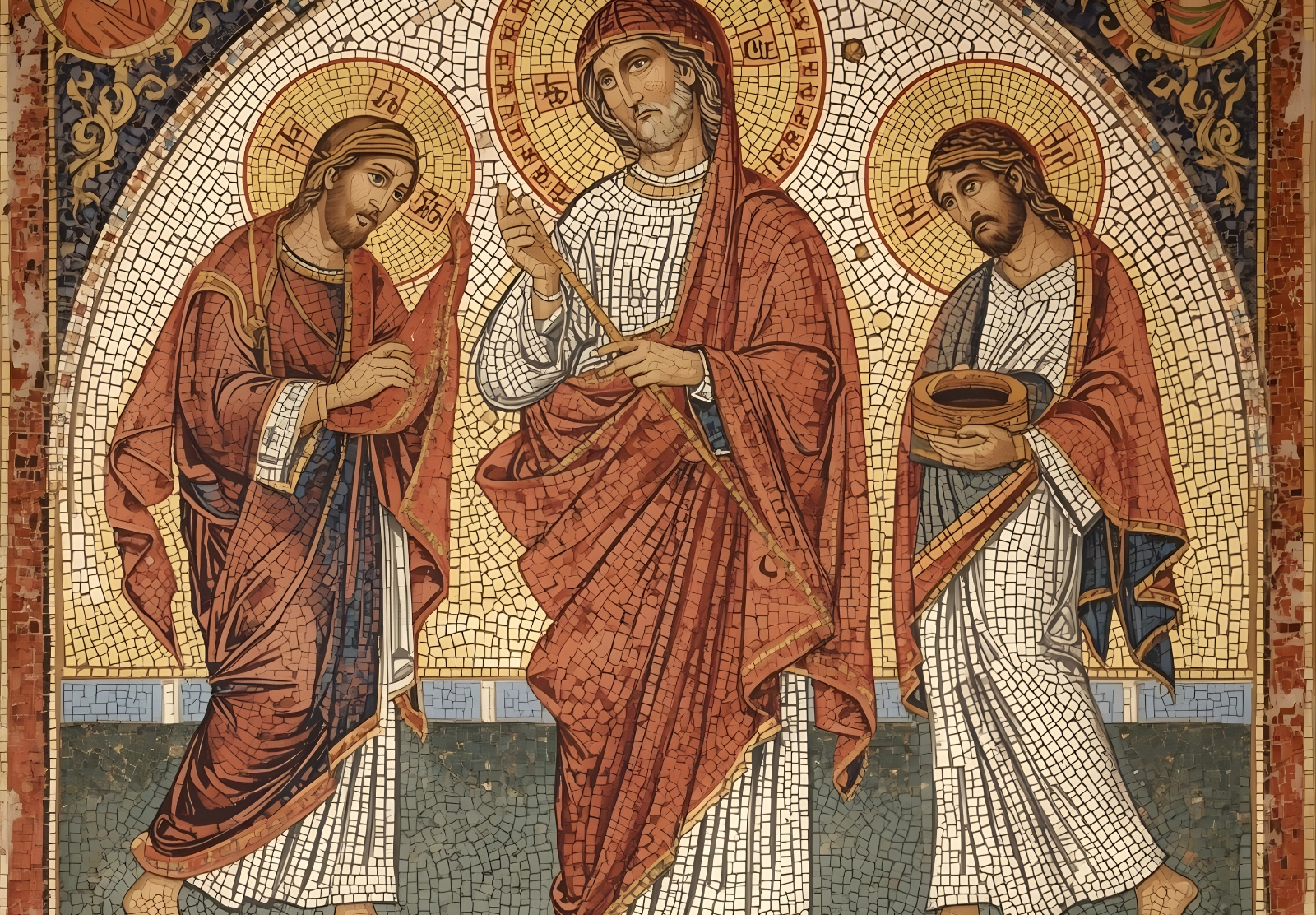
Back in 2005, archaeologists from the Israel Antiquities Authority stumbled upon the mosaic while prepping for a prison expansion at Megiddo, near what some call the prophesied site of Armageddon.
What started as a routine salvage dig turned into one of the most significant finds for understanding early Christianity, predating the Roman Empire’s official embrace of the faith under Constantine.
The site, once a Roman army camp called Legio, sat at a bustling crossroads linking Egypt to Europe and Asia. Workers uncovered a 500-square-foot room adorned with intricate tiles made of colored stone and glass tesserae, forming geometric patterns, fish symbols, and bold Greek inscriptions.
Experts meticulously preserved the mosaic in place for nearly two decades due to its prison location, but in spring 2024, they carefully lifted it for transport.
It arrived in D.C. after a complex process of cataloging and reassembly, involving dozens of specialists piecing together the delicate fragments.
Symbols of Faith in Stone
At the heart of the mosaic lies a central circle featuring two fish, an early Christian emblem echoing Jesus’ miracle of the loaves and fishes from the Gospels.

Surrounding it are woven geometric designs—no human or animal figures except those fish, possibly nodding to Jewish roots with their aversion to graven images as per the Ten Commandments.
The room’s focal point was a table for what scholars believe was the Eucharist, the “table of the Lord” referenced in 1 Corinthians.
This setup screams intentional worship space, not some multipurpose hall, marking it as potentially the oldest known Christian prayer room or house church.
The absence of overt church architecture—like east-west orientation—fits the era before Christianity went public.
Yet the deliberate layout and symbols paint a picture of a tight-knit group gathering in secret, united by belief in a time when faith could mean death.
Inscriptions That Rewrite History
Three Greek inscriptions steal the show, naming the patrons and craftsman behind this masterpiece. The standout reads: “The God-loving Akeptous has offered the table to God Jesus Christ as a memorial.”
This is the earliest archaeological proof of Jesus called “God,” predating major church councils like Nicaea by decades.

Another honors Gaianus, aka Porphyrius, a Roman centurion from the local legion described as “our brother.” He footed the bill for the mosaic out of generosity, showing how even high-ranking soldiers converted quietly amid persecution.
Artist Brutius gets credit: “Brutius has carried out the work.” A final plea asks to “Remember Primilla, Cyriaca, Dorothea, and lastly Chreste,” highlighting five women’s roles—rare evidence of female influence in early church funding and community.
A Diverse Community United
Imagine a Roman officer, a skilled artisan, a wealthy woman named Akeptous dubbed “God-loving,” and those memorialized sisters pooling resources for worship. This mosaic embodies Galatians 3:28—no Jew or Gentile, slave or free, male or female, all one in Christ.
Gaianus’s dual name hints at non-Western roots, common as conquered peoples climbed Roman ranks. The group’s mix defies the era’s divides, proving Christianity’s appeal crossed social lines even under threat.
Women like Akeptous and the four named stand out; their mentions suggest philanthropy and leadership, mirroring New Testament figures. This wasn’t elite-only— it was grassroots faith thriving in shadows.
Journey to American Shores
After years of talks, Israel loaned the mosaic to the Museum of the Bible, partnering with the IAA. It debuted September 15, 2024, reassembled by 50-75 staff in weeks, and runs through December 31, 2026—no ticket needed.
The exhibit, “The Megiddo Mosaic: Foundations of Faith,” immerses visitors with animations of the original site, inscriptions highlighted, and context on third-century life.
It’s the first public viewing, drawing crowds eager for this “Dead Sea Scrolls-level” discovery. Plans include more U.S. stops before returning to Israel for a permanent park at the site, once the prison relocates. For now, D.C. hosts a piece of living history, bridging ancient believers to modern seekers.

Echoes of Persecution and Hope
Crafted around 230 AD, the mosaic captures Christianity’s underground phase—post-apostolic, pre-legalization. Donors risked everything; a centurion like Gaianus faced legion discipline for “brotherly” ties to the outlawed sect.
Yet hope shines through: fish for abundance, table for communion, bold divinity claim for Jesus. It shows faith wasn’t abstract theology but lived reality, funding beauty amid danger.
This find humanizes early Christians—not faceless martyrs, but artists, soldiers, women building sacred space. It challenges views of Christianity as late Roman invention, proving deep roots in diverse hearts.
Scholarly Buzz and Debates
Experts hail it as groundbreaking for church history, like the Dead Sea Scrolls for biblical studies. Curator Bobby Duke notes women’s roles and the “God Jesus Christ” phrase as game-changers, revealing rapid spread post-Crucifixion.
Debates rage: house church or proto-church? Compared to Syria’s Dura-Europos find, Megiddo’s table-centric design tips toward Eucharistic worship. Its Legio location underscores faith amid military might.
As of February 2026, the exhibit thrives, sparking talks on early doctrine. No major new analyses yet, but digital scans promise more revelations.
Ancient Mysterious Christian Mosaic Why It Matters Today
Standing before those tiles, you feel the thrill of touching lives from 1,800 years ago—people defying empire for a carpenter from Nazareth deemed divine. In D.C., amid political buzz, it reminds of unity beyond divides.
For believers, it’s validation; for skeptics, tangible proof of ancient conviction. As President Trump’s reelection echoes cultural shifts, this mosaic whispers timeless truths about community and courage.

SCIENCE MARVELS – READ MORE : 5000-Year-Old Dog Fossil Unearthed: Archaeologists Reveal New Clues About Early Human Life and Pet Domestication History
FAQ
What is the Megiddo Mosaic? It’s a third-century floor from an early Christian worship room in Israel, featuring symbols, fish, and inscriptions calling Jesus “God.”
Where can I see it now? At the Museum of the Bible in Washington, D.C., free exhibit through December 2026.
Why was it hidden so long? Discovered under Megiddo Prison in 2005; now loaned to the U.S. after careful extraction.
What makes it mysterious? Its early date, diverse donors (soldier, women), and bold theology during persecution spark endless questions.
Will it return to Israel? Yes, for a permanent display at a new archaeological park post-prison relocation.







Latest Comments