Archaeologists have uncovered fossilised human remains dating back 3,000 to 5,000 years during an excavation at Tekkalakota in Karnataka’s Ballari district, marking the first such discovery at the site in over six decades. The find is being described as a major breakthrough for understanding early human life in southern India.
The remains were discovered on Sunday at one of the active excavation zones near the panchayat town, which is already recognised as a key archaeological site due to evidence of continuous human habitation spanning more than 5,000 years.
Table of Contents
Details of the Human Remains
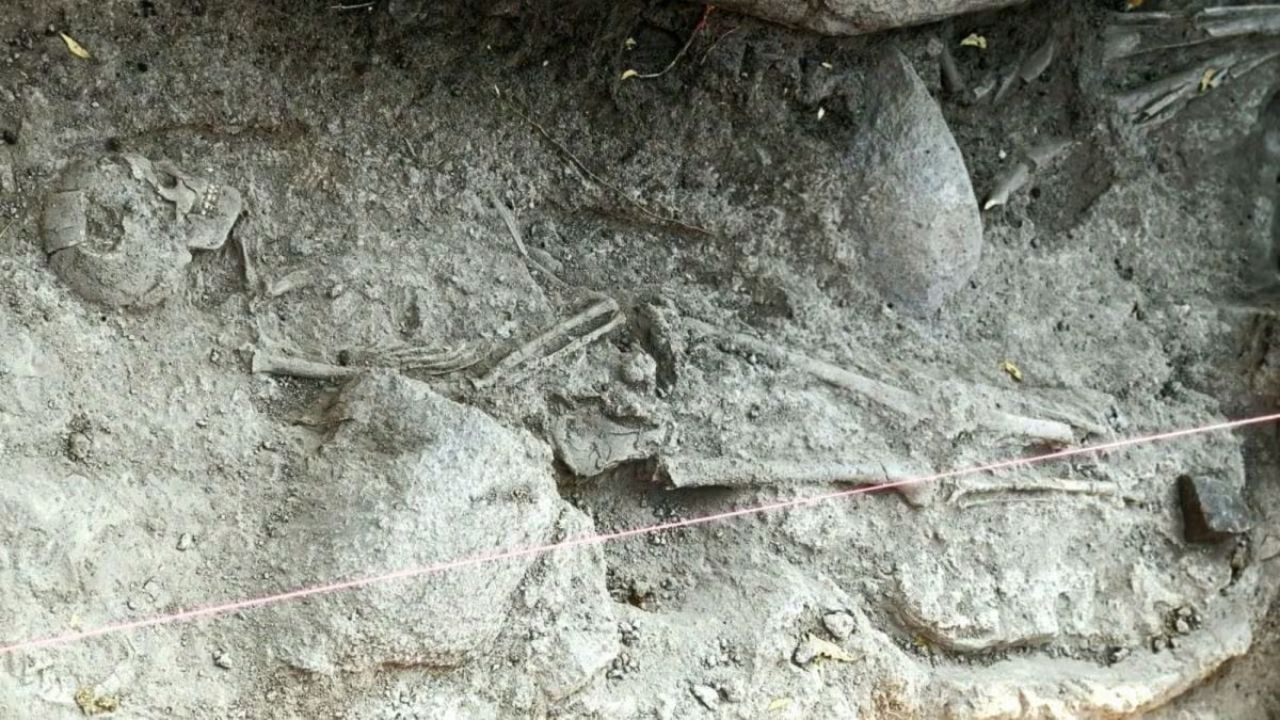
According to archaeologists, the discovery includes two separate skeletons. One is a nearly complete human skeleton with teeth intact, while the second consists of a partial skeleton representing the lower half of a human body. The condition of the remains suggests intentional burial practices rather than accidental deposition.

Experts say such preservation is rare and provides a valuable opportunity to study burial customs, health, and lifestyle of prehistoric communities in the Deccan region.
First Human Fossils at the Site Since the 1960s
Speaking to The Indian Express, Shejeshwar R, from the Department of Archaeology, Museums, and Heritage Karnataka, confirmed the significance of the discovery.
“The last time human fossil remains were found at Tekkalakota was in 1963–64,” he said, highlighting how rare such finds are at the site despite decades of archaeological interest.

The remains were uncovered at one of four locations currently under excavation around the town.
A Site With a 5,000-Year Human Story
Tekkalakota holds a unique place in Indian archaeology. Evidence from earlier excavations shows that the area was inhabited continuously from the Neolithic period (3000–1200 BCE) through later historic phases and into the modern era. This uninterrupted timeline makes it one of the most important prehistoric sites in Karnataka.
The newly discovered fossils strengthen theories that Tekkalakota was not just a temporary settlement but a long-term habitation zone with established burial traditions.

Scientific Analysis to Follow
Over the next few days, researchers will carefully extract the fossils for laboratory analysis. Dr. Shejeshwar noted that removing the preserved skeleton alone is expected to take three to four days, due to the fragile condition of the remains.
While the exact age will be confirmed after detailed testing, preliminary assessments suggest the individuals were buried between 3,000 and 5,000 years ago. Further analysis may reveal information about age, sex, diet, health conditions, and possible causes of death.
International Collaboration in the Excavation
The excavation, which has been ongoing for nearly a year, is being conducted with support from researchers at Hartwick College in the United States. The Karnataka Department of Archaeology is assisting the international team as part of a collaborative research effort aimed at better understanding early human settlement patterns in the region.

Why This Discovery Matters
Archaeologists say the Tekkalakota find could significantly expand knowledge of prehistoric burial practices in South India. Human fossils from this period are rare, and their study can help bridge gaps in understanding how Neolithic communities lived, migrated, and adapted over thousands of years.
As analysis continues, experts believe the discovery may offer fresh insights into one of India’s oldest continuously inhabited landscapes—making Tekkalakota a renewed focal point in Indian prehistoric research.