In the heart of the Sahara Desert, where sand seas stretch to the horizon and the sun scorches the earth, a team of scientists has done the impossible. They have pulled a monster from the depths of time. A dinosaur so strange, so fearsome, and so unexpected that it has been likened to a creature from hell.
Meet Spinosaurus mirabilis. A 95-million-year-old predator with a blade-like crest on its head, teeth that formed a lethal snare, and a lifestyle that defies everything we thought we knew about spinosaurs.
This is the story of a discovery made possible by a 70-year-old note, a Touareg guide, and a team that refused to give up.
Table of Contents
The Astonishing Find: A Blade in the Sand
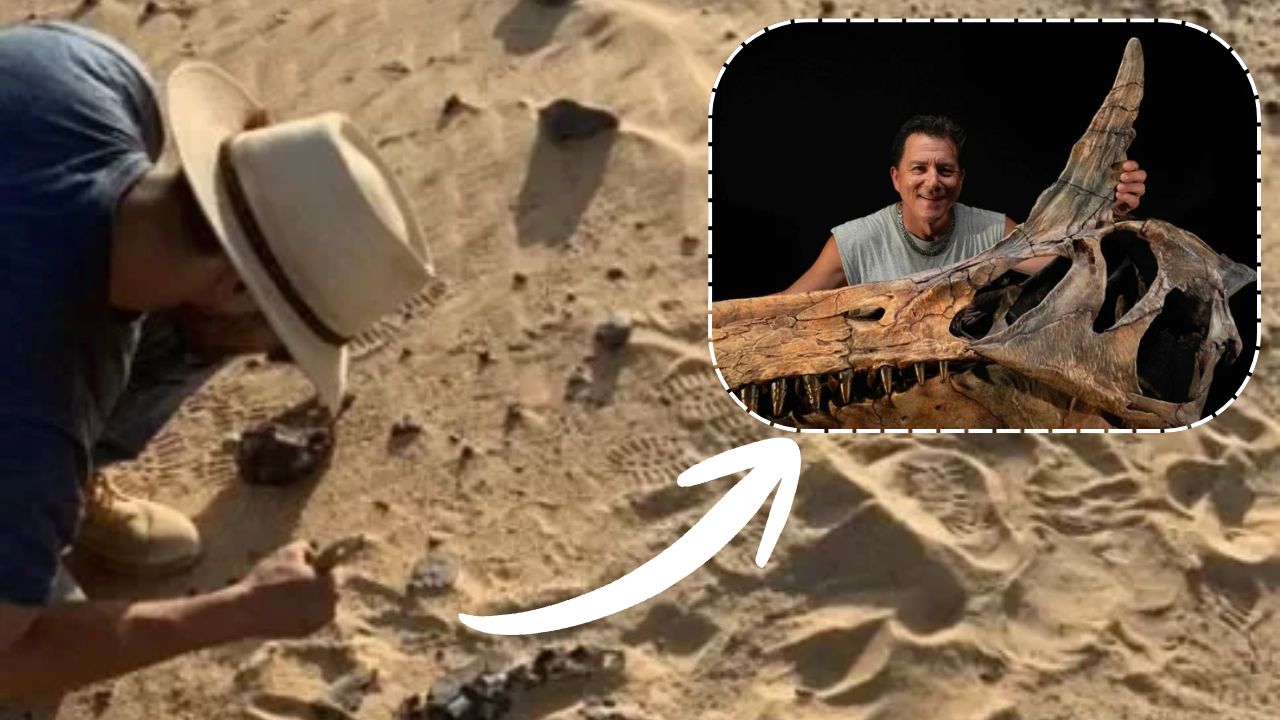
The journey began with a whisper from the past. A French geologist, working in Egypt’s Western Desert in the 1950s, mentioned finding a fossilized tooth. The note was brief, the location vague. For decades, it sat in archives, forgotten.
But Professor Paul Sereno of the University of Chicago does not forget. He traced the clue to its source. When his team arrived in the region, they encountered a local Touareg man. He had seen something strange deep in the sands. Enormous bones, unlike anything he had ever encountered.
The journey to the fossil field took nearly an entire day. When they arrived, they found teeth and jaw bones. But the real shock came later.
In 2019, the team uncovered a skull fragment with an extraordinary feature: a blade-shaped crest curving up like a scimitar. It was so unexpected that researchers initially failed to recognize what they had found. Two more crests emerged in 2022. The truth became undeniable.
They had discovered a new species.

The findings have now been published in the journal Science.
What the Crest Reveals: A 20-Inch Signal in Color
The crest measured approximately 20 inches long. Scientists believe it would have been covered in keratin, the same protein found in rhinoceros horns and human hair. Keratin can produce vivid colors, suggesting the crest was a display structure.
But a display for whom? For what purpose?
The leading hypothesis is species recognition and mating. In a world of giant predators, being able to identify your own kind quickly and accurately would be essential. The crest may have flashed bright colors, signaling identity, fitness, and dominance.
It may also have been used in combat or competition. Males might have sparred with their crests, wrestling for territory or mates. The scimitar shape suggests something more than mere decoration.
The Teeth: A Lethal Snare for Slippery Prey
Spinosaurus mirabilis belongs to the spinosaurid family, a group of dinosaurs known for their crocodile-like skulls and taste for fish. This new species takes that adaptation to another level.
Its teeth were interlocking, forming a perfect trap. Once a fish was caught, there was no escape. The teeth functioned like the bars of a cage, holding slippery prey in place while the dinosaur maneuvered it for swallowing.
This is not the dentition of a land-bound hunter chasing dinosaurs through the forest. This is the equipment of a specialized fisher, perfectly adapted to exploiting aquatic resources.
The “Hell Heron”: A New Vision of Spinosaur Life
Prior to this discovery, spinosaurid fossils had mostly been recovered from coastal deposits near ancient shorelines. This led some experts to conclude they were entirely aquatic, hunting exclusively beneath the water like giant crocodiles.
Spinosaurus mirabilis shatters that picture.
The site where it was found is inland, hundreds of miles from any ancient coast. This animal lived in forested river environments, patrolling the waterways of the Sahara when it was green and lush.
Professor Sereno paints a vivid picture:
“I envision this dinosaur as a kind of ‘hell heron’ that had no problem wading on its sturdy legs into two meters of water. But it probably spent most of its time stalking shallower traps for the many large fish of the day.”
The “hell heron” was an ambush predator. It stood in the shallows, waiting. When a fish swam close, the interlocking teeth did the rest. It was a hunter of edges—where land met water, where patience met opportunity.
Global Implications: Rewriting the Spinosaur Map
This discovery expands the known range and ecology of spinosaurs dramatically. They were not confined to coastlines. They penetrated deep into continents, following river systems and adapting to inland environments.
The Sahara 95 million years ago was a very different place. It was crossed by rivers, dotted with forests, and teeming with life. Spinosaurus mirabilis was one of the apex predators of that world.

The find also raises new questions. How many other spinosaur species remain hidden in unexplored sediments? What other adaptations did they evolve? The spinosaur family tree just got a new branch—and it may not be the last.
The Emotional Moment: Crowded Around a Laptop in the Desert
Professor Sereno describes the discovery in terms that go beyond science. It was personal. It was emotional.
“This find was so sudden and amazing, it was really emotional for our team. I’ll forever cherish the moment in camp when we crowded around a laptop to look at the new species for the first time.”
The team generated 3D digital models of the bones to reconstruct the skull—using solar power in the middle of the Sahara. When the pieces came together on screen, the significance registered.
“That’s when the significance of the discovery really registered.”
It was an adventure and a half. A journey into the sand seas, guided by a local man who knew the land better than any map. A search that traced back to a 1950s note. A discovery that will be studied for generations.
What This Means for History: The Monster Lives
Spinosaurus mirabilis is now part of the fossil record. Its bones will be studied, its crest analyzed, its teeth measured. But its true legacy is the questions it forces us to ask.
How did such a bizarre creature evolve? What was its world like? Who were its competitors, its prey, its predators?
The Sahara, now one of the most inhospitable places on Earth, was once a land of giants. Rivers flowed where sand now drifts. Forests stood where nothing grows. And through it all, a dinosaur with a blade on its head stalked the shallows, waiting for its next meal.
The “hell heron” has returned from 95 million years of silence. And it is every bit as terrifying as we imagined.
In-Depth FAQs: Your Questions Answered
1. How was Spinosaurus mirabilis discovered?The discovery traces back to a 1950s note from a French geologist mentioning a fossil tooth in Egypt’s Western Desert. Professor Paul Sereno’s team followed this clue, aided by a local Touareg guide who led them to a remote fossil site. After a full day’s journey into the sand seas, they found teeth and jaw bones. The crest was first spotted in 2019, with additional specimens confirming the new species in 2022.
2. What is the purpose of the blade-like crest?Scientists believe the 20-inch crest was covered in colorful keratin and used primarily for display—species recognition and mating. It may also have been used in combat between males. The vivid colors would have made it a highly visible signal in the riverine environments where the dinosaur lived.
3. How did Spinosaurus mirabilis hunt?It was an ambush predator specializing in fish. Its interlocking teeth formed a cage-like trap, perfect for holding slippery prey. Professor Sereno describes it as a “hell heron”—wading into shallow water, stalking fish, and striking when opportunity arose. It likely spent most of its time in and around rivers, not chasing prey on land.
4. Does this discovery change what we know about spinosaurs?Yes, dramatically. Previously, spinosaur fossils were mostly found in coastal deposits, leading some to believe they were entirely aquatic. This new species was found inland, hundreds of miles from any ancient coast, proving they also inhabited river systems deep within continents. It expands their known ecology and range.
5. What was the Sahara like when Spinosaurus mirabilis lived?The Sahara 95 million years ago was green and lush. It was crossed by rivers, dotted with forests, and teeming with life. The climate was wetter, supporting ecosystems that could sustain giant predators. This dinosaur lived in a world of water and vegetation, not the endless sand seas we see today.