For generations, we told ourselves a simple story. First came the primitive ones, the small-brained Homo habilis, carrying simple stone tools. They wandered out of Africa around 1.8 million years ago, reaching Dmanisi in Georgia. Then, much later, came the big-brained, brawny Homo erectus, armed with sophisticated hand axes, colonizing Asia in a second wave.
It was neat. It was linear. It was wrong.
A revolutionary new study from the prehistoric site of Ubeidiya in Israel’s Jordan Valley has shattered that tidy narrative. The evidence now suggests that at least two different hominin species walked out of Africa together, more than 1.9 million years ago. They were different. They carried different toolkits. And they may have competed, coexisted, and even interbred across the ancient landscape.
This is the story of humanity’s first, chaotic, and utterly transformative family reunion.
Table of Contents
The Astonishing Find: Ubeidiya Is 400,000 Years Older Than We Thought
The site of Ubeidiya, located just south of the Sea of Galilee, has been known to archaeologists since the 1960s. Excavations revealed a treasure trove: flint tools, animal bones, and a few rare hominin remains, all preserved on the marshy shores of an ancient lake. For decades, researchers dated the site to around 1.5 million years ago, based on relative chronology—comparing tools and fossils to other known sites.
That date has now been blown out of the water.
A team led by Prof. Ari Matmon of the Hebrew University of Jerusalem applied cutting-edge absolute dating techniques to the site. They used three different methods, including a spectacularly precise technique called cosmogenic isotope burial dating. This measures rare isotopes created when cosmic rays strike quartz crystals in sediments. By measuring their decay, scientists can determine exactly when those sediments were buried.
The result? Ubeidiya formed between 1.93 and 2.13 million years ago —at least 400,000 years older than previously believed.
The findings, published in the journal Quaternary Science Reviews, sent shockwaves through the paleoanthropological community.

Two Species, Two Toolkits, One Migration
The new date matters because of what was found at Ubeidiya. The stone tools there are not the simple Oldowan flakes and choppers associated with early Homo habilis. They are Acheulian—a more sophisticated toolkit that includes bifacial hand axes and mysterious stone spheroids whose purpose still baffles researchers .
The Acheulian is traditionally linked to Homo erectus, the larger-brained, larger-bodied hominin that would go on to colonize vast swaths of Asia. And indeed, the few hominin remains found at Ubeidiya—including a vertebra—have been assigned to Homo erectus.
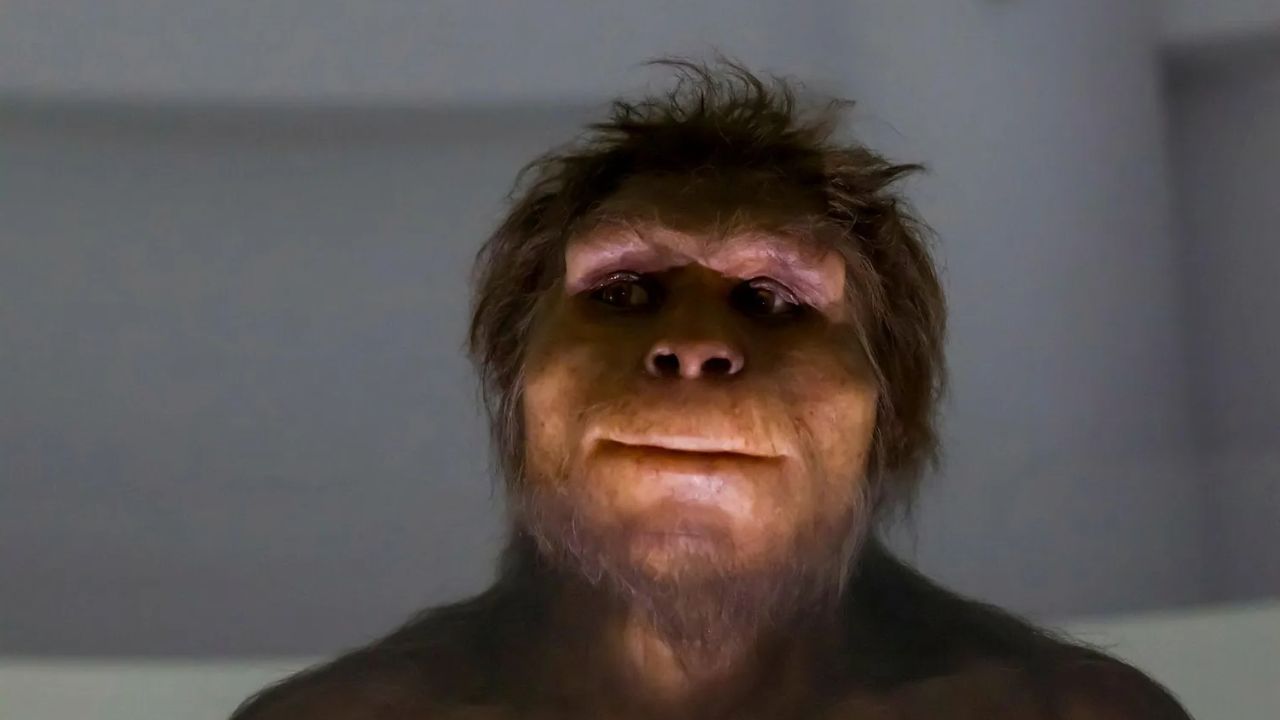
But here’s the catch. At roughly the same time, another hominin was also leaving Africa. The famous Dmanisi site in Georgia, dated to about 1.8 million years ago, contains remains of small-bodied, small-brained individuals. Some call them early Homo erectus. Others see Homo habilis. Still others give them a local name: Homo georgicus. Their tools are Oldowan, not Acheulian.
For decades, the timeline seemed clear: habilis first, erectus later. But Ubeidiya now shows that erectus was already in the Levant, wielding Acheulian axes, at the same time that habilis (or its close relative) was settling the Caucasus.
Prof. Omry Barzilai of Haifa University, a leading archaeologist involved in the Ubeidiya research, put it bluntly:
“Homo erectus and habilis left Africa together, not one after the other. There were two hominins with different cultural traditions.”
Global Implications: A World Crawling with Hominins
The Ubeidiya redating does not stand alone. Across Eurasia, evidence is accumulating that the first hominin dispersals were far earlier and more complex than anyone imagined.
Just last week, another team using the same cosmic-ray dating technique reported that skulls from Yunxian in central China—previously dated to around 1 million years ago—are actually 1.77 million years old . Acheulian tools have been found in Tamil Nadu, India, dating to 1.7 million years ago , and in Romania as far back as 2 million years ago .
The picture coming into focus is astonishing. By around 2 million years ago, Eurasia was crawling with hominins. Different species, different toolkits, different body plans—all spreading across the landscape, following the herds, adapting to new environments.

Barzilai explains:
“We thought things were linear, that there was a specific order in the exit from Africa. First Homo habilis with the Oldowan, which you see at 1.8 million years ago in Dmanisi, and then, much later, the erectus with the Acheulian tools.”
That model is now dead.
What the Animals Tell Us: A Mass Migration
The Ubeidiya site also contains bones of African fauna—macaque monkeys, antelopes, and other species that originated in Africa. Their presence alongside hominins suggests that what occurred more than 1.9 million years ago was not a single species’ journey, but a mass, multi-species migration.
This was likely facilitated by periodic “green Sahara” windows, when climatic changes made the deserts of Africa and Arabia more hospitable, creating corridors of grassland and savanna that animals—and the hominins who hunted them—could follow.
Barzilai draws the logical conclusion:
“When such a mass of animals moves from Africa to Eurasia, everybody moves. It’s not like a certain species says ‘I’m staying behind and waiting my turn.’ There is no reason for one to leave and one to stay. They all followed the herds.”
Did They Interbreed? The Question of Ancient Sex
The coexistence of multiple hominin species raises an irresistible question: did they interbreed?
For later periods, we know the answer is yes. Modern humans carry Neanderthal DNA, proof of interbreeding when Homo sapiens encountered their Eurasian cousins. For the earlier hominins, we lack ancient DNA. The fossils are too old, too degraded.
But Barzilai considers it entirely possible:
“Just like in later periods we have sapiens and Neanderthal coexisting, habilis and erectus lived together as well. It is also possible that the two species interbred, though we cannot know for sure.”
If true, our family tree is not a tree at all. It is a tangled thicket of branches intertwining, splitting, and merging across deep time.
What This Means for History: Complexity Is the New Normal
The new Ubeidiya dating is more than a technical correction. It is a fundamental shift in how we understand our origins.
Human evolution was not a parade of species marching in orderly succession. It was a chaotic jumble of different hominin groups coexisting, competing, cooperating, and probably having lots of sex. They spread across continents not in waves but in floods, following the animals, adapting to changing climates, and leaving their marks in stone and bone.
The old models were comforting. They gave us a clear story: first this, then that. But reality is messier. And in that messiness lies the true richness of our past.
Ubeidiya now stands as one of the oldest hominin sites outside Africa. Its redated sediments tell us that Homo erectus was already in the Levant 2 million years ago, crafting Acheulian axes on the shores of an ancient lake. At almost the same moment, another kind of human was settling the Caucasus with simpler tools.
They left Africa together. They walked different paths. And their descendants—perhaps including us—carry the legacy of that first, great migration.
The story of humanity just got a lot more interesting.
In-Depth FAQs: Your Questions Answered
1. How was Ubeidiya redated, and why is the new date more reliable?The new date was obtained using cosmogenic isotope burial dating, a precise absolute dating method. It measures rare isotopes (like Beryllium-10) created when cosmic rays strike quartz crystals in sediment. Since these isotopes decay at a known rate, scientists can calculate how long the sediment has been buried. This is far more reliable than the previous relative dating, which was based on comparing tools and fossils to other sites.
2. What is the difference between Oldowan and Acheulian tools?Oldowan tools are the oldest and simplest, consisting of flakes and choppers made by striking one stone against another. They are associated with Homo habilis. Acheulian tools are more sophisticated, including carefully shaped hand axes and cleavers. They require more planning and skill to produce and are traditionally associated with Homo erectus.
3. How do we know two different species left Africa at the same time?The evidence comes from comparing different sites. Dmanisi, Georgia (1.8 million years ago) contains small-bodied, small-brained hominins using Oldowan tools. Ubeidiya, Israel (1.9–2.1 million years ago) contains a Homo erectus vertebra and Acheulian tools. Since both sites date to roughly the same period, it demonstrates that two different hominin populations—with different physical characteristics and different toolkits—were living outside Africa simultaneously.
4. What caused this mass migration from Africa?The most likely explanation is climate change. Periodic “green Sahara” windows occurred when increased rainfall turned the Sahara and Arabian deserts into grassland and savanna. This created migration corridors for African animals—antelopes, elephants, monkeys—and the hominins who hunted or scavenged them followed the herds into Eurasia.
5. Does this discovery change the human family tree?Yes, significantly. It replaces the old linear model (one species leaving, then another much later) with a more complex picture of multiple hominin species dispersing, coexisting, and potentially interacting across Eurasia. It suggests that human evolution was always a story of diversity and interaction, not a simple progression from primitive to advanced.