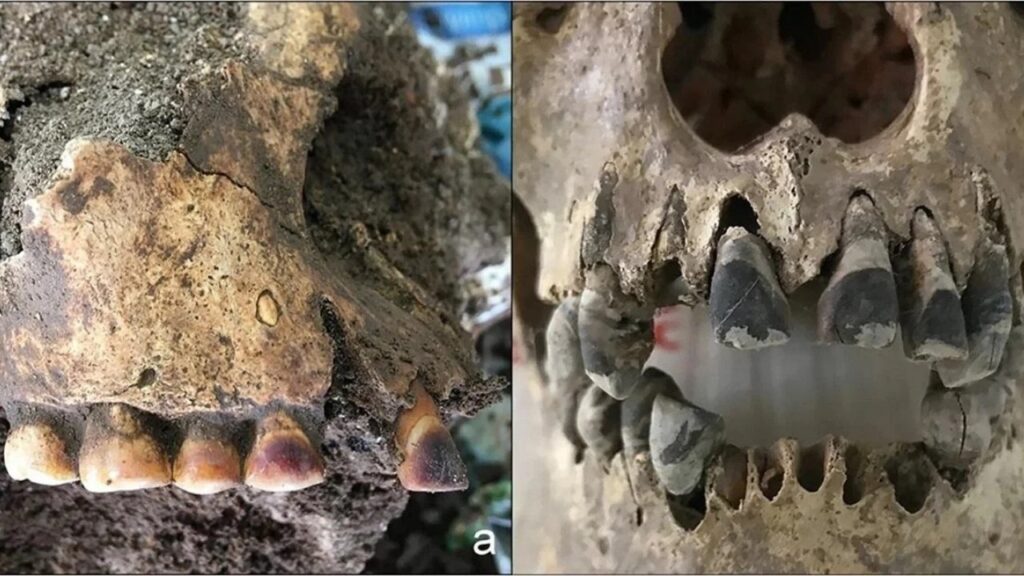
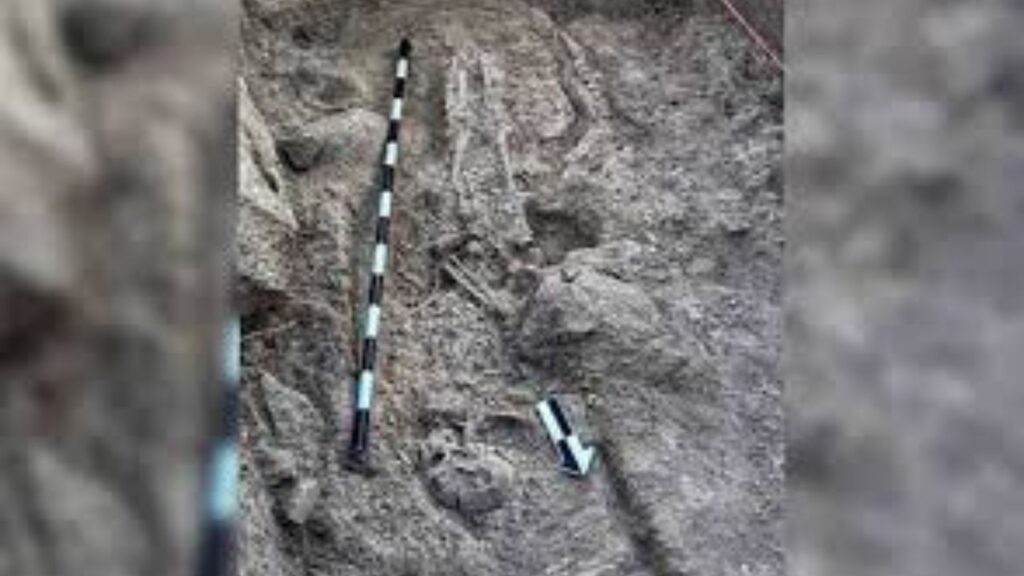
In the rugged hills of Oaxaca, where the ancient Zapotecs—the “Cloud People”—built cities that touched the sky, the earth has guarded a secret for fourteen centuries. It wasn’t discovered by a grand archaeological expedition, but by the vigilant response to looters’ scars. Beneath those scars, in San Pablo Huitzo, researchers from Mexico’s National Institute of Anthropology and History (INAH) found the unimaginable: a sealed, two-chambered tomb from the Classic Zapotec era, its vivid murals, sculpted guardians, and symbolic carvings preserved in a state of clarity that defies time.
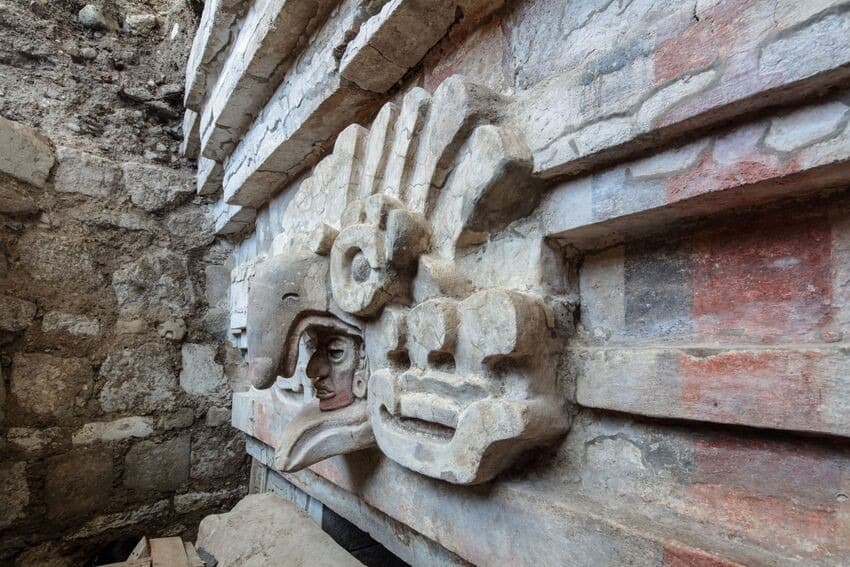
This is not a plundered crypt. It is a pristine portal. A door guarded by a stone owl, a messenger of death, peering over a painted ancestor. Inside, walls shimmer with ochre and green processions, carrying offerings of sacred copal smoke. This discovery is a mind-blowing, direct line to the ritual mind of a powerful Mesoamerican civilization. It offers a revolutionary, intact canvas of belief, hierarchy, and artistry that promises to redefine everything we know about Zapotec rites of passage into the afterlife.
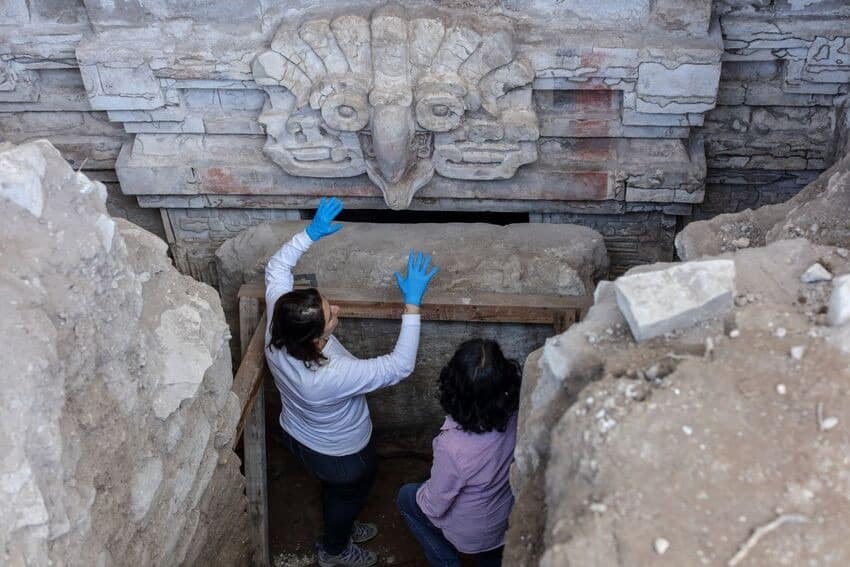
Table of Contents
The Astonishing Find: Architecture of the Afterlife
The tomb’s architectural sophistication immediately signaled its elite status. Dating to approximately 600 CE, its design is a deliberate journey from the world of the living to the realm of the ancestors.
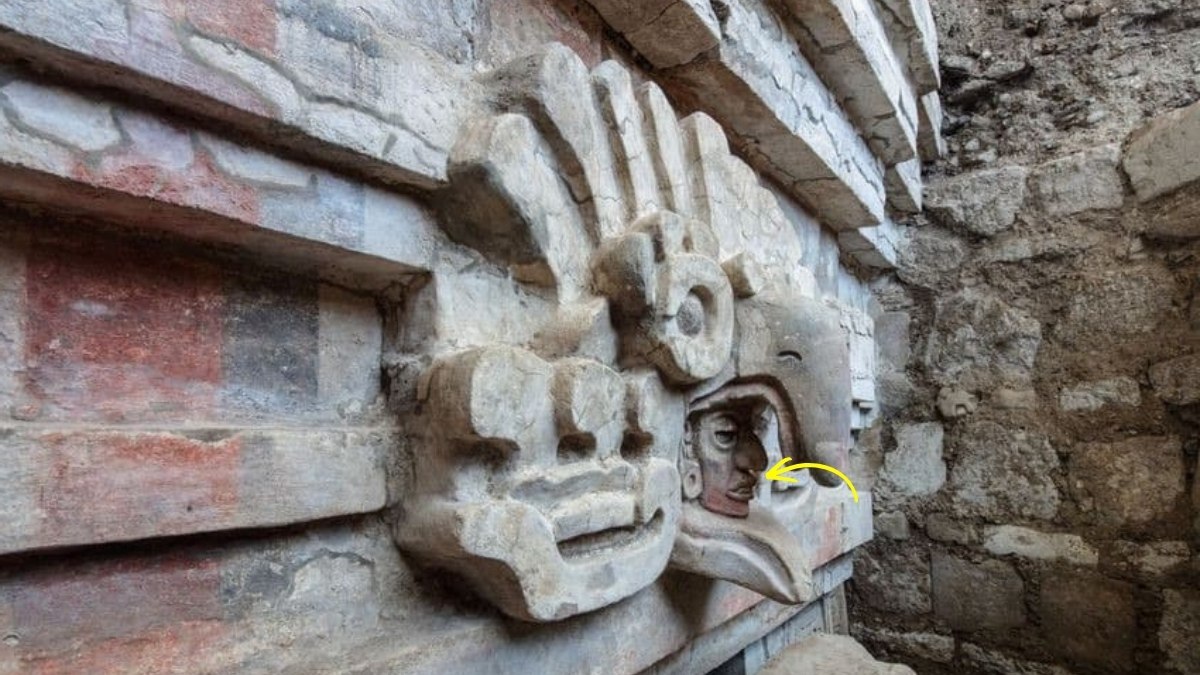
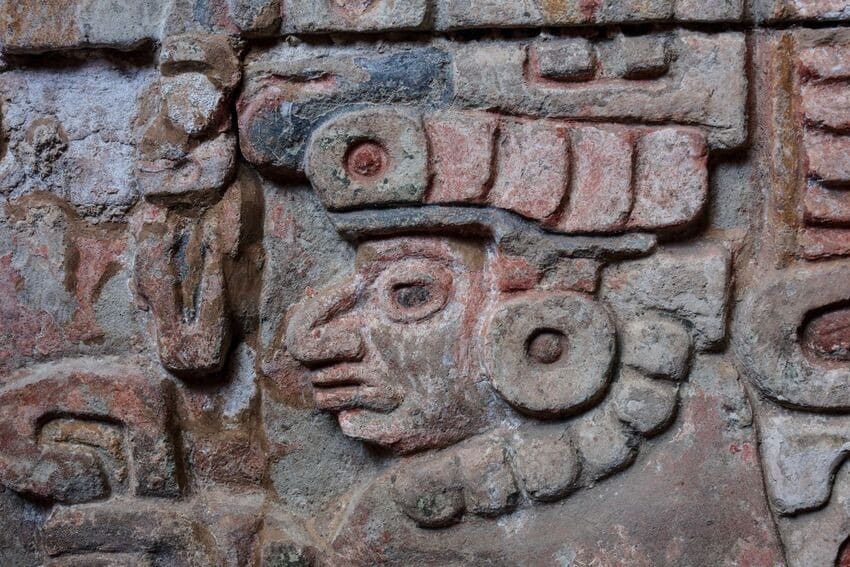
The Threshold of SymbolismEntry is governed by profound iconography. A sculpted owl motif—the Zapotec symbol of night, death, and omens—looms over the doorway, its beak descending toward a stuccoed human face. This is no generic symbol. INAH experts believe it represents a venerated ancestor, blending the concepts of deity, guardian, and the deceased into one powerful apotropaic image.
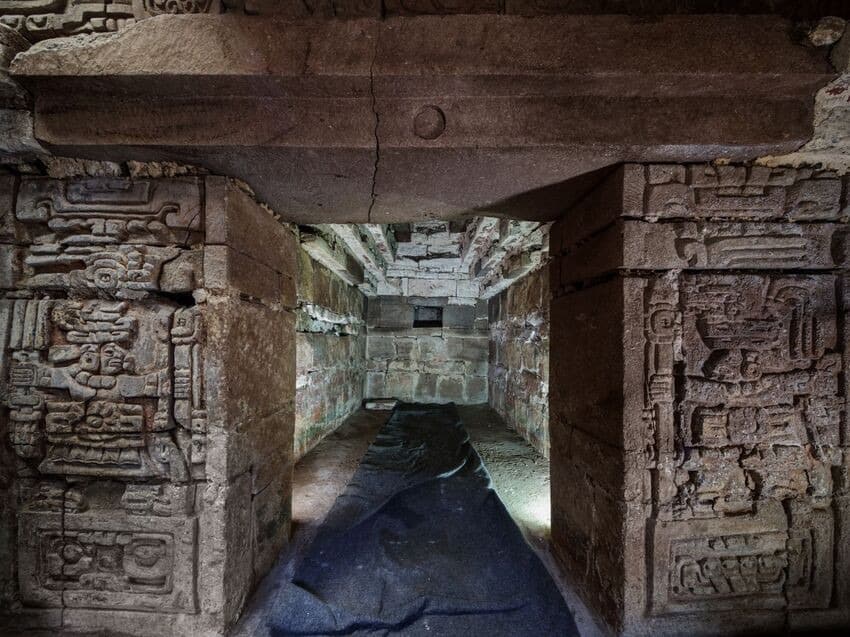
The Eternal GuardiansFlanking the entrance are two monumental carved figures, a male and a female, acting as eternal sentinels. Adorned with elaborate headdresses and holding ritual objects, their presence elevates the tomb from a burial place to a protected sanctum. Their remarkable preservation and prominence suggest a localized artistic tradition with unparalleled emphasis on guardian spirits.
The Calendrical CodeAbove the inner threshold, a horizontal frieze is inscribed with precise Zapotec calendrical glyphs. This is a direct link between the identity of the tomb’s occupant and the sacred 260-day ritual calendar. It signifies that their death, and ongoing veneration, were woven into the very fabric of cosmic time and religious duty.
Deep Dive: The Painted Ritual Unfolds
Within the funerary chamber, the tomb’s true masterpiece comes to life: in situ wall murals of a ritual procession. These are not static portraits, but a dynamic narrative.
The March of the OfferingsFigures are depicted walking in solemn alignment, carrying bundles of copal incense. In Mesoamerican belief, copal smoke was the physical breath of prayer, connecting the earthly and divine realms. The mural likely illustrates the continuous ancestor veneration performed after burial, suggesting the tomb was a site for ongoing ceremonial re-entry and commemoration.
A Palette Frozen in TimeThe use of ochre, red, green, and white pigments has survived with stunning vibrancy. This preserved palette offers chemists and art historians a rare opportunity to analyze ancient Zapotec mineralogy and artistic technique without the distortion of centuries of exposure.
Global Implications: A New Lens on Mesoamerican Cosmology
This tomb is a keystone discovery for global archaeology. Its pristine state provides an uncorrupted dataset for understanding pre-Columbian complex societies.
Redefining Funerary SpaceWhile elite tombs are known at Monte Albán, the Huitzo tomb’s integrated artistic program—where architecture, sculpture, and painting form a cohesive narrative—is exceptional. It demonstrates that for the Zapotec, the tomb was a stage for perpetual performance, an engine for ritual that ensured cosmic order and lineage legitimacy.
The Antiquity of Iconographic CodesThe clarity of the symbols—the owl, the guardians, the glyphs—provides a “Rosetta Stone” for interpreting more degraded examples elsewhere. It confirms the deep antiquity and widespread understanding of a sophisticated symbolic language across the Zapotec realm, offering new context for artifacts found from centuries earlier.
The Conservation Crusade: Science Against Time
The discovery is a race against decay. INAH’s careful, months-long silence before announcement was a period of urgent emergency stabilization.
The Invisible ThreatsConservators battle root intrusion, insect colonies, and climatic fluctuations that threaten the fragile stucco and pigments. Each step inside risks micro-climate changes. This work is as meticulous as brain surgery, preserving the tomb’s integrity for future study.
A Sovereign LegacyUnder strict Mexican cultural heritage law, the site remains under full federal control. All research is led by INAH, ensuring the narrative is shaped by national experts. This model highlights a global shift toward decolonized archaeology, where source nations maintain authority over their own past.
What This Means for History: The Dialogue Resumes
The San Pablo Huitzo tomb is more than a treasure; it is a conversation resumed. For 1,400 years, its story was silent. Now, every pigment molecule, every carved line, speaks.
It allows us to move from theorizing about Zapotec ancestor worship to witnessing its physical theater. It transforms the Cloud People from builders of grand plazas into philosophers of death, masters of art, and choreographers of sacred processions that bridged worlds.
This tomb is a testament to the Zapotecs’ belief that death was not an end, but a transformation guarded by owls, guided by calendars, and sustained by the perpetual smoke of remembrance. In revealing their journey, it deepens our own understanding of humanity’s universal quest to master the great unknown.
5 In-Depth FAQs
1. Why was this tomb found in such excellent condition?A combination of fortunate factors: its sealed construction prevented large-scale looters; its deep burial beneath sediment created a stable microenvironment; and the quality of materials—like the stucco and mineral pigments—was inherently durable. The looters’ initial dig did not penetrate the main chamber, ironically leading to its professional discovery and preservation.
2. Who was buried here?While no human remains have been formally announced, the tomb’s elite markers are undeniable. The occupant was almost certainly a high-ranking noble or ruler, possibly a cocijo (lord) or a high priest, whose identity was linked to the calendrical glyphs. The male and female guardians may symbolize ancestral pairs or deified lineage founders, suggesting the occupant claimed descent from them.
3. How does this discovery change our view of the Zapotecs compared to the Maya or Aztecs?It asserts the Zapotecs as independent masters of their own ideological and artistic tradition. While they interacted with other Mesoamerican cultures, the Huitzo tomb showcases a fully formed, sophisticated expression of death ritual distinct from Maya pyramid tombs or Aztec tzompantli. It shifts the Zapotecs from being “contemporaries of” to “central innovators in” the development of Mesoamerican funerary art and cosmology.
4. What are the biggest challenges in conserving the site?The primary challenge is controlling the tomb’s microenvironment. Opening it introduced humidity, light, and microorganisms. Conservators must stabilize the delicate painted stucco, which is susceptible to flaking. Additionally, preventing future looter interest and designing a long-term preservation plan—whether through reburial or a sealed, climate-controlled enclosure—are critical, complex tasks.
5. Will the public ever be able to see it?Direct public access is unlikely in the near future, as foot traffic would destroy the microclimate. However, digital reconstruction is almost certain. INAH will likely create ultra-high-resolution 3D models, immersive virtual reality experiences, and detailed photographic archives. This will allow global public and scholarly access while preserving the fragile originals in situ, following best practices seen at other ultra-sensitive sites like Lascaux Cave.