Imagine a sacred landscape, hallowed by Neolithic farmers over 6,000 years ago. Its defining feature is a massive trapezoidal earthwork, a monument of community and belief carved into the German loess. Now, fast-forward four millennia. In the shadow of the Middle Ages, someone returns to this ancient, likely feared or revered place. But they do not build upon it. They burrow into it, secretly constructing a narrow, twisting tunnel right through its heart.
This is not one mystery, but two, layered like geological strata. Near Reinstedt, Germany, archaeologists have peeled back time to reveal a stunning palimpsest: a late-medieval Erdstall—a ghostly, purposeless tunnel network—deliberately built inside a 4,000 BC Neolithic ritual enclosure. This discovery isn’t just a tunnel; it’s a profound act of cultural memory, secrecy, and a riddle that has baffled Europe for centuries.
Table of Contents
The Astonishing Find: A Portal Through Epochs
The discovery was made during routine excavations for a wind farm, a modern quest for energy that uncovered an ancient puzzle.
The Outer Shell: A Neolithic SanctuaryFirst, archaeologists identified the grand, older structure: a trapezoidal ditch enclosure built by the Baalberge culture (4100–3600 BC). These sites are believed to be communal gathering places for rituals, trade, and social cohesion—the cathedrals of their time. They marked the landscape with sacred geometry.
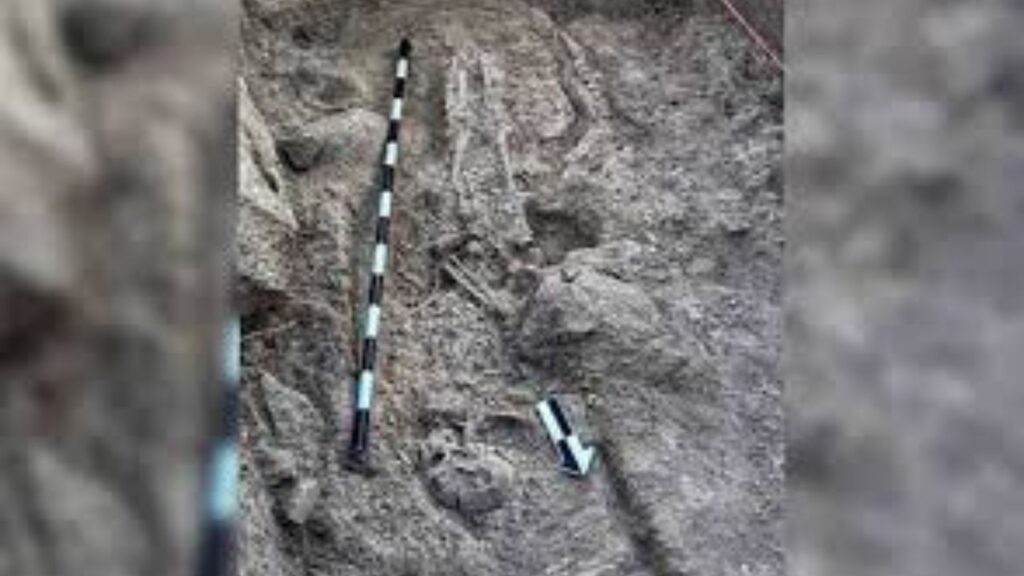
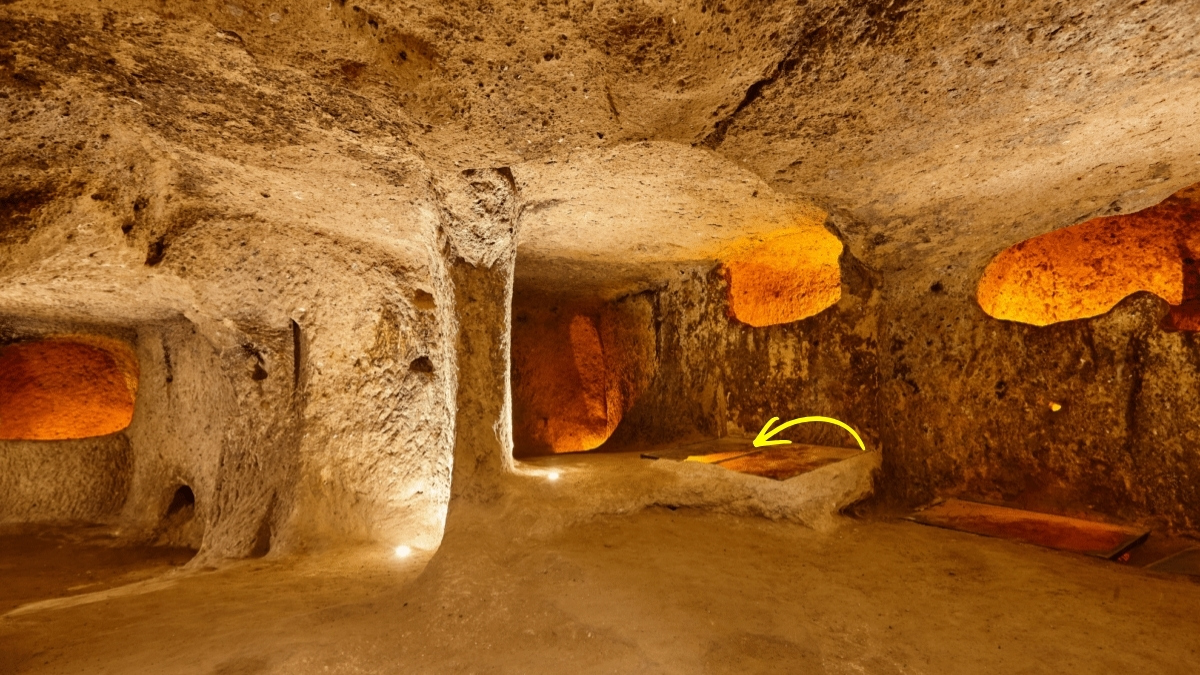
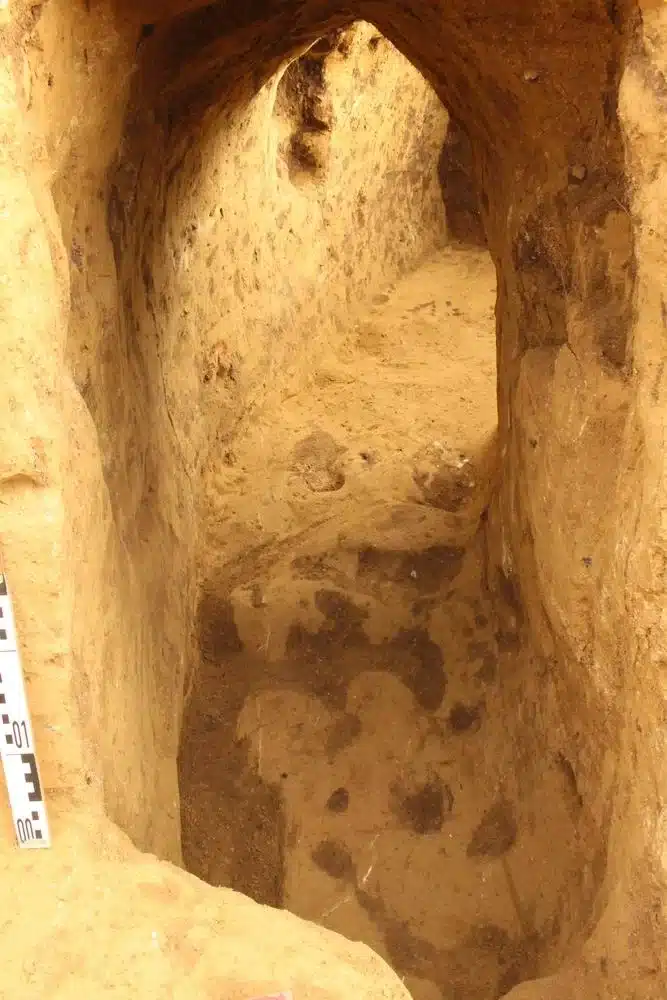
The Hidden Core: The ErdstallBeneath a large stone slab within this ancient ditch, the team found something utterly unexpected. A narrow, man-made tunnel snaked into the earth. With dimensions barely allowing a single person to crawl (50-70 cm wide, 1.25 m high), it curved northwestward. This was a classic Erdstall.
These enigmatic tunnels, dating from the 10th to the 13th centuries AD, are found across Central Europe. They are expertly engineered in stable loess soil but are famously dysfunctional: too cramped for storage, too obvious for long-term hiding, with no ventilation for fires. They are architectural ghosts.
Deep Dive: The Enduring Riddle of the Erdstalls
The Reinstedt find amplifies the core mystery that has surrounded Erdstalls for generations. What drove medieval communities to expend tremendous effort digging these cryptic subterranean passages?
Theories of Secrecy and Sanctuary
- Refuges for Raiders: Could they have been hideouts during the violent upheavals of the Magyar or Viking incursions? Their narrow “creep holes” could be blocked from inside.
- Spiritual Passageways: Many scholars propose a ritual function—perhaps symbolic journeys to an underworld, initiation rites, or spaces for pagan practices forced underground by Christianization.
- Storage Rejected: Their damp, cramped conditions and difficult access make them ill-suited for storing food or valuables.
The Reinstedt Twist: A Sacred SynchronicityWhat makes this Erdstall revolutionary is its location. It wasn’t dug under a village. It was precisely placed within a known, ancient ritual site. The LDA’s suggestion is electrifying: the Neolithic ditch, perhaps still recognized as a “pagan grave” or haunted place 4,000 years later, was avoided by the local medieval populace. This made it the perfect, unseen location for a secret that needed absolute concealment.
The tunnel builders weren’t just utilizing stable soil; they were leveraging a deep cultural memory of taboo. They hid their secret in a place already shrouded in the supernatural.
The Archaeological Methodology: Reading the Earth’s Diary
Unearthing this was an act of forensic precision. The team moved from macro to micro:
- The Aerial View: Drones revealed the ghost of the Neolithic ditch and the soil disturbance of the later tunnel intrusion.
- Layer by Layer: Hand tools carefully removed fill, exposing the tunnel’s precise, curving form.
- Artifact as Clue: Each find was a data point:
- Late Medieval Pottery: Dating the tunnel’s use to between 1000-1300 AD.
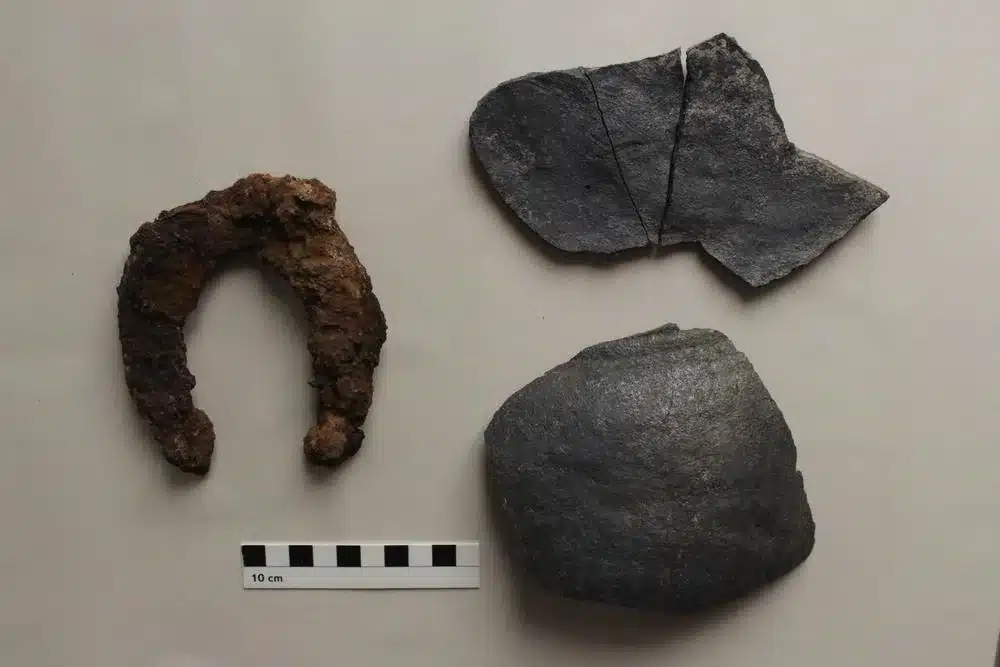
- The Horseshoe: A potent medieval symbol of luck and protection, possibly left as a votive offering.
- Charcoal Layers & Animal Bones: Evidence of fire use (perhaps for light or ritual) and the presence of a fox skeleton, an animal rich in European folklore as a trickster or spirit guide.
Global Implications: The Universal Language of Hidden Spaces
This discovery transcends German archaeology. It speaks to a fundamental human behavior: the creation of secret, liminal spaces.
Architecture of the UnsayableFrom the kivas of the Ancestral Puebloans to the catacombs of early Christians, societies often build hidden spaces to protect threatened beliefs or communities. The Erdstall fits this pattern, potentially representing a submerged layer of medieval folk belief or social structure.
Long-Term Memory in LandscapesThe 4,000-year gap between the ditch and the tunnel is staggering. It suggests that the significance of certain places can be transmitted orally or through folk memory for centuries, even millennia. The landscape itself became an archive, and the medieval tunnel builders were consulting it.
What This Means for History: A Dialogue Between Worlds
The Reinstedt Erdstall is more than a tunnel; it’s a conversation across time. A medieval community, for reasons we can only guess, felt compelled to connect with—or hide within—a sacred site created by their unimaginably ancient predecessors.

It challenges the linear view of history. It shows how the past actively shapes the future, not just through stone monuments, but through the stories and fears they inspire. The tunnel is a physical manifestation of a medieval mind engaging with its own deep past, treating it as a place of both power and secrecy.
We may never know if it was a refuge from marauders, a chamber for clandestine rituals, or something else entirely. But its silent, cramped passageway forces us to acknowledge the profound depths of human mystery, literally carved into the foundations of our world.
5 In-Depth FAQs
1. What exactly is an “Erdstall”?An Erdstall (German: “earth stable”) is a type of narrow, hand-dug subterranean tunnel or gallery found across Central Europe, primarily from the High Middle Ages (c. 1000-1300 AD). They are characterized by very tight dimensions, sometimes with “creep holes” and small chambers, and a notable lack of clear practical function, making them one of Europe’s most enduring archaeological puzzles.
2. Why is finding an Erdstall inside a Neolithic ditch so significant?The location is revolutionary. It directly links a medieval mystery with a prehistoric ritual landscape. It strongly suggests the medieval builders were aware of the site’s ancient, likely sacred or taboo nature and exploited that cultural memory to conceal their activities. It transforms the Erdstall from an isolated oddity into part of a 6,000-year-long story of human interaction with a specific place.
3. What does the horseshoe found inside signify?In medieval European context, a horseshoe was a powerful apotropaic (evil-averting) symbol, commonly associated with luck, protection, and warding off witches or evil spirits. Its placement in the tunnel could indicate it was left as a protective charm for those using the space or to seal/protect the space itself, supporting theories of ritual or refuge use.
4. Could these tunnels have been used by persecuted groups like pagans?This is a leading theory. During the period of forced Christianization, groups practicing older beliefs may have needed hidden spaces for rituals. The placement within an ancient “pagan” site would compound its secrecy and spiritual resonance. However, a lack of definitive ritual artifacts makes this compelling but unproven.
5. What happens to the site now?As with many rescue archaeology digs tied to development, the physical tunnel was likely meticulously documented using 3D scanning, photography, and drawings before being carefully backfilled or impacted by construction. Its preservation in situ is often the best protection. The true discovery now lives on in the detailed records, scans, and the ongoing scholarly analysis that will debate its meaning for decades.