

Travellers who used diggers to carry out unauthorised work on a protected wildlife site have been prevented from causing further damage after a High Court injunction was extended.
East Herts Council had previously secured an injunction to stop work on land off Sheering Mill Lane in Sawbridgeworth, Hertfordshire – a site within the green belt described as “particularly environmentally sensitive”.
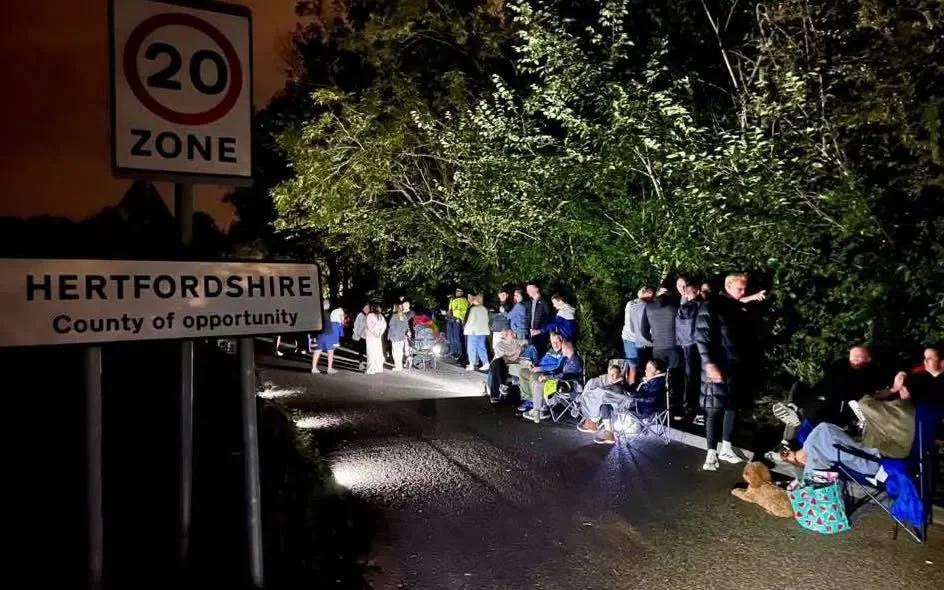
The legal action followed unauthorised works at the site last month, prompting villagers to organise a peaceful protest.
Those carrying out the work left the site over the bank holiday weekend after the High Court issued an injunction giving police the power to arrest anyone who breached the order.
Read Also: Earl Charles Spencer's new book on Princess Diana stolen in Dutch lorry raid
At a hearing this afternoon, barristers representing the council asked for the injunction to remain in place until a full trial of the authority’s legal claim.
Michael Fry, representing the council, described the case as “one of those extraordinary and vanishingly rare cases” in which the court should continue to give police the power of arrest.
Mr Justice Lavender granted the extension and maintained the power of arrest.
He said: “The evidence of the police is that it is only the power of arrest that has enabled planning control to be enforced in this case.”

The injunction applies to “persons unknown carrying out, encouraging and/or facilitating development” on the land, or intending to do so.
It also covers anyone “occupying or intending to occupy” the site, as well as several named individuals.
No one appeared in court to challenge the continuation of the order.
In written submissions, Mr Fry said work began on the land in late August, despite a temporary stop notice being issued.
LATEST DEVELOPMENTS
- ‘Reckless’ people smugglers risk dozens of lives by launching small boat in treacherous conditions
- Villages across Britain beg for Piddington blueprint as referendum ballot opens today
- Piddington locals taking self-defence classes and installing CCTV ahead of asylum seeker flood
An initial High Court injunction, which did not give police the power to arrest anyone breaching it, failed to stop the work.
A second injunction, issued on August 30, granted police the power of arrest. Mr Fry said this had “absolutely abated” the work taking place at the site.
The council does not know the identities of those who moved onto the land but, Mr Fry told the court, it “assumed” they were members of the gypsy and traveller community.
He acknowledged that the council “accepts that it cannot currently demonstrate a five-year supply of pitches” for travellers but said it was “seeking to address the shortfall”.

He also said there was evidence that people previously occupying the site were from a “wide range of ethnicities”.
Mr Fry argued that while Travellers “require somewhere to live not on the roadside”, this did not “excuse or permit the activities which have been undertaken” at the site, and that the injunction was both “necessary and proportionate”.
The barrister said the planning breaches had involved, and were likely to involve, conduct that was a “public nuisance”, as part of what was presumed to be a proposed change of use from open space to a residential caravan site.
Works carried out at the site included removing vegetation, installing drainage, erecting fencing and gates, and bringing caravans, mobile homes and heavy machinery onto the land – alongside multiple excavators, dump trucks and a ground roller.
Mr Fry said the injunction should remain in place because the unauthorised works, carried out without planning permission, had caused “significant harms, significant local disruption and widespread concern”.
Our Standards:
The GB News Editorial Charter