
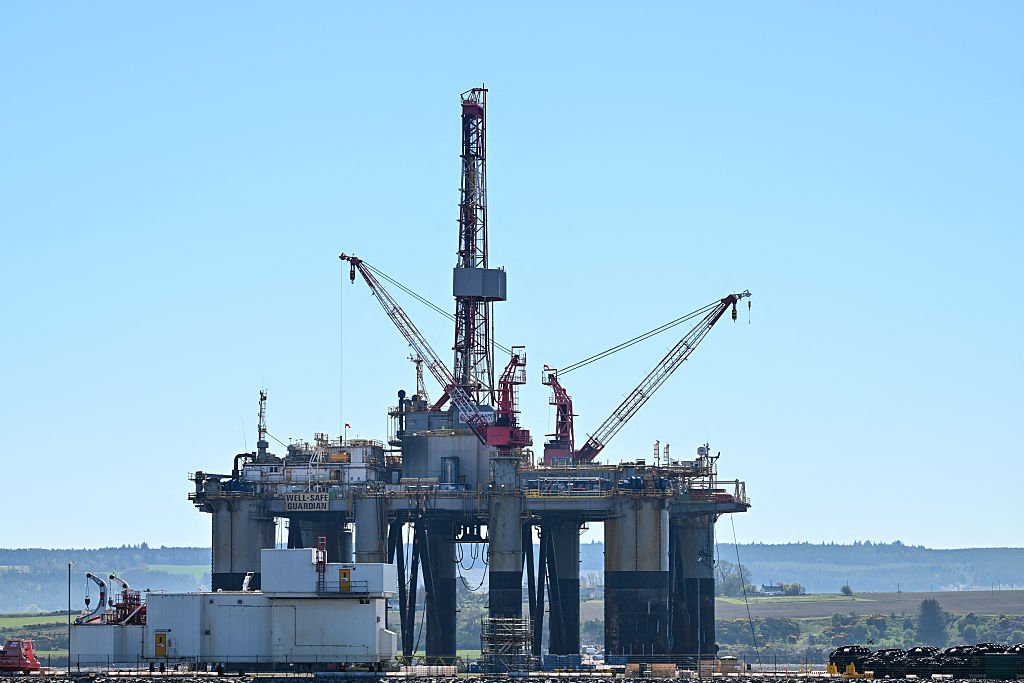

Iran’s conflict has shown “energy security is national security” and there has “never been a stronger case” for North Sea oil and gas, industry leaders have said.
More than 100 new oil and gas projects could be approved if the UK Government adopts a more “pragmatic approach” to the North Sea, the trade body Offshore Energies UK (OEUK) has revealed.
The group said the UK still holds “vast quantities of domestic resources within our reach”.
However, it warned that policy decisions will determine “whether investment is made here in the UK or elsewhere around the world”.
Read Also: Earl Charles Spencer's new book on Princess Diana stolen in Dutch lorry raid
It said scrapping the existing windfall tax in this year’s Budget would add £15billion to the Treasury over the next decade.
Approving the Jackdaw gas field alone, currently stalled by a climate challenge, would bring gas into UK homes this winter, meeting six per cent of national supply, said OEUK chief executive David Whitehouse.
A decision on Jackdaw had been expected this week but is understood to be delayed until after a key by-election in Sir Keir Starmer’s former seat.
Mr Whitehouse said timely decisions were essential.

Speaking at the launch of the OEUK’s Economic Report 2026, he said: “I do think we are now at a point where we are looking for those decisions to come — and more broadly that signal that actually the UK wants to produce more of its own energy; wants to produce more oil and gas.
“Jackdaw is an important component of our gas production this winter, and we’re now at a point where further delays are going to push back bringing that production online.”
The launch highlighted the offshore sector’s role in “strengthening energy security, supporting skilled jobs and helping to deliver a homegrown energy transition.”
The report said it arrives “at a critical time, when energy security has moved back to the top of the political and economic agenda here in the UK”.
LATEST DEVELOPMENTS
- Lords launch inquiry into ‘dunkelflaute’ risk as Britain left vulnerable on windless, sunless days
- Interest rate rise likely as Bank of England ‘patience running thin’ after oil prices SKYROCKET
- UK and US strike nuclear fusion pact in bid to unlock 10,000 jobs and near-limitless clean power

It warned that “in an increasingly volatile world, energy security is national security”.
The report noted the UK currently imports 40 per cent of its energy needs, a figure it warned could rise without a change in policy.
It called for the current windfall tax, or energy profits levy, to be scrapped next year.
This would be replaced with an Oil and Gas Revenue levy that would only apply once prices rose above a set threshold.
It also urged a more “pragmatic approach to licensing”.
Combined, these changes could unlock 111 additional projects, £50billion in private capital investment, and 3.25 billion barrels of oil equivalent in production, the report revealed.
OEUK Market Intelligence Manager Ben Ward said: “Even under Net Zero scenarios, the UK will continue to consume huge volumes of oil, gas, electricity, and heat.
“The choice is whether that energy and the associated jobs, investment, and economic value that comes with it is produced domestically, or whether we import it.”
Mr Ward said oil and gas prices were rising again, though not yet matching the peaks seen after Russia’s invasion of Ukraine.
He said this still presented “a pretty worrying picture for Europe as we head into the winter”, noting that storage levels were currently at a five-year low.
He warned the impact would be “sustained high European gas prices, including the UK’s gas prices, throughout the winter periods.”
While acknowledging the North Sea basin “is mature”, Mr Ward said “the pace of decline is not fixed”.
He said: “Under our current trajectory, we’re on track to produce just one third of the oil and gas that the UK will need between 2026 and 2035.
“Under our investment case, the UK could produce half of what it needs. Doing so would ensure that the sector maintains jobs, values, taxes, and supply chains for decades to come.
Mr Ward also argued domestic energy production was cleaner overall.
He said: “Producing energy domestically, unequivocally comes with lower emissions. The UK has a proud history of supply decarbonisation, resulting in lower carbon emissions than the global average, and significantly lower emissions than imported LNG.
“To put it simply, producing energy domestically is better for the environment than importing energy.”
However, he cautioned: “The longer the UK government delays the decision, then the smaller the opportunity becomes, as investment, production, and associated tax revenues are progressively lost.”
Mr Whitehouse said the offshore sector remained committed to delivering a secure, affordable and low-carbon energy system, spanning oil and gas, offshore wind, hydrogen and carbon capture.
He said: “Together, they represent not only our energy future but a major opportunity to strengthen the economy, support skilled jobs and maintain the UK’s position as a world-leading energy nation.”
He added: “In a more volatile world, the case for domestic energy has never been stronger.”
Not everyone agreed with the assessment.
Ms Tessa Khan, executive director of climate group Uplift, which campaigns for a shift away from fossil fuels toward renewables, said: “This is just fantasy from the OEUK, who are ignoring geology, history and also the very real climate crisis we have all just suffered.
“After 50 years of drilling, the North Sea is a declining, ultra-mature basin. The UK has burned most of its gas and what’s left is mostly oil, the vast majority of which is exported and sold on international markets. New drilling will do nothing to bring down bills and little for energy security.”
A UK Government spokesman said: “We’re giving the sector and its investors the long-term certainty to plan, invest and support jobs with plans to replace the Energy Profits Levy when it ends by 2030, or earlier if its price floor is triggered.
“We are also making sure the North Sea has a prosperous and sustainable future through record investment that helps deliver the next generation of skilled jobs while growing the clean energy industries of the future.”
Our Standards:
The GB News Editorial Charter