It is the stuff of science fiction, except the science is real and the fiction is rapidly fading. A planetary defense expert at NASA has issued a chilling warning: humanity is defenseless against up to 15,000 near-Earth asteroids large enough to obliterate a city. We know where the giant, civilization-ending rocks are. We track the tiny ones that burn up in the atmosphere. But the midsize monsters—the so-called “city killers”—are hiding in the dark, and we have no idea when they might find us.
This is not a movie plot. This is a countdown.
Table of Contents
The Astonishing Find: We Only Know 40% of the Threat
The warning came from Kelly Fast, a planetary defense officer at NASA, speaking at the American Association for the Advancement of Science (AAAS) in Phoenix, Arizona. Her message was stark.
“What keeps me up at night is the asteroids we don’t know about.”
Fast clarified that she is not worried about the “large ones”—the rocks big enough to end civilization. Scientists know where they are. They track them meticulously. Nor is she concerned about the tiny debris that hits Earth constantly, burning harmlessly in the atmosphere.
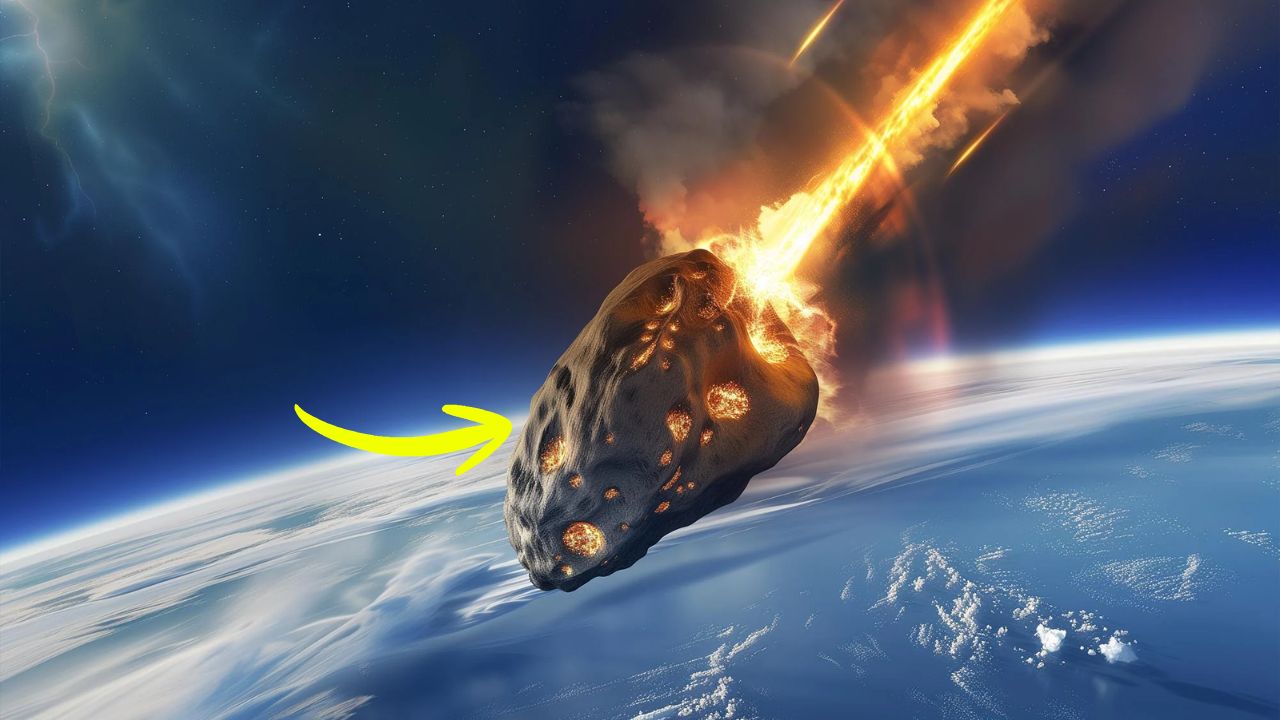
Her fear is focused on the midsize asteroids, roughly 500 feet in diameter. These are the “city killers.” Large enough to cause regional devastation if they strike a populated area. Small enough to evade detection even with our best telescopes.
According to Fast, there are approximately 25,000 of these near-Earth objects passing within our planet’s vicinity. We know the location of only 40% . That leaves 15,000 unaccounted for.
Fifteen thousand city-killers, and we have no idea where they are.
Why They’re So Hard to See: The Blind Spot in Our Sky
The problem is not a lack of effort. It is physics.
These midsize asteroids often accompany Earth in its orbit around the Sun. From our perspective, they lurk in the daylight sky. They are illuminated by the Sun from behind, making them nearly impossible to spot with optical telescopes. They hide in the glare, invisible until they are upon us.

Even at night, their small size and dark surfaces make them difficult to detect. They reflect little sunlight. They blend into the blackness of space.
Fast described the challenge bluntly:
“Even with the best telescopes, these asteroids are hard to detect because they accompany Earth in orbit around the Sun, preventing them from reflecting sunlight.”
We are scanning the skies, but we are scanning blind.
The Solution: A Telescope That Sees in the Dark
To address this vulnerability, NASA is planning to launch a new tool. The Near-Earth Object Surveyor (NEO Surveyor) space telescope is scheduled to launch next year.
Unlike optical telescopes, NEO Surveyor uses infrared detection. It will spot asteroids by their thermal signatures—the heat they emit, not the light they reflect. This makes it ideal for finding dark objects hiding in the Sun’s glare.
Fast described its mission:
“It uses thermal signatures to spot dark asteroids and comets that were previously hidden from our planet.”
The telescope will systematically scan the sky, cataloging objects that have evaded detection for millennia. It is humanity’s best hope for completing the inventory of nearby threats.
But finding them is only half the battle.

The Defenseless Reality: No Spacecraft Ready to Launch
Even if NEO Surveyor identifies a city-killer on a collision course, we face a terrifying question: what do we do about it?
In 2022, NASA conducted a groundbreaking test. The DART mission (Double Asteroid Redirection Test) deliberately crashed a spacecraft into the mini-moon Dimorphos at 14,000 miles per hour. The impact successfully altered its orbit. The experiment proved that kinetic deflection works.
But there is a catch.
Nancy Chabot, a planetary scientist at Johns Hopkins University and a leader of the DART mission, explained the limitation:
“We would not have any way to go and actively deflect one right now. We don’t have one of these deflector crafts sitting around ready to go.”
Building and launching a deflection mission takes years. If a city-killer is discovered with only months or weeks of warning, there is nothing we can do. The technology exists in principle. It does not exist in practice.
Chabot warned that space agencies lack the funding to keep planetary defenses on standby. She urged action:
“We could be prepared for this threat. We could be in very good shape. We need to take those steps to do it.”
Currently, we are taking none.
The Looming Example: Asteroid YR4 and the Moon
The urgency of the situation is underscored by a specific threat. Scientists are monitoring asteroid YR4, a city-killer first detected in 2024. Current calculations suggest a 4% chance that it could strike the Moon in 2032.

A lunar impact would be dramatic but not catastrophic for Earth. However, it highlights the unpredictability of these objects. If YR4’s trajectory shifts slightly, Earth could become the target.
In response to this potential threat, space defense experts have reportedly discussed extreme measures. Proposals include blowing it up with nuclear weapons—a scenario straight out of the sci-fi film Armageddon. This is not a serious deflection strategy. It is a measure of how little prepared we truly are.
Global Implications: A Threat Without Borders
An asteroid strike does not respect national boundaries. A city-killer hitting a populated area would cause regional devastation. The economic, social, and political ripple effects would be global. Yet planetary defense remains underfunded and underprioritized.
The 15,000 hidden asteroids are a shared threat. They demand a shared response.
The upcoming NEO Surveyor mission is a critical step. It will find the hidden rocks. But finding them is useless without the ability to act. The world needs a ready-to-launch deflection capability. It needs international agreements on response protocols. It needs funding, planning, and political will.
Currently, we have none of these.
What This Means for History: The Clock Is Ticking
Kelly Fast’s job is to “find asteroids before they find us.” She is racing against a clock we cannot see. The 15,000 unknown city-killers are out there, orbiting in the dark, crossing our path at unknown intervals.
Most will miss us. That is the nature of probabilities.
But probability is not certainty. Eventually, one will not miss. When that day comes, humanity will face a choice: be prepared or be devastated.
We have the technology to find them. We have the technology to move them. We lack only the will to deploy that technology before it is needed.

The question is not whether another city-killer will hit Earth. The question is when. And whether we will be ready.
Fifteen thousand hidden rocks. No defense. The countdown continues.
In-Depth FAQs: Your Questions Answered
1. What exactly is a “city-killer” asteroid?A “city-killer” is a term for asteroids roughly 500 feet (about 150 meters) in diameter. They are large enough to survive passage through Earth’s atmosphere and cause catastrophic damage on impact. If one struck a populated area, it could flatten a city and cause regional devastation. They are not large enough to cause global extinction, but they are large enough to be civilization-changing events for the affected region.
2. Why can’t we see these 15,000 asteroids?Many of these asteroids orbit in regions that make them difficult to detect with optical telescopes. Some accompany Earth in its orbit, appearing in the daytime sky where sunlight glare hides them. Others are dark-colored, reflecting little visible light. Current surveys have prioritized larger objects; the midsize population remains largely uncharted until dedicated infrared surveys like NEO Surveyor begin operations.
3. Couldn’t we just blow one up with nuclear weapons?In theory, yes. In practice, it’s extremely complicated. Nuclear detonation in space is politically and legally fraught. It could also fragment a large asteroid into multiple smaller but still dangerous pieces, spreading the impact zone. The preferred method is kinetic deflection—gently pushing the asteroid off course over time. However, this requires years of warning and a ready-to-launch spacecraft. We currently have neither.
4. How much warning would we have if a city-killer was heading for Earth?It depends entirely on when we detect it. If the asteroid is among the 15,000 unknown objects, we might have no warning at all until it is very close. Even if detected, warning times could range from days to decades. The upcoming NEO Surveyor mission aims to provide decades of warning for most threats, but it is not yet operational, and we have no deflection capability ready even if we get that warning.
5. What is being done to prepare for this threat?NASA and other space agencies are actively working on planetary defense. The NEO Surveyor telescope, launching next year, will greatly improve our ability to find hidden asteroids. The successful DART mission proved that kinetic deflection works. However, there is currently no operational deflection capability. No spacecraft is sitting on a launch pad ready to go. The next step requires international cooperation and funding to move from proof-of-concept to operational readiness.