4,000-Year-Old Kerma Grave in Sudan’s: The Lone Sentinel A 4,000-Year-Old Grave in Sudan’s Bayuda Desert Rewrites the Story of the Kerma Kingdom
Some secrets refuse to stay buried. In the vast, unforgiving expanse of Sudan’s Bayuda Desert, Polish archaeologists have uncovered the grave of a man who lived approximately 4,000 years ago. His bones tell a story of hardship. His burial goods hint at ritual. The environment around him reveals a world that has vanished completely.
This is not just a grave. It is a time capsule from the age of the Kerma kingdom—a powerful Nubian civilization that once rivaled Egypt. And it is changing everything we thought we knew about life and death in ancient Africa.
Table of Contents
The Astonishing Find: A Kingdom Hidden in Plain Sight
The Bayuda Desert remains one of Sudan’s most unexplored regions. Scattered excavations occurred in the mid-20th century. But systematic work did not begin until the 21st century. For over six years, a team led by Dr. Henryk Paner of the Polish Centre of Mediterranean Archaeology has been rewriting that narrative.
Their latest discovery is electrifying.
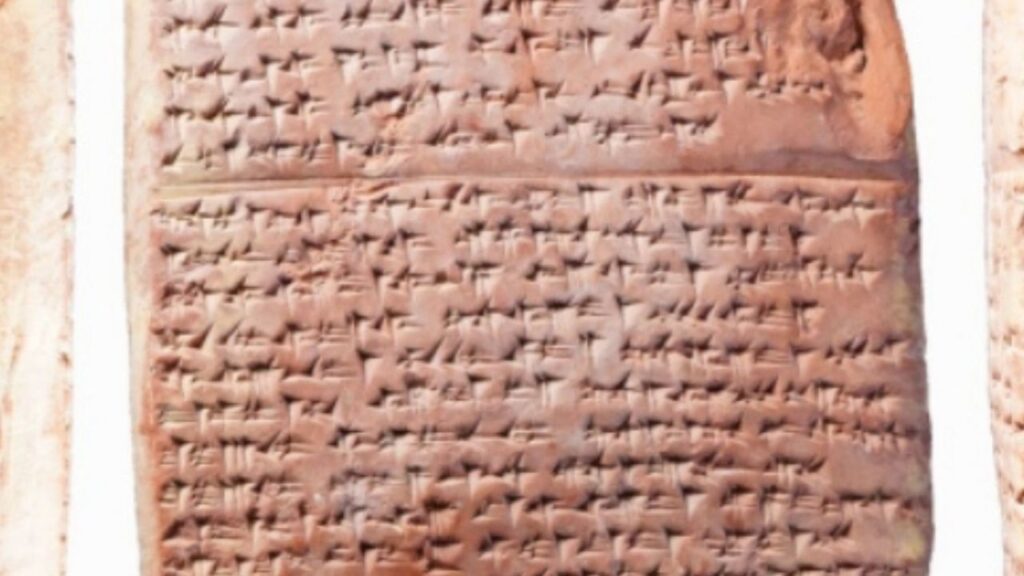
They uncovered a burial from the Kerma period, dating to between 2500 and 1500 BCE. This was the era of a powerful Nubian kingdom that controlled trade routes, built monumental mud-brick structures, and buried its elite in massive tumuli. But this grave was different. It was modest. It was isolated. And it held secrets far beyond its simple appearance.
What the Grave Reveals: A Body Bent by Life
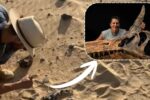
The grave itself was shallow. Roughly oval. The rocky ground shaped its irregular form. At the bottom lay a man, placed on his back. His head faced east, a few degrees north. His legs were sharply bent and turned to the right. His feet rested on his own pelvic bones.
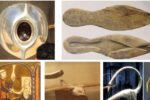
This position is distinctive.
It matches earlier Kerma burial customs. It is deliberate. It is ritual. But the man’s bones tell an even deeper story. Biological and pathological studies reveal a life of extreme physical exertion. He worked long hours in a harsh, semi-desert environment. His diet was restricted. He lived in close proximity to animals.
This was not a king. This was a worker, a herder, a survivor.
The Offerings: Fire, Feasting, and Symbolic Death
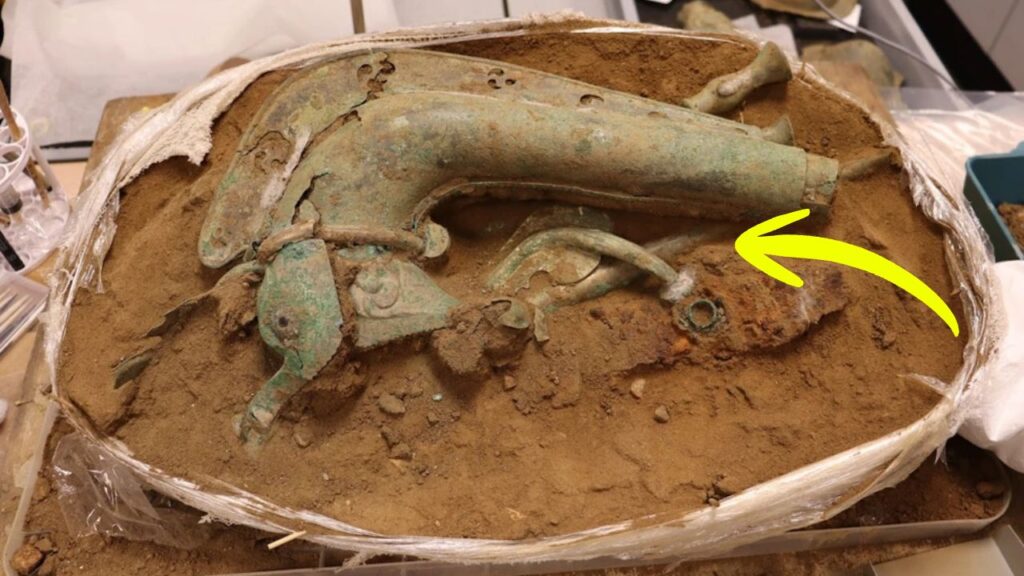
Behind the body, archaeologists found two hand-built ceramic vessels. A medium-sized jug with a spout rested near ground level. An inverted bowl sat beside it. But the real story was inside the jug.
Charred plant remains. Bits of animal bone. Coprolites. Beetle parts.
This was not random debris. This was material from a hearth, deliberately collected and placed inside the vessel. There were no signs of burning on the pot itself. The contents were added after the fire. The researchers interpret this as remains of a funeral feast—food offered to the dead, then carefully gathered and deposited.
The animal bones may represent the remnants of a ritual meal. Some portions were not consumed. They were cast into the flames. The pottery itself held meaning beyond utility. Kerma burials often used ceramics as social markers. Puncturing vessels, leaving them open, or placing them upside down may have symbolically “deactivated” them.
This was a ritual of transformation. The dead were honored. Their possessions were rendered unusable for the living. They entered the next world with their own goods, their own food, their own fire.
Global Implications: When the Desert Was Green
Perhaps the most mind-blowing aspect of this discovery lies not in the grave, but around it. Environmental mapping of the burial grounds reveals a shocking truth. Four thousand years ago, this spot was not desert.
It was savannah.
Grasses covered the hills. Shrubs dotted the landscape. Scattered trees provided shade. The man buried here lived in a world far wetter, far greener than the arid wasteland that exists today. This aligns with broader evidence of the African Humid Period, when enhanced monsoon rains transformed the Sahara into a habitable landscape.
The implications are global.
Climate change is not a modern phenomenon. It shaped human history in profound ways. The Kerma kingdom rose during a wetter phase. Its people herded cattle, farmed, and built cities where no one could live today. When the rains failed, the civilization adapted or collapsed. This grave captures a snapshot of that dynamic world.
What This Means for History: Every Grave Tells a Story
Dr. Paner emphasizes the importance of interdisciplinary research. This modest burial, viewed through multiple lenses, has yielded extraordinary information. The bones reveal physical anthropology. The ceramics reveal cultural practices. The environmental data reveals climate history.

Together, they reconstruct a vanished world.
The Kerma kingdom remains understudied compared to its Egyptian neighbors. Yet it was a major power, controlling territories from the first cataract of the Nile deep into Africa. Its people traded with Egypt, fought with Egypt, and eventually conquered Egypt during the 25th Dynasty. But the heartland of Kerma, in modern Sudan, holds countless secrets still buried beneath the sand.
This grave is one piece of that puzzle.
It reminds us that history is not only written by the powerful. The man in this shallow grave, his legs bent, his funeral fire preserved in a pot, lived and died 4,000 years ago. He left no inscriptions. He built no monuments. But his bones and his burial speak across millennia.
We are finally learning to listen.
In-Depth FAQs: Your Questions Answered
1. Who were the Kerma people?The Kerma kingdom was a powerful Nubian civilization that flourished in present-day Sudan between approximately 2500 and 1500 BCE. Centered at the city of Kerma near the third cataract of the Nile, they controlled trade routes, built massive mud-brick structures called deffufa, and developed a distinct material culture. They interacted extensively with ancient Egypt, sometimes as trading partners, sometimes as rivals, and eventually conquered Egypt during the 25th Dynasty.
2. Why was this grave found in such a remote desert location today?The grave reflects a time when the climate was dramatically different. Around 4,000 years ago, the Bayuda Desert was savannah—grassy, shrubby, and dotted with trees. It supported human and animal life. The site was likely chosen as a cemetery overlooking a habitable landscape. Subsequent climate change dried the region, turning it into the barren desert visible today.
3. What does the bent leg position signify?The sharply bent legs with feet resting on the pelvis is a characteristic burial position of earlier Kerma period graves. It likely reflects a specific funerary tradition, perhaps related to concepts of the afterlife, sleeping positions, or symbolic postures. Its consistency across multiple burials indicates it was a deliberate cultural practice rather than an accident of deposition.
4. What was in the pot found with the burial?The jug contained charred plant remains, animal bone fragments, coprolites (fossilized dung), and beetle parts. Researchers interpret this as material raked from a hearth used during funeral rites. The presence of animal bone suggests a funeral feast, where portions were offered to the dead and then collected. The lack of burning on the pot itself indicates the materials were added after the fire.
5. Why is this discovery important for understanding ancient climate?The environmental data extracted from the burial site provides direct evidence of local conditions 4,000 years ago. Pollen, soil chemistry, and landscape analysis reveal a savannah environment. This matches broader patterns of the African Humid Period (roughly 14,000 to 5,000 years ago), when enhanced monsoons greened the Sahara. Understanding these past climate shifts helps scientists model future changes and reveals how ancient civilizations adapted to environmental transformation.