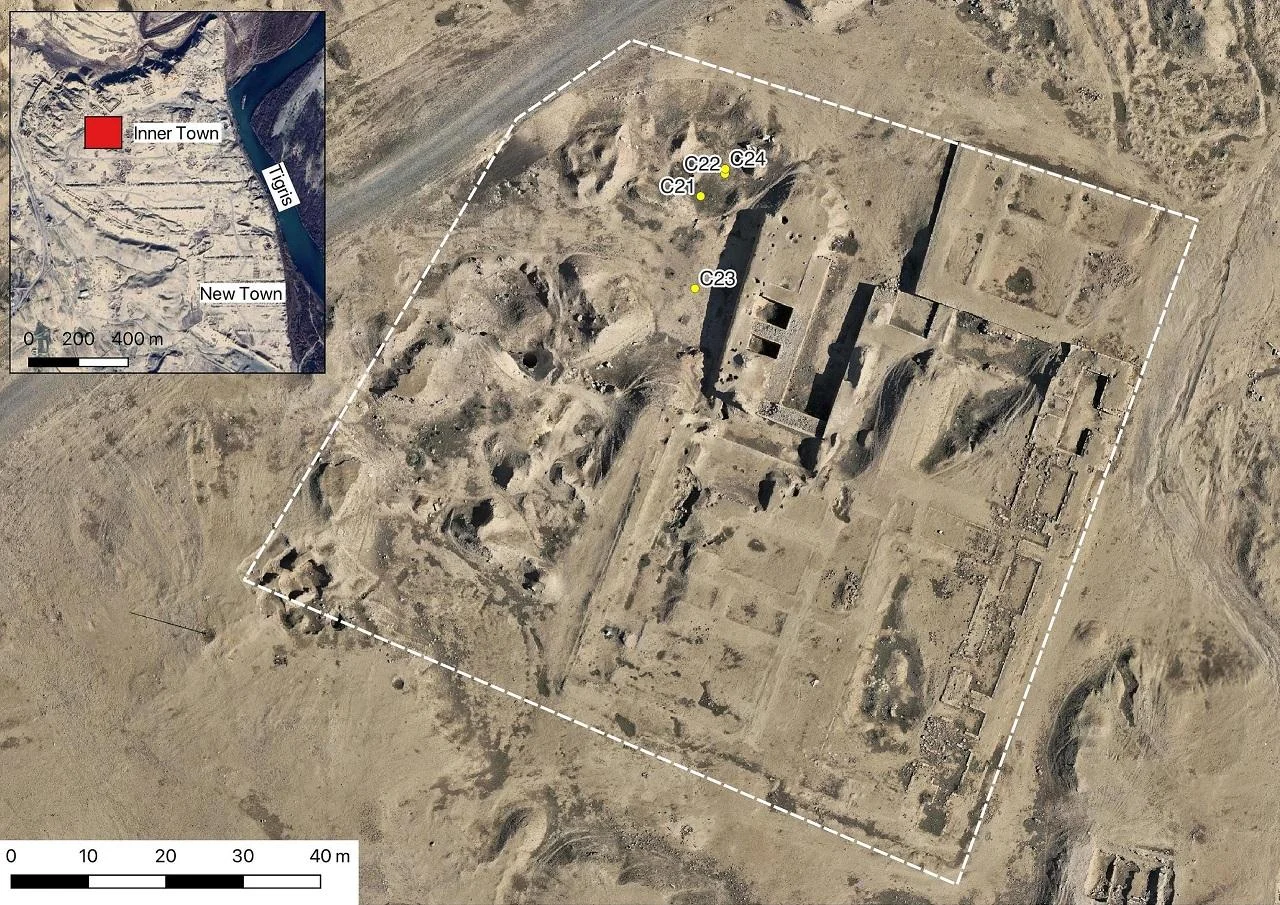
Before it was the fearsome heart of the Assyrian war machine, before its ziggurats pierced the sky, Assur was a whisper of ambition on the Tigris River. For over a century, its deepest origins were a mystery, locked beneath the very temples built to glorify its gods. Now, by probing the earth beneath the Ishtar Temple, scientists have touched the moment of that whisper becoming a shout.
They found not just soil, but a statement: a deliberate, one-meter-thick layer of pure, imported sand. This wasn’t construction debris. It was a sacred ritual, a metaphysical insulator laid down between 2896 and 2702 BCE. This discovery does more than push Assur’s founding back by centuries. It captures the precise instant when a fledgling settlement chose to plant its identity on a foundation of borrowed divinity, weaving southern Mesopotamian ritual with northern Mesopotamian geology to birth a culture destined to dominate the ancient world.
Table of Contents
The Astonishing Find: A Ritual Encoded in Sand
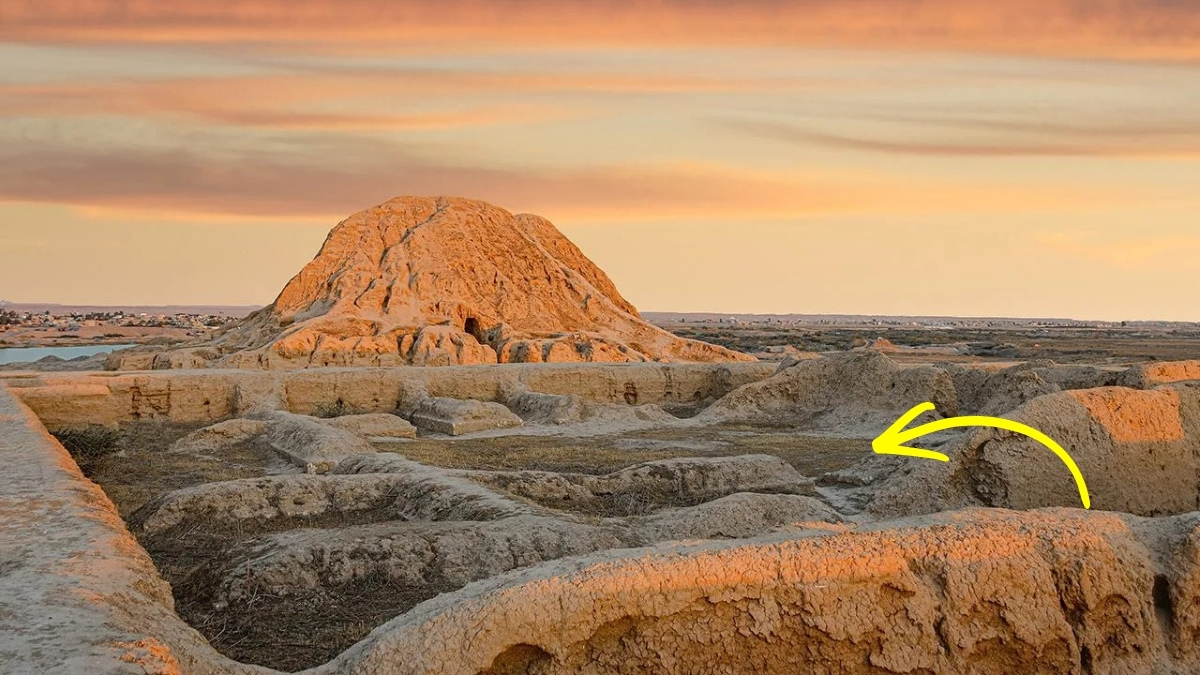
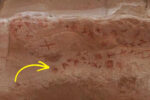
The discovery is a triumph of modern archaeo-geology. The Assur Excavation Project used advanced sediment coring to reach layers untouched by 20th-century excavations. What they extracted was a time capsule.
The Chronological KeyRadiocarbon dating of charcoal above the sand pinpoints the temple’s construction to the Early Dynastic I period (c. 2896–2702 BCE). This single date provides the first absolute anchor for Assur’s urban genesis, transforming it from a shadowy precursor into a major, organized urban center contemporary with the famed city-states of Sumer.
A Geological FingerprintThe real revelation was in the sand’s composition. Mineralogical analysis revealed epidote, glaucophane, and lawsonite—minerals characteristic of blueschist-facies metamorphic rocks. This is a specific, rare geological signature. Crucially, it does not match the alluvial sediments of the nearby Tigris.
The Deliberate ChoiceThe sand originated in the Zagros Mountains, over 100 kilometers away, transported via ancient river systems and wind-blown deposits. The builders of Assur did not use what was at hand. They sought out a specific material with known ritual properties and imported it. This was an act of profound intention, not convenience.
Deep Dive: The Southern Ritual in a Northern City
The meaning of this sand layer is where history comes alive. This practice is well-documented in the temple foundations of southern Mesopotamia (Sumer). There, sand was used as a purifying agent—a symbolic “abzu” (freshwater ocean) or a barrier against chaos, consecrating the ground for a god’s dwelling.
Cultural Transmission Across MesopotamiaFinding this practice in Assur, nearly 500 years earlier than previously attested in the north, is revolutionary. It provides the first physical evidence of the adoption of sophisticated Sumerian theological and architectural concepts by emerging northern powers. The founders of Assur were signaling their participation in the elite, cosmopolitan “language” of Mesopotamian kingship and divinity.
A Hybrid Theology EmergesThe sand may also link to northern Hurrian concepts, connecting Ishtar to the goddess Shawushka. This suggests the temple’s foundation was a syncretic act. By using a southern ritual with northern materials, the elites of early Assur were performing a brilliant political and theological synthesis. They were building legitimacy by bridging two worlds, creating a unique Assyrian identity from the start.
Global Implications: The Politics of Purity
This finding transcends archaeology. It is a masterclass in how emerging states use ritual to forge power.
The Theater of State FoundationThe selective use of this costly, imported sand only under the Ishtar Temple—and not under other major temples built later—speaks volumes. Ishtar, as a goddess of both love and war, was central to Assyrian royal ideology. Her temple’s foundation was the foundational act of the city itself. The sand ritual was a theatrical display of esoteric knowledge and resources, establishing the ruling elite as the indispensable intermediaries with the divine.
A New Methodology for Ancient UrbanismThis study pioneers the systematic mineralogical analysis of construction materials as historical texts. By reading the geological “DNA” of a single sand layer, researchers reconstructed trade networks, ritual knowledge, and cultural aspirations. This approach offers a new blueprint for investigating the origins of sacred sites worldwide, where written records are absent.
What This Means for History: The Calculated Birth of a Civilization
The sand beneath the Ishtar Temple rewrites Assur’s narrative. It shows that the city did not slowly evolve from a village. It was conceived as a capital.
The founders performed a calculated, expensive, and ideologically charged act to sanctify its very soil. This transforms our understanding of early Assyria from a peripheral northern culture to an ambitious, savvy player that actively consumed and adapted the highest civilizational practices of its time to fuel its own rise.
That layer of Zagros sand was more than a ritual. It was the seed crystal around which an empire grew. It represents the moment Assur decided it was not just a settlement on the Tigris, but a destined heart of the world, purified, protected, and ready for its millennia-long history.

5 In-Depth FAQs
1. How did the coring technology work, and why wasn’t this done before?The team used modern hydraulic sediment coring rigs capable of extracting continuous, undisturbed cylindrical samples from great depths. Early 20th-century excavations led by Walter Andrae, while meticulous, lacked this technology. They reached the earliest accessible masonry but could not safely or precisely sample the foundational substrates beneath without risking collapse. Modern coring is minimally invasive, allowing scientists to “biopsy” the earth’s strata.
2. Why is the mineralogical fingerprint of the sand so important?It acts as a geological “provenance” marker. The specific blueschist minerals are a unique fingerprint pointing unequivocally to an origin in the tectonic zones of the Zagros Mountains. This eliminated all local sources, proving the material was intentionally brought from afar. If the sand had been locally sourced from the Tigris, its ritual significance would be ambiguous.
3. What does this tell us about the people who built the temple?They were connected, resourceful, and theologically literate. Organizing the quarrying, transport, and ritual placement of a specific sand from over 100 km away required significant logistical power and social organization. Their knowledge of southern Mesopotamian foundation rituals indicates they were part of an extensive network of elite cultural exchange, likely involving priests, scribes, and traders.
4. Why was this practice not repeated under later temples in Assur?This is a key insight. By the time the Sin-Shamash or Anu-Adad temples were built centuries later, Assyrian ritual practice had become distinct and self-confident. The city had developed its own imperial identity and construction traditions. The imported sand ritual was a foundational act—a one-time, city-founding ceremony that established sacred legitimacy. Later temples could rely on that established holiness without needing to repeat the exact same symbolic import.
5. How does this change the map of early Mesopotamian influence?It dramatically expands the reach and depth of Sumerian cultural influence. Previously, the north was seen as a recipient of diffuse ideas. This find shows a direct, precise, and early adoption of core Sumerian religious engineering practices. It suggests the third-millennium Mesopotamian world was a deeply interconnected “koine” of ritual technology, with Assur actively and knowledgeably participating from its very inception, challenging the old dichotomy between a “civilized” south and a “peripheral” north.