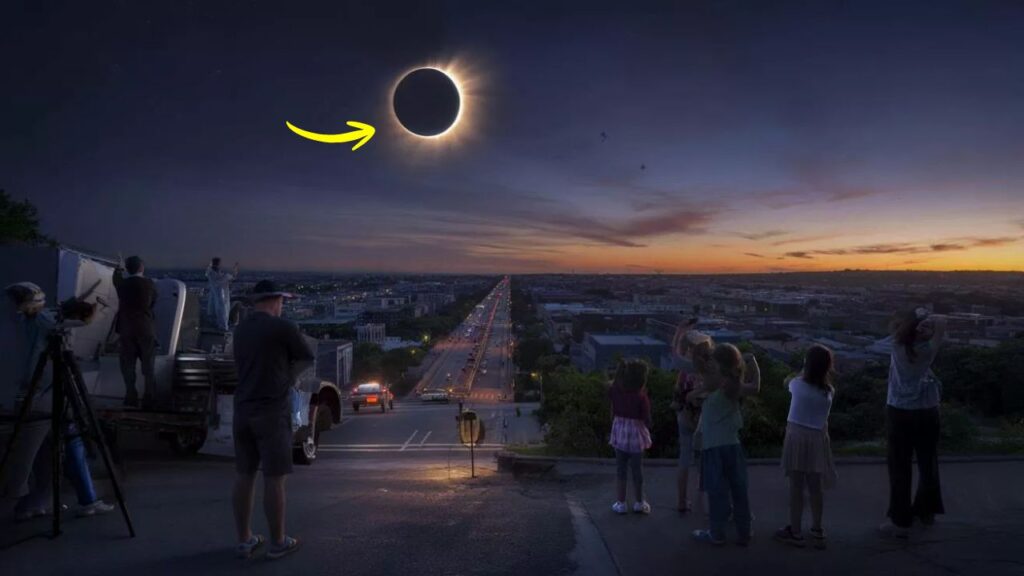
The first loudspeaker crackles at 9:07 a.m., right as the morning sun turns the city glass a hard, white gold. On the main avenue, delivery scooters slow down. Drivers squint up. Someone in a café mutters, “That’s the one, right? The big eclipse?”
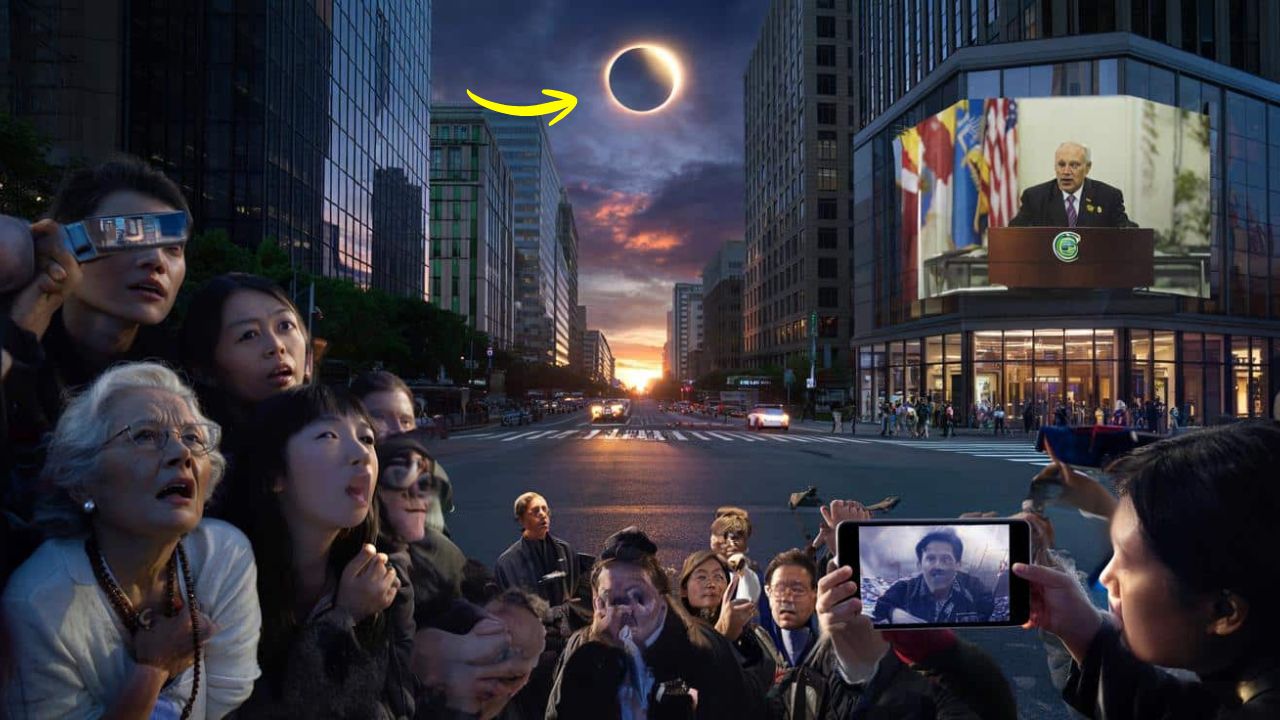
A few tables away, a grandmother clutches a string of beads, lips moving in a quiet, urgent rhythm. On a nearby TV, a minister in a dark suit smiles and calls public concern “a symptom of ignorance that belongs to the past.”
Outside, a teenager scrolls through viral TikToks warning that the sky going black for nearly seven minutes means “energies will flip” and “portals will open.”
Somewhere between the beads and the briefings, anxiety starts to spread.
This is not a disaster movie. This is the countdown to the longest total solar eclipse of the century. And it is revealing something far more complex than the mechanics of the cosmos. It is revealing us.
Table of Contents
The Numbers Are Impressive. The Fear Is Real.
Astronomers have calculated everything. The Moon’s shadow will race across continents at over 1,700 kilometers per hour. It will plunge broad corridors of land into an eerie twilight that lasts far longer than most people have ever experienced. For some, totality will stretch to nearly seven minutes—an eternity when the sun vanishes at noon.
For scientists, it’s a once-in-a-lifetime laboratory in the sky. For millions watching from balconies, rooftops, and crowded fields, it’s something else entirely: a moment when the world suddenly feels fragile.
That long pause in the light is exactly what has experts quietly worried.
The Rumor Mill Goes Dark
In rural districts from South Asia to parts of West Africa, local radio already crackles with whispers. A pastor in Lagos warns his congregation that the eclipse is “a sign of cleansing.” A WhatsApp chain in northern India urges pregnant women not to leave their homes “or the baby will be marked.”
On a crowded bus in Mexico, a woman takes off her shoe and bangs it lightly on the floor as she explains to her seatmate that this “wakes the Sun.” She learned it from her grandmother during an eclipse in the 1990s. She fully plans to do it again.
Across the hemisphere, search terms like “eclipse curse,” “end times eclipse,” and “what to do during eclipse” start climbing Google Trends.
For scientists tracking human behavior, this rising hum of nervous storytelling is not a side note. It’s the story. When the sky misbehaves, people rush to fill the silence with meaning—especially if they already feel insecure or ignored.
The longer the darkness, the more room for myths to bloom.
Warnings from Scientists, Shrugs from Power
Behind the scenes, teams of sociologists and space-agency communicators have been running simulations for months. They’re not modeling the path of the eclipse anymore. That’s settled math.
They’re modeling reactions. Spikes in emergency calls. Sudden drops in school attendance. Panicked stockpiling of candles and bottled water.
One draft advisory document, shared with regional authorities in a European country, bluntly predicts “a significant increase in apocalyptic interpretations” and urges local leaders to prepare gentle, factual messaging. Most of those lines never made it into the polished press conferences.
We’ve already seen a small preview. During the last major eclipse, police in a South American city reported a surge in calls about “strange lights” and animals “acting possessed.” A neighborhood veterinarian remembers fielding tearful questions about whether dogs could “absorb the bad energy in the sky.”
At the same time, municipal offices were flooded with building-permit forms stamped with urgent as developers rushed to finish projects “before the curse period.” A local sociologist later collected hundreds of social media posts from that day. Many were jokes. Many weren’t. People stayed home, curtains closed, convinced something beyond their understanding was passing overhead.
The Tone Problem: When Governments Dismiss Fear
On paper, this year is supposed to be different. Governments across several countries have pledged robust information campaigns, full of crisp infographics and classroom worksheets. The problem is the tone.
At a recent briefing, a spokesperson for one Southeast Asian government called eclipse fear “a childish reaction in a modern society.” Another minister dismissed concerns as “nonsense that needs no response.”

In the age of viral clips and meme warfare, that kind of confident shrug reads less like calm leadership and more like a dare. When institutions talk down, people turn sideways—toward whoever seems to take their feelings seriously. That can be a scientist. It can just as easily be a doomsday YouTuber.
Dr. Lina Ortega, a solar physicist who volunteers at public viewing events, puts it simply:
“People don’t need to be told they’re ignorant. They need to hear, ‘Yes, the sky will go dark. Yes, that’s strange. Here’s exactly what’s happening, and here’s how you can watch it safely with us.'”
How to Navigate an Eclipse That Scares You More Than It Should
If you’re already bracing yourself, there is a simple, practical gesture that can change the whole experience: plan your eclipse, on purpose, a week in advance. Not just the glasses and the time. The mood.
Decide where you want to be. Decide who you want to stand next to when the day briefly turns to night. Look up the exact minute totality hits your city. Set a quiet alarm.
When you map the moment, you turn a looming, fuzzy threat into a small, concrete event. That switch—from vague dread to scheduled appointment—takes a surprising amount of fear out of the air.
The trap many of us fall into is pretending we’re “above” all this. We roll our eyes at superstitions, but then we spend the day doomscrolling threads about “bad omens” and wondering why we feel jumpy.
Let’s be honest: nobody really reads the full scientific briefing every single day.
What helps much more is admitting, at least to yourself, that a darkened midday sky is unsettling. You’re not weak for feeling that in your stomach. You’re human. Once you name that feeling, you can decide what to do with it—instead of letting YouTube, TikTok, or a panicked cousin decide for you.
Practical Steps for a Peaceful Eclipse
Longest eclipse of the centuryScientific vs. official messagingPersonal preparation

Key PointDetailValue for the Reader Several minutes of total darkness at midday across multiple regionsHelps you anticipate how unusual the experience will feel and why reactions may be intense Scientists warn of superstition; some governments dismiss concerns as “ignorance”Shows why mixed signals can fuel anxiety and where to look for reliable guidance Plan where, how, and with whom you’ll watch; use safe equipment and limit rumor exposureGives you practical steps to turn fear into a memorable, shared moment
Watch with others. Join a local astronomy club, school, or community group that’s organizing a viewing. Being in a crowd replaces lonely dread with shared wonder.
Use proper eclipse glasses. No sunglasses. No smoked glass. No phone cameras as shields. Buy ISO-certified viewers from trusted vendors a few days beforehand.
Limit superstition scroll time. Give yourself a cutoff: once you’ve read a basic science explainer and a safety guide, step away from the endless “signs and omens” threads.
Talk to older relatives with respect. Ask what they were told as children. Then gently add what we know now. You’re not erasing their stories. You’re updating the script with them.
Prepare kids with a small ritual. Draw the Sun and Moon together. Build a “solar picnic.” Create a countdown chart. Turning the eclipse into a family project grounds anxious imaginations.
Between Shadow and Signal: What This Eclipse Really Reveals
When the Moon’s shadow races across the Earth this time, it won’t just reveal the delicate outer atmosphere of the Sun. It will outline us. Our fears. Our beliefs. Our trust—or lack of it—in the people who speak from podiums with flags behind them.
Some governments will get through the day with no more than a few confused phone calls. Others may watch as rumors of cursed crops, doomed pregnancies, or divine punishment twist their citizens’ mood for weeks.
The same event. The same patch of darkness. Two very different outcomes.
The difference is rarely the science. It’s the conversation.

There’s a quiet lesson here for anyone watching, from a city balcony or a dusty field. We live in a world that moves between data and myth at the speed of a swipe. The coming eclipse is a stress test for that fragile bridge.
If you choose, you can stand under that strange, temporary night and feel the old stories tug at you, while also holding the clean, almost boring truth of orbital mechanics. Both can exist in the same person.
What matters is which one you let steer your choices.
Somewhere in that balance, in those seven minutes of not-quite-day, we might catch a glimpse of the kind of society we’re becoming.
In-Depth FAQs: Your Questions Answered
Will this eclipse really be longer or scarier than past ones?Yes, it will be significantly longer—up to nearly seven minutes of totality in some locations. This extended darkness, combined with the massive population in the path, creates a perfect storm for heightened anxiety and myth-making. Previous long eclipses have triggered similar reactions, but social media amplifies everything now.
Can an eclipse affect my health, pregnancy, or mental state?Physically, no. There is zero scientific evidence that eclipses harm pregnancies, mark babies, or emit harmful radiation. Psychologically, yes—if you’re anxious, the experience can feel overwhelming. That’s normal. The key is preparation, not panic.
Is it dangerous to stay outside during the eclipse?Only if you stare at the sun without protection. Certified eclipse glasses are essential. Once totality hits and the sun is completely covered, it’s safe to look directly—but only for those minutes. As soon as the first flash of sunlight returns, glasses must go back on.
Why do governments downplay superstition instead of addressing it directly?Officials often fear that acknowledging myths gives them credibility. But dismissing concerns as “ignorance” can backfire, making people feel unheard and driving them to alternative sources—often less reliable ones. The most effective approach combines respect for tradition with clear, calm science.
How can I talk to family members who see the eclipse as a bad omen?Listen first. Ask about what they were taught and why it matters to them. Acknowledge that it’s natural to feel awe or fear when the sky changes. Then gently introduce the scientific explanation as an addition to their understanding, not a replacement. You’re not taking away their story—you’re enriching it.