Eclipse of the Century: Picture the world falling eerily silent. Daylight transforms into an otherworldly twilight. Birds stop singing. Shadows grow unnaturally sharp. A chilling hush settles in at noon—or, in this case, at sunset. This is the gripping reality of the August 12, 2026 total solar eclipse, a celestial event that astronomers are already calling the highlight of our era.
But here’s the catch: despite the breathless headlines promising “six minutes of totality,” the truth is both more precise and more thrilling. The maximum duration of this eclipse will be 2 minutes and 18 seconds. And those precious seconds will unfold against one of the most dramatic backdrops imaginable—the sun setting over the Atlantic Ocean, its corona blazing as day melts into twilight .
This is not just an eclipse. It is a cosmic alignment that will sweep across Russia, Greenland, Iceland, and Spain, offering viewers a blend of science and wonder that leaves people forever changed. Veteran eclipse chasers describe the experience as transformative, a moment that redefines your sense of place in the universe.
Table of Contents
When Does the Eclipse of the Century Take Place?
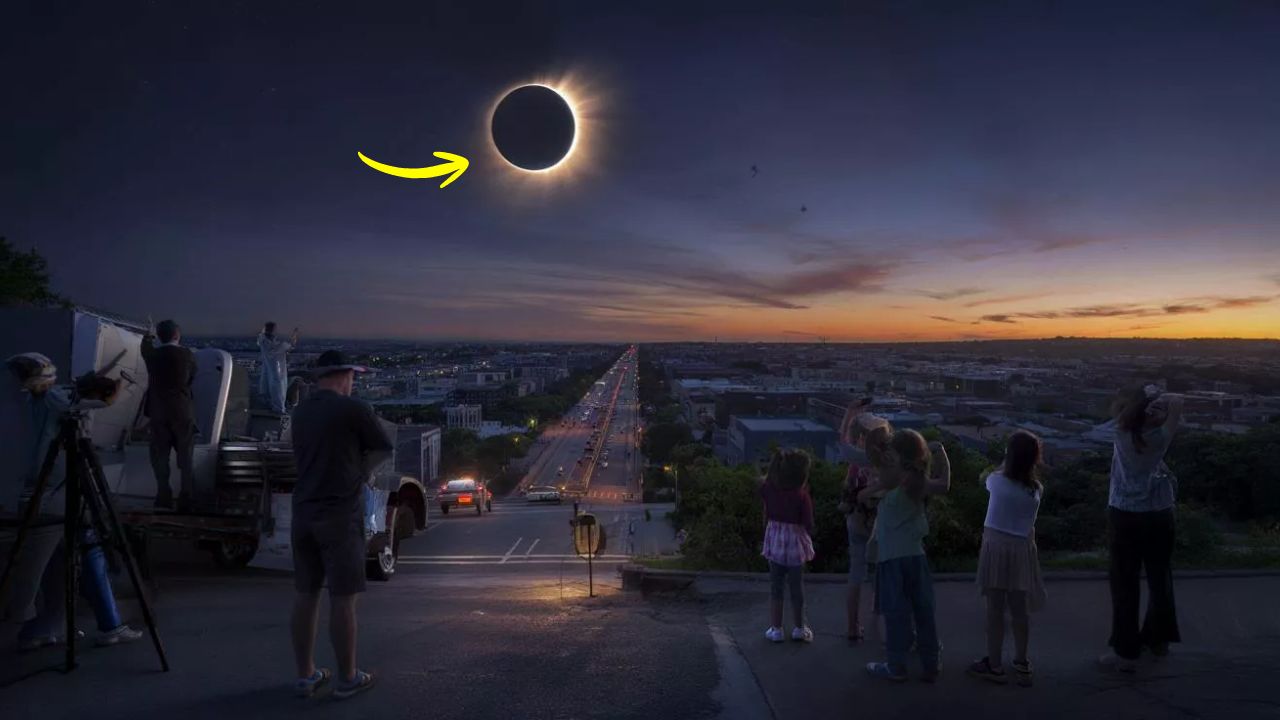
Mark your calendars: Wednesday, August 12, 2026. The moon’s umbral shadow will touch down in Siberia, race across the North Pole, graze eastern Greenland, kiss the western coast of Iceland, and finally sweep across northern Spain before departing just east of the Balearic Islands . The entire journey across the planet will take just 96 minutes .
The point of Greatest Duration—where totality lasts longest—will occur near Iceland, offering 2 minutes and 18 seconds of complete darkness . But as NASA eclipse expert Fred Espenak notes, “You can be hundreds of miles from the theoretical point of Greatest Duration and still enjoy totality lasting within a fraction of a second of the maximum possible, as long as you stay within several miles of the central line” .
This eclipse carries an extra gift: it occurs the day before the peak of the Perseid meteor shower, the strongest annual meteor display in the Northern Hemisphere . Imagine watching the sun vanish, then staying up to catch shooting stars streaking across a moonless sky.
What Makes This Eclipse Uniquely Spectacular?
The 2026 eclipse is a study in contrasts—literally. In Iceland, the sun will stand a respectable 25 degrees above the western horizon during totality . In Spain, the eclipse will occur very close to sunset, with the sun just 2 to 12 degrees high, depending on your location .
This low angle creates a photographer’s dream: the eclipsed sun hanging over the Atlantic, its corona shimmering above the waves . Oscar Martín Mesonero, an astronomer with Startrails in Spain, describes the view from the Balearic Islands as potentially “spectacular,” with the eclipsed sun over the sea and a “golden corona” .

But there’s a challenge. In Spain, you’ll need a clear view of the western horizon, unobstructed by mountains or buildings . The eclipse will occur so low that any obstacle could block the view entirely.
Top Locations for the Longest Totality Experience
The path of totality is narrow—just 182 miles (293 kilometers) wide . To experience the full magic, you must be inside this corridor. Here are the prime destinations:
Iceland offers the longest totality and the highest sun. Reykjavik will experience just over 1 minute of darkness, but the Snæfellsnes Peninsula could yield up to 2 minutes, 10 seconds. The advantage? A higher sun means easier viewing and better photography. The disadvantage? Iceland’s famously fickle August weather. Graham Jones of Time and Date frames the dilemma: “It’s a question of higher altitude and more clouds versus lower altitude and less clouds” .
Spain offers better weather odds but a much lower sun. The path sweeps through multiple provinces including Galicia, Asturias, Castilla y León, and the Balearic Islands . Totality durations vary:
LocationTotality DurationSun HeightKey ConsiderationSnæfellsnes, Iceland2m 10s25°Longest duration, cloudy risk Scoresby Sund, Greenland1m 46s24°Remote, dramatic fjord setting Gijón, Spain1m 46s10°Coastal, sunset view Burgos, Spain1m 44s8°Inland, better weather odds Sigüenza, Spain1m 38s7°Castle viewing, high elevation Mallorca, Spain1m 36s2.7°Over-the-ocean finale
Inland Spain—particularly the Castilla-La Mancha and Castilla y León regions—offers the best chance of clear skies, based on historical cloud data . But these areas also attract the largest crowds.
Key Factors for Picking the Best Eclipse Spots
Eclipse planning requires balancing multiple variables. Here’s what the experts prioritize:
Clear weather is paramount. Fred Espenak puts it bluntly: “Good weather is the key to successful eclipse viewing – better to see a shorter eclipse from clear sky that a longer eclipse under clouds” . Consult long-term climate data from sources like Eclipsophile.com, and have backup plans ready .

Horizon visibility is non-negotiable in Spain. The sun will be just degrees above the horizon, so scout locations with unobstructed western views . Coastal cliffs, hilltops, and castles like Gormaz or Sigüenza offer elevated perspectives .
Accessibility matters. Remote spots in Greenland offer dramatic settings but limited infrastructure . Spain provides excellent roads, hotels, and public transport . Book early—accommodations in the path are already filling .
Crowds will be massive. Smaller towns in the path may see their populations triple, as happened during the 2017 American eclipse . Plan for traffic, fuel your vehicle beforehand, and arrive at your viewing spot hours early.
How to Prepare and Safely Enjoy the Eclipse
Start observing an hour before first contact. Put on ISO 12312-2 certified eclipse glasses as the moon takes its first bite out of the sun . Watch the crescent shrink, notice the sharpening shadows, feel the temperature drop.
As totality approaches, prepare for the “diamond ring” effect—a single burst of sunlight flashing like a jewel. Then, darkness. Remove your glasses and look up. The solar corona, the sun’s outer atmosphere, will shimmer in delicate streamers around the black disk of the moon . Stars and planets may appear. The horizon glows 360 degrees as if bathed in sunset light.
Veteran observers warn against spending the entire event behind a camera. Take a few shots, then simply be present. The experience burns into memory far more vividly than any photograph.
Logistics and Safety Essentials
Protect your eyes. This is non-negotiable. Solar retinopathy—permanent retinal damage—can occur without pain, and the damage is irreversible. Certified eclipse glasses are mandatory except during the brief moments of totality .
Cameras need filters too. Without a solar filter on the lens, the sun’s concentrated rays can destroy your camera’s sensor .

Pack for the location. Iceland requires warm layers, waterproofs, and sturdy footwear . Spain demands sun protection, water, and snacks for what may be a long, hot day waiting for an evening eclipse.
Expect the unexpected. Cell towers may be overloaded. GPS may lag. Download offline maps, bring paper backups, and consider travel protection services for remote areas .
The Profound Impact of 2 Minutes in the Dark
Eclipse veterans speak of these events with near-religious reverence. The sudden silence of birds. The 360-degree sunset. The corona shimmering in the black sky. The chill that races down your spine.
For families watching together, the moment becomes a shared touchstone—a child’s first gasp of wonder, a grandparent’s tears. For solo travelers, it’s a profound encounter with cosmic scale, a reminder that we orbit a star, that we are passengers on a planet hurtling through space.
This eclipse offers something extra: the chance to witness it from places of breathtaking beauty—Iceland’s volcanic landscapes, Spain’s medieval hilltops, Greenland’s towering fjords. The experience will linger for decades.
The next total solar eclipse visible from Europe won’t occur until 2027 . After that, Spain waits until 2053 for another chance . This is not just the eclipse of the century. For many, it’s the eclipse of a lifetime.
Secure your spot on the path early. Prioritize clear skies. And when those 2 minutes and 18 seconds arrive, put down your phone, look up, and let the universe remind you how small—and how lucky—we truly are.
In-Depth FAQs: Your Questions Answered
How long will totality last in the eclipse of the century?Along the centerline, the maximum duration is 2 minutes and 18 seconds near Iceland . Durations decrease toward the path edges. In Spain, expect 1 minute to 1 minute 49 seconds depending on location .

Do I need special equipment to safely view the eclipse?Yes. ISO 12312-2 certified eclipse glasses are essential for all partial phases . Regular sunglasses offer zero protection. Cameras, telescopes, and binoculars require solar filters on the front of the lens .
What are the best places worldwide to witness full totality?Iceland offers longer duration and higher sun but cloudier weather. Northern Spain provides better weather odds but a very low sun requiring unobstructed western horizons . Remote Greenland appeals to adventure seekers willing to risk clouds for dramatic landscapes .
What if I’m outside the path of totality?You’ll experience a partial solar eclipse where the sun appears bitten. While interesting, you will miss the corona, the sudden darkness, stars appearing, and the full emotional impact . Major cities like Madrid and Barcelona will see 99%+ coverage—tantalizingly close but still not totality .
Is traveling for this eclipse worth the effort?Veteran eclipse chasers answer with a unanimous yes. The emotional depth, the visual spectacle, and the shared human experience outweigh any travel hassles . With proper planning, this 2-minute event becomes a memory that lasts forever.