It’s easy to imagine the past as a distant, dusty place. A world of superstition and suffering, populated by people nothing like us. But every time a construction crew digs a foundation, or a hiker stumbles upon a strange stone, we are reminded of a profound truth: humans have always been human.
For every bizarre belief, there was ingenuity. For every struggle, there was beauty. The objects our ancestors left behind are not just relics. They are messages. They tell us about love, loss, work, play, and the eternal desire to be remembered.
We have gathered some of the most interesting, cool, and downright bizarre pictures of artifacts from across history. From a 1,500-year-old pair of sandals with a heartfelt inscription to a 2,000-year-old computer that predicted the stars, these discoveries prove that the past is far more fascinating—and familiar—than we ever imagined.
So get comfortable, scroll through, and prepare to see history in a whole new light.
Table of Contents
Messages in the Sole: A Byzantine Lady’s Sandals
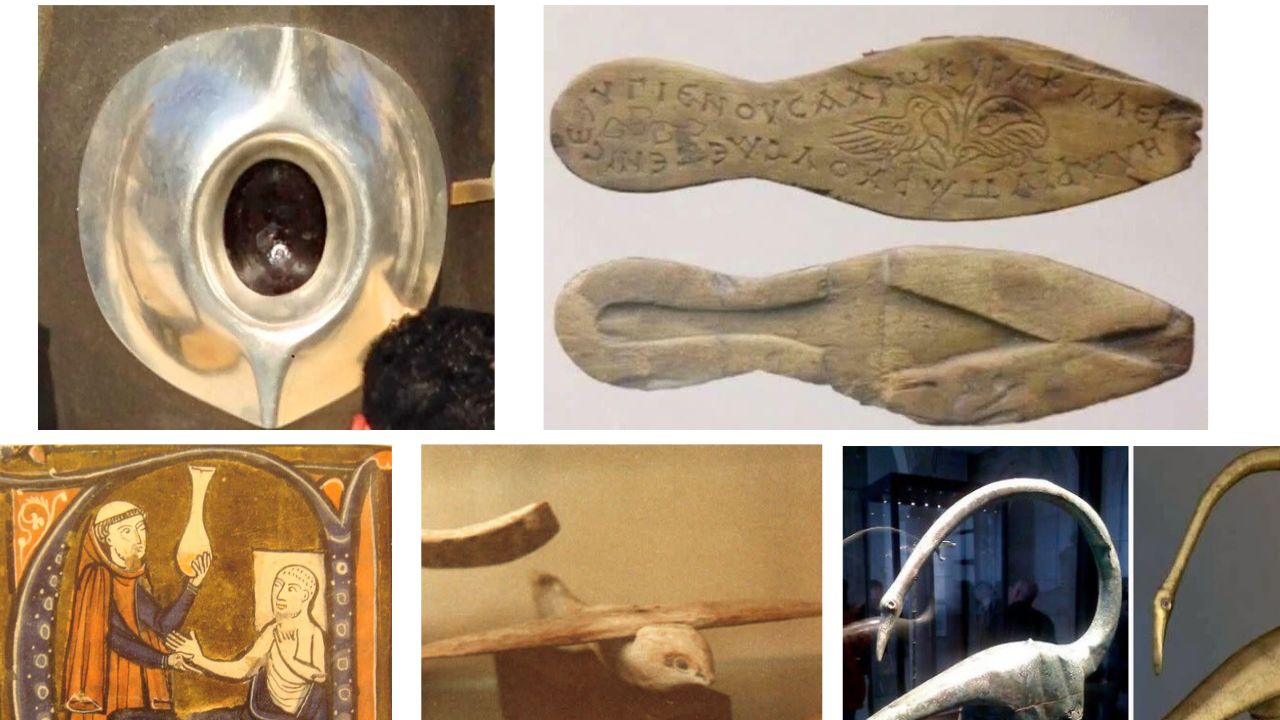
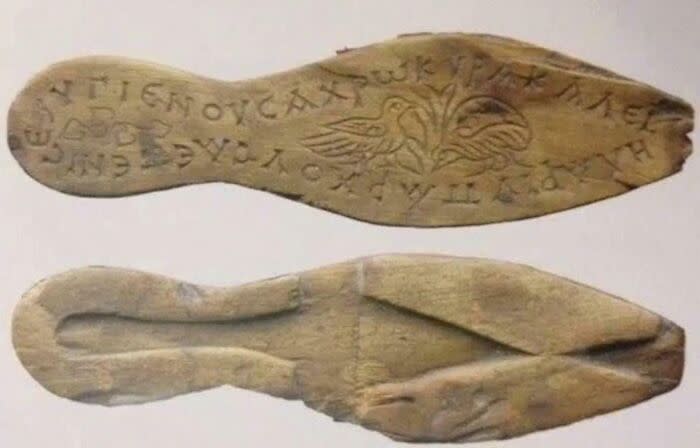
A 1,500-year-old pair of Byzantine-era lady’s sandals was discovered during digs associated with the Marmaray Project in Istanbul. These were no ordinary footwear. They likely belonged to a Greek woman and bear the following message in Greek: “Use in health, lady, wear in beauty and happiness.”
It is a wish across time. A hope that the wearer would walk through life blessed. It transforms an everyday object into a deeply personal connection.
Ancient Excuses: “Scorpion Bit Him”
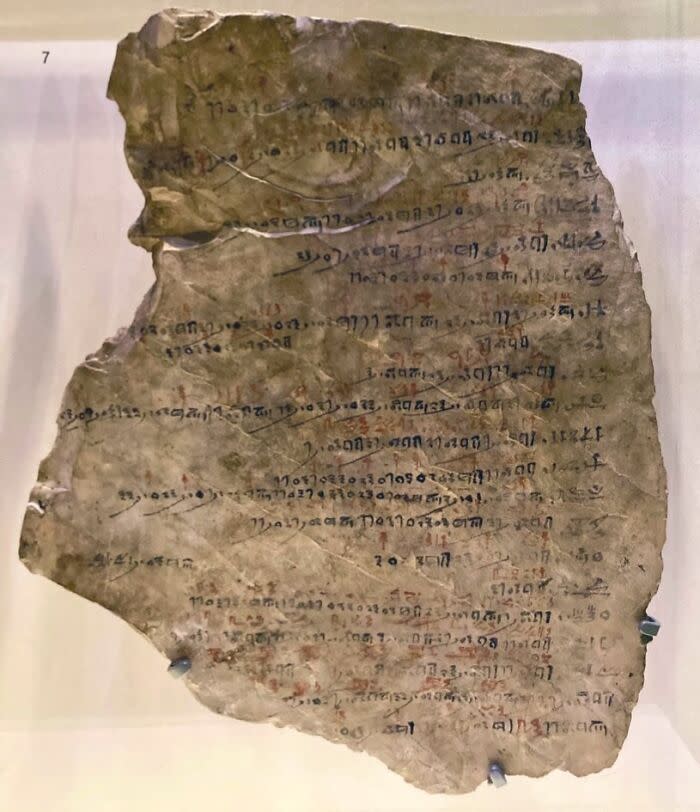
Held by The British Museum, a limestone tablet or ostracon dating back to 1250 BCE offers a fascinating glimpse into the work-life balance of ancient Egyptian workers. 40 employees and their reasons for missing work are inked in red and black New Egyptian hieratic script.
Among the entries are: ’embalming brother’, ‘brewing beer’, and—perhaps most alarmingly—‘scorpion bit him’ . Some things never change. Excuses, however, have evolved.
The Swan Warrior: A Gallic Masterpiece
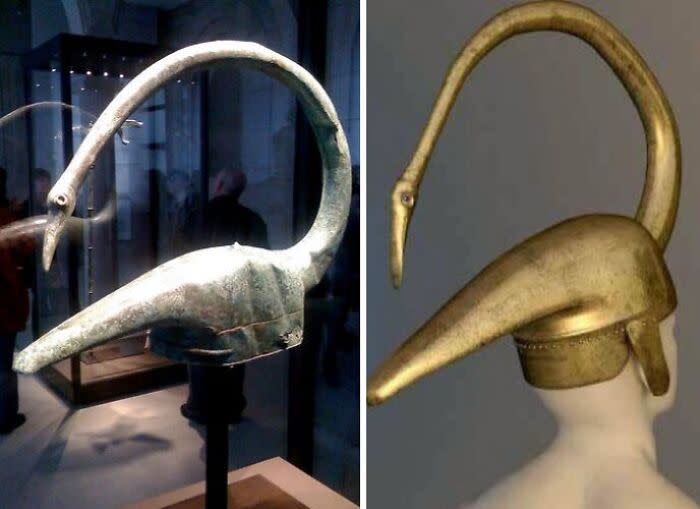
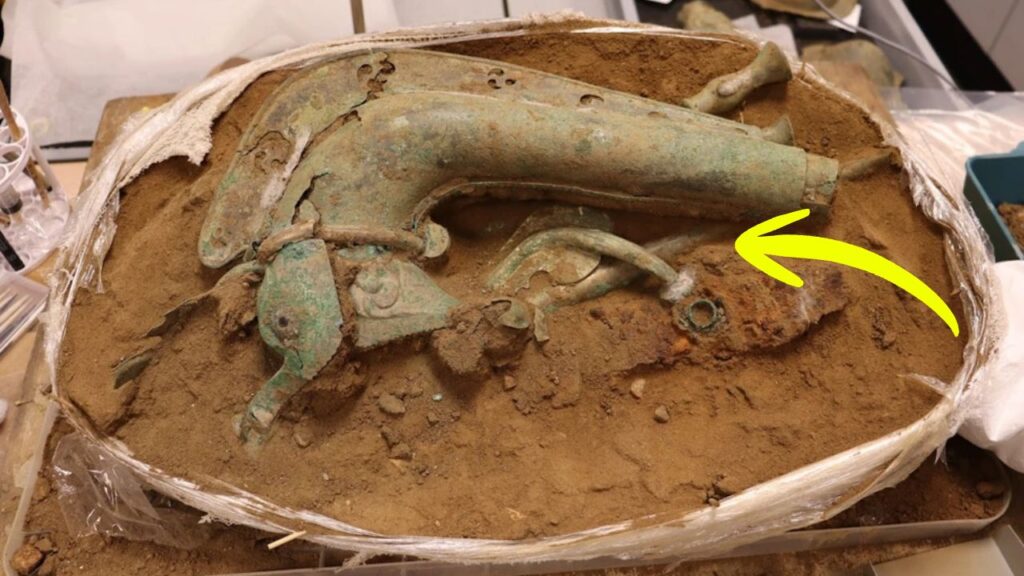
In 2004, archaeologists discovered the swan-shaped Gallic bronze helmet in an excavation of Tintignac in Southern France. Dated to the 1st century BC, the helmet was most likely worn by a wealthy, high-ranking member of society. Although it was excellently crafted from bronze and made to protect the wearer’s ears and head, it was probably only used as a ceremonial item.
It is a stunning blend of artistry and martial power. A reminder that warriors, too, appreciated beauty.
A Toast to the Future: 121-Year-Old Whisky
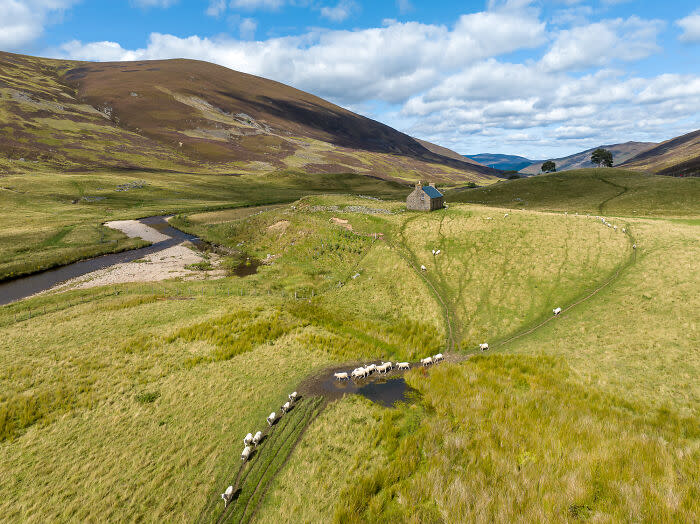
While replacing a bridge in Kingussie, Scotland, construction workers discovered a 121-year-old time capsule. Buried deep in the foundations of the bridge, the metal box held a newspaper dated 22 September 1894, a scroll, and a bottle of whiskey.
Someone, over a century ago, wanted to reach across time. They succeeded. One hopes the whiskey is still drinkable.
The Last Loaf: Vesuvius’s Preserved Bread
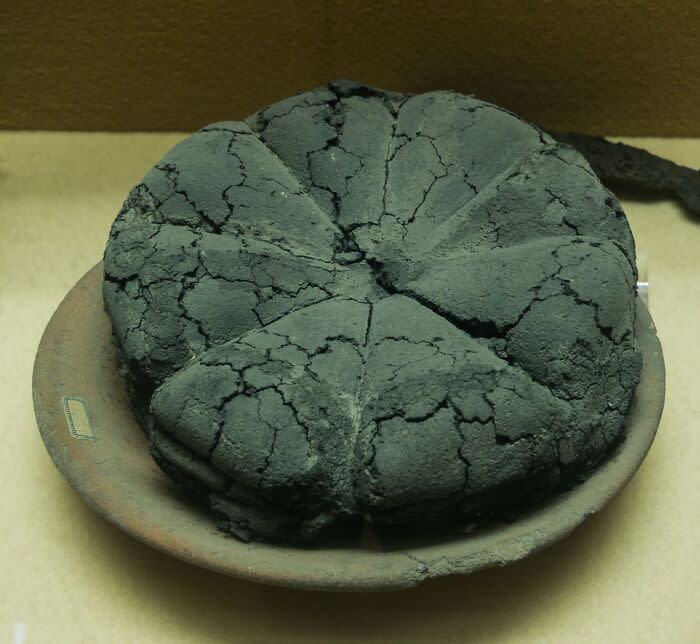
Stamped sourdough bread probably isn’t the first thing you think of at the mention of historical artifacts. But the Herculaneum loaf is different. It was baked just before the eruption of Mount Vesuvius in 79 AD and discovered in 1930 after the excavation of the House of the Stags. It is currently preserved in the National Archaeological Museum in Naples.
It is the last loaf. A final meal, frozen in ash, a poignant reminder of lives interrupted.
Highway to History: A Byzantine Church
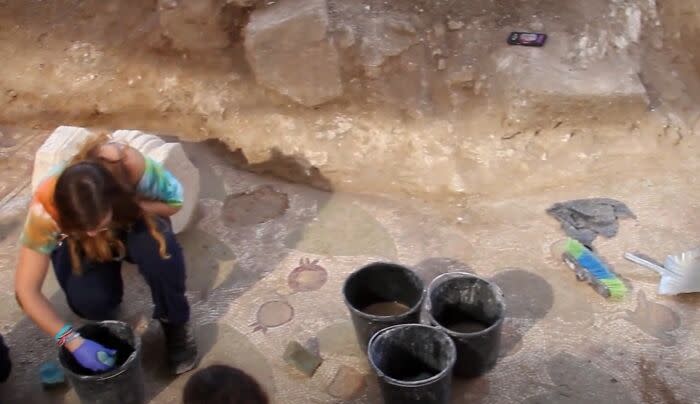
During the expansion of the Tel Aviv-Jerusalem highway in 2015, construction workers made an interesting discovery: a 1,500-year-old Byzantine church. With a white marble floor and a cross-shaped baptistery, the condition of the elaborate church far surpassed other similar structures discovered in the Holy Land.
A testament to faith, buried for millennia, now revealed by the roar of modern traffic.
Hands Across Time: Wyoming’s Petroglyphs
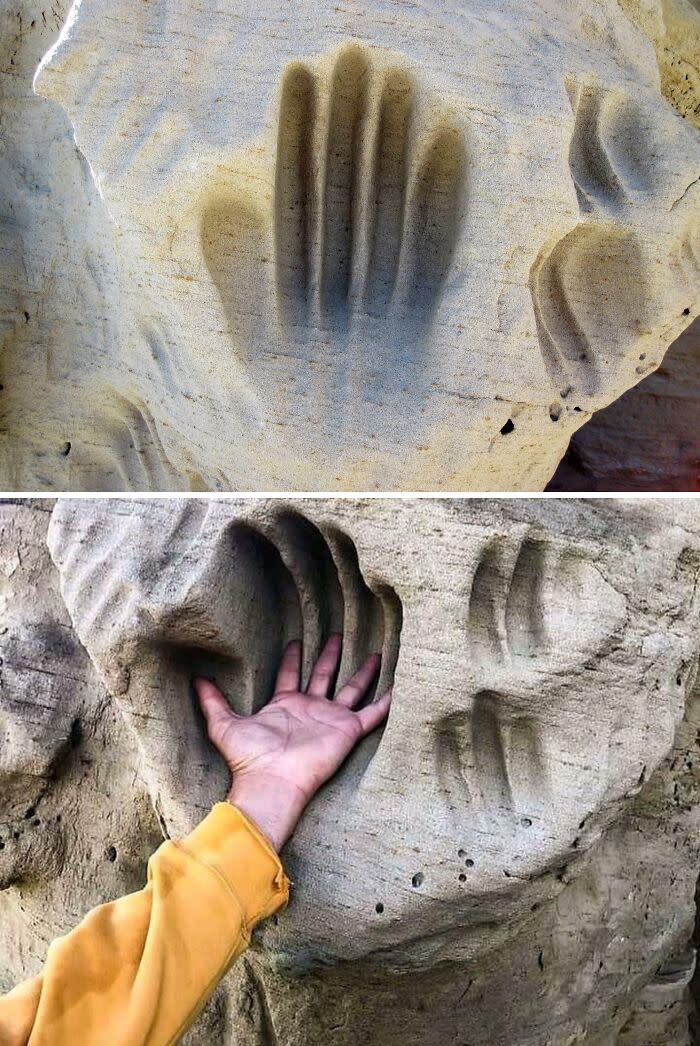
At least 200 years ago, handprints were carved into the sandstone surface of the White Mountain in Wyoming. They are unlike any other petroglyphs because they’re deeply etched into the stone. While archaeologists are baffled by the prints, visitors feel a compelling connection to those who created them.
Someone pressed their hand to the rock and said: I was here.
The Greatest Mystery: The Roman Dodecahedron
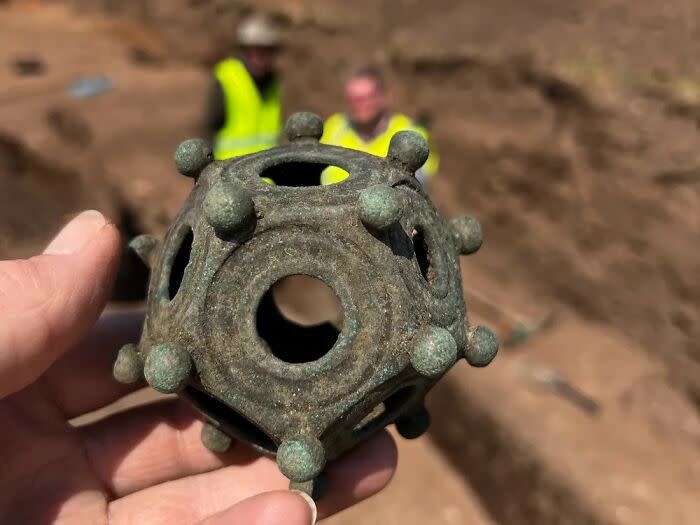
The Roman Dodecahedron is one of a few historical artifacts that still baffles people today. First found in 1739, over 130 have since been discovered all over Europe. They are small, hollow objects with 12 faces made from copper alloy. With no inscriptions, their purpose isn’t known, and as a result, more than 50 possible explanations have been published.
Was it a measuring device? A knitting tool? A religious object? A candlestick holder? No one knows. It is a beautiful, enduring puzzle.
Skis of the Ice: 1,300-Year-Old Gear
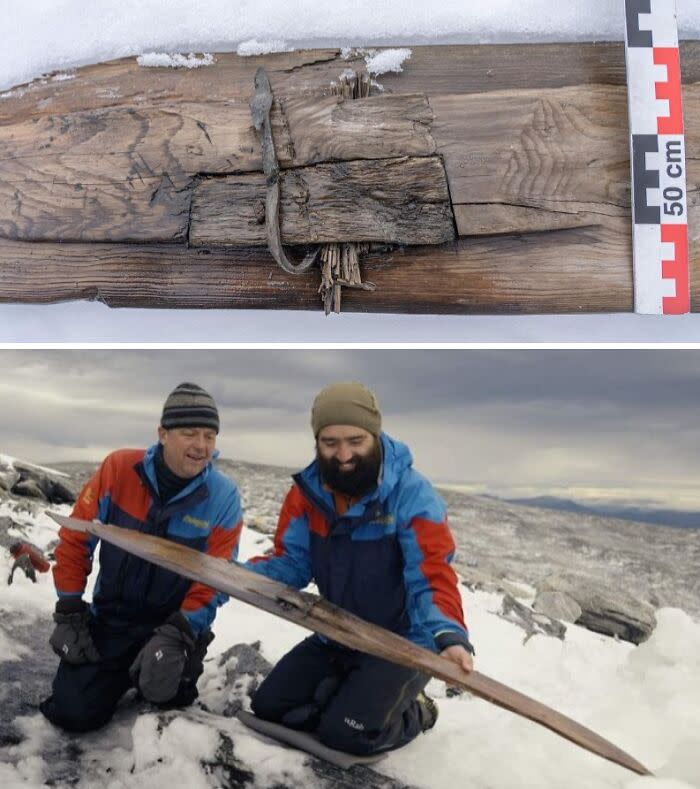
In 2014, archaeologists uncovered a lone wooden ski on Digervarden Mountain in Norway. Fast forward to 2021, researchers discovered the second ski buried more deeply in the ice. Both skis were handmade over 1,300 years ago and were not identical due to their individual history of wear and repair.
The world’s oldest complete ski set. Someone lost them in a blizzard 1,300 years ago and walked home. They are a testament to ancient survival skills.
Lines in the Desert: The Nazca Mystery
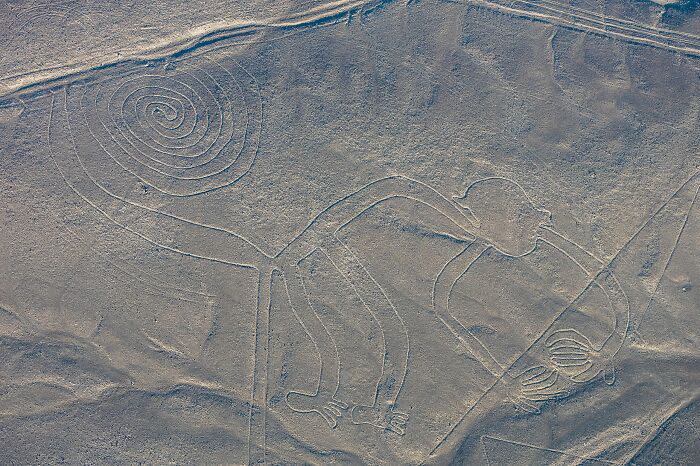
The Nazca lines were constructed over 2,000 years ago by people of the Nazca culture. The drawings spanned kilometers and included geometric shapes, straight lines, plants, and animals. Since their discovery in the 1920s, their importance remains a mystery, but some hypothesize they were drawn for astronomical purposes or religious ceremonies.
Only from the air can their full glory be seen. Who were they speaking to? The gods? Or us?
The Capstone of a King
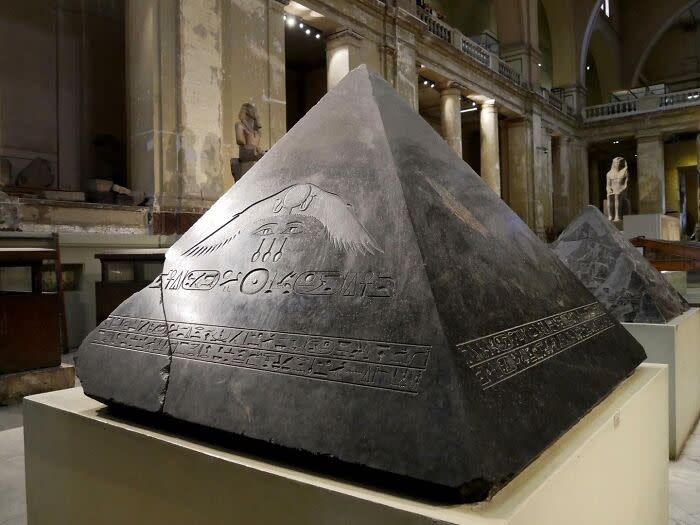
Crafted around 1850 BC, the pyramidion (capstone) of the Pyramid of Amenemhat III in Dahshur, Egypt, was excavated from the sand on the east side of the pyramid in 1900. The pyramidion was carved out of black granite and was intricately inscribed on all four faces. It is now at the Egyptian Museum in Cairo.
The very tip of a pyramid. The point where the king’s monument met the sun.

The World’s First Computer
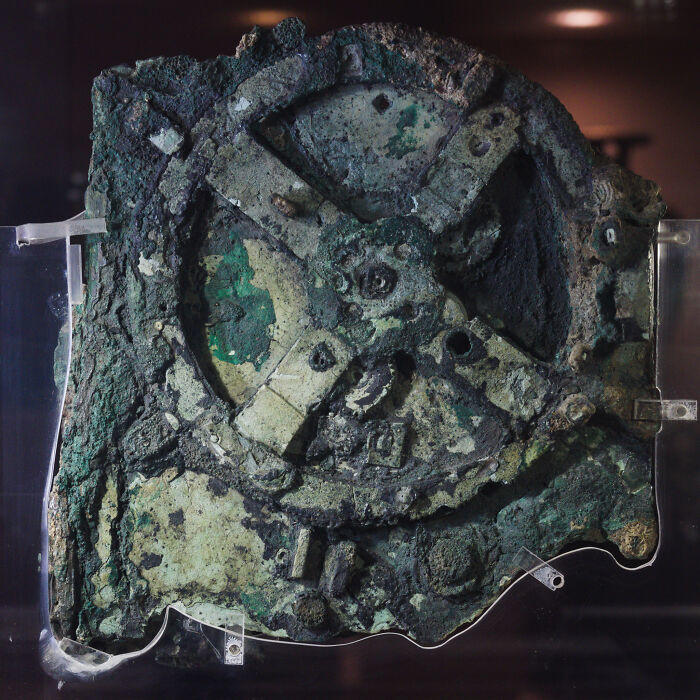
In 1901, the Antikythera mechanism was discovered among the remains of a shipwreck off the coast of the Greek island of Antikythera. The hand-powered device is regarded as the first known analog computer and was used to predict eclipses and astronomical positions years in advance. It could also track the cycle of the ancient Olympics.
A device of such complexity that its purpose was a mystery for decades. It proves that ancient technology was far more advanced than we ever assumed.
A Samurai’s Hidden Treasure
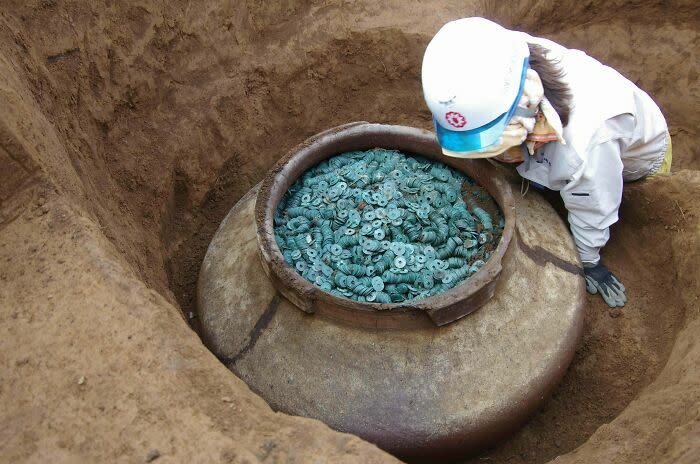
In 2018, archaeologists unearthed a 15th-century ceramic jar full of bronze coins at a residence belonging to a samurai just north of Tokyo. The coins were most likely acquired over time through trade, as they were from different regions and periods. The exact reason why the jar was buried remains a mystery.
A warrior’s savings. Hidden away and never retrieved.
The Birth of Bureaucracy: 200 Sumerian Tablets
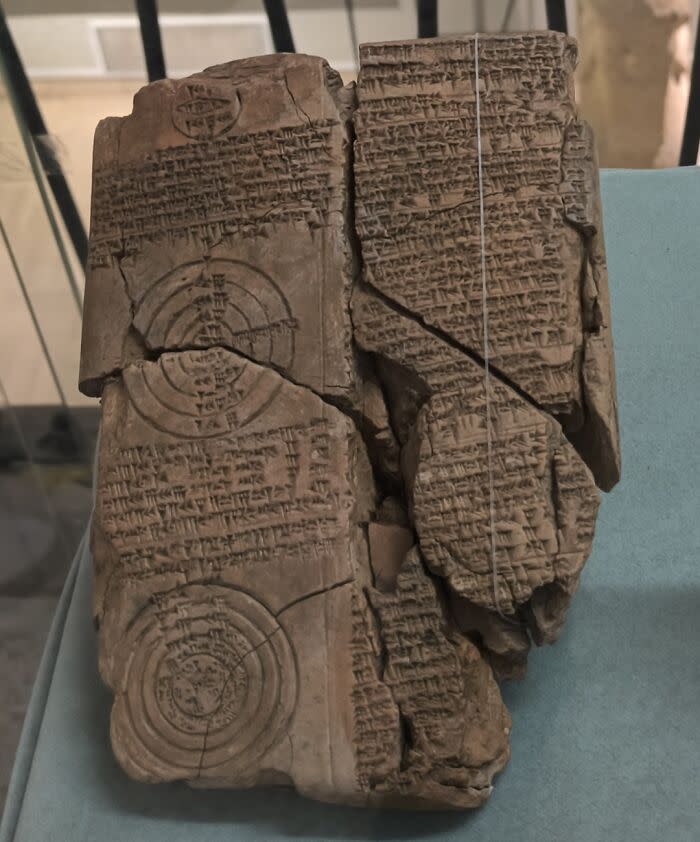
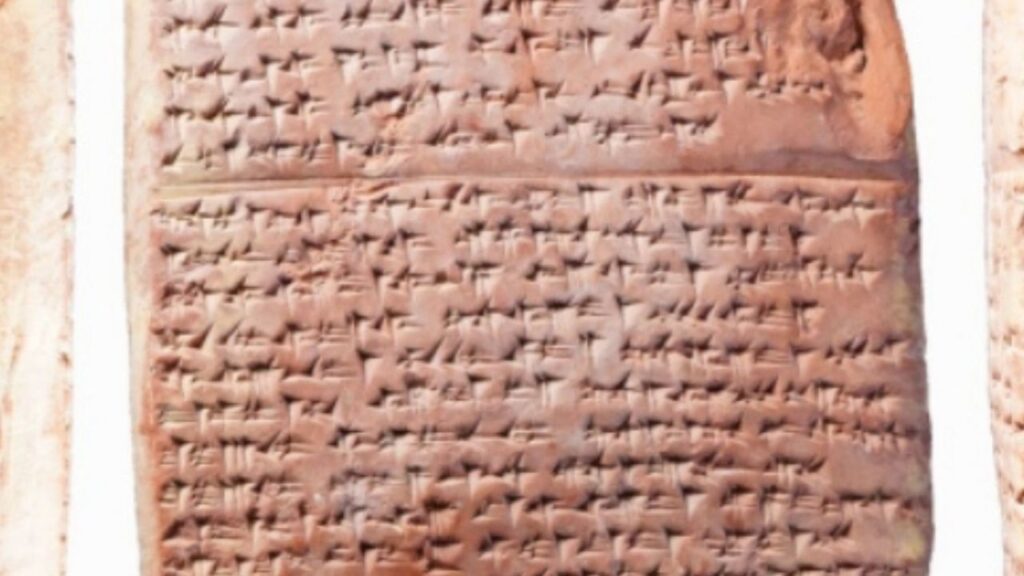
Researchers from the Girsu Project uncovered more than 200 tablets at a site in Southern Iraq, dating back to the third millennium BCE. Written in Cuneiform, the tablets detailed all aspects of Sumerian life, including people’s names, their roles, state of affairs, blueprints, maps, and much more. The tablets reveal just how concerned the Akkadian Empire was with bureaucracy.
Paperwork. It’s been with us for over 4,000 years.
A Mammoth in Seattle
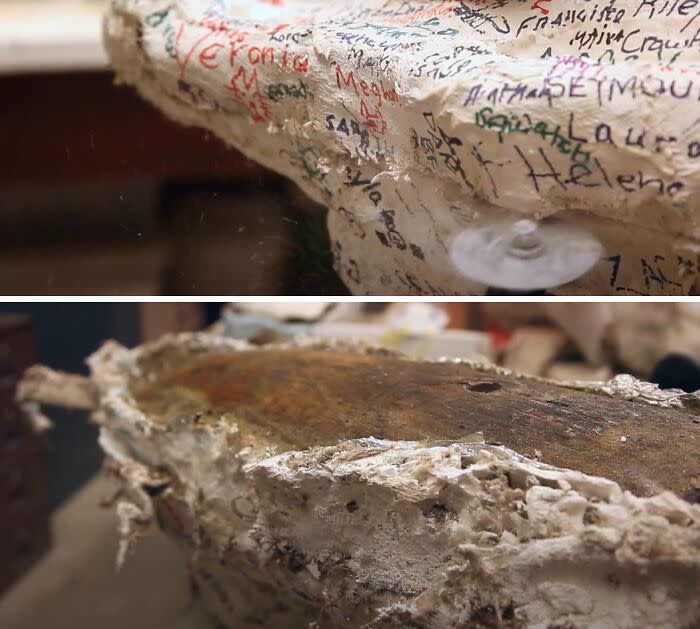
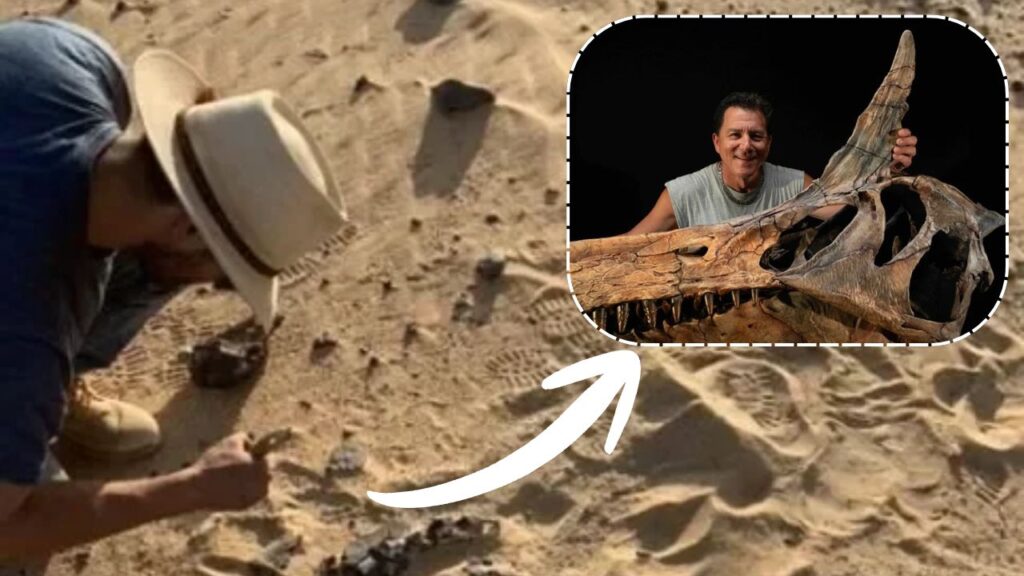
Property owner AMLI is credited for the discovery of a Columbian Mammoth tusk fossil at their apartment development site in Seattle. Regarded as the largest and most intact tusk discovered in Seattle, paleontologists estimated it to be over 60,000 years old, with its exact age to be determined using carbon dating. It was carefully removed for preservation and eventually found a home at the Burke Museum of Natural History.
A giant from the Ice Age, found beneath a modern city.
An Apple Store Built on Plague Victims
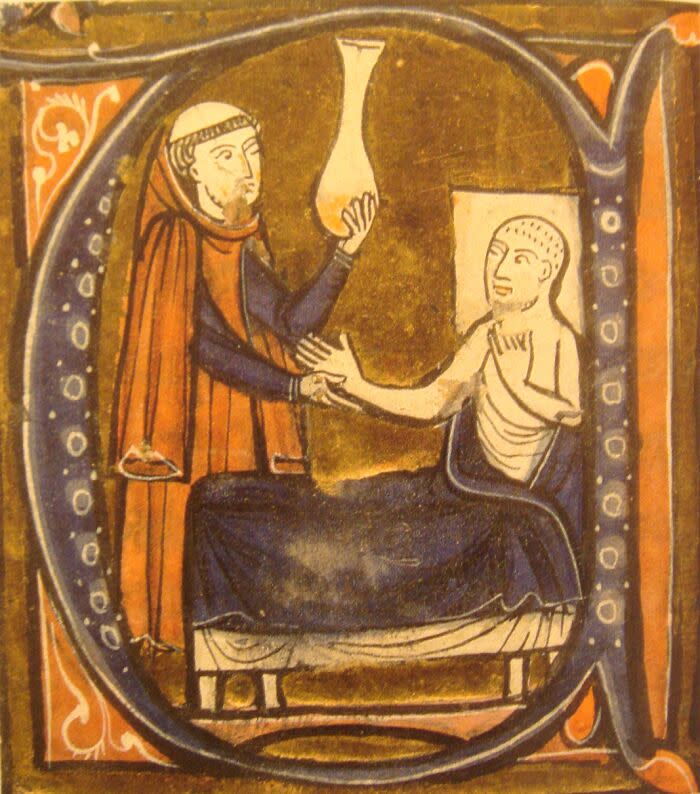
In 2013, construction workers unearthed a 15th-century hospital in Madrid during an excavation for a new Apple Store. Four years earlier, other construction workers at a neighboring site had uncovered the ruins of an adjoining church. It is believed the hospital was used to treat plague patients before being demolished in the 1850s.
Technology and mortality, forever intertwined.
Mammoths Emerging from Thawing Ice
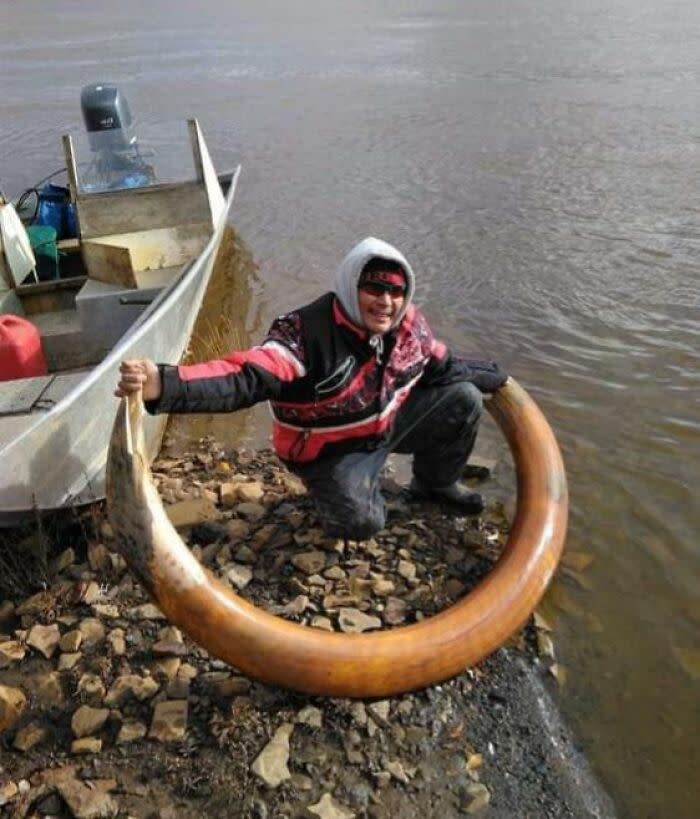
In 2020, oil workers found Woolly mammoth remains while working on an oil field on the Yamal Peninsula near the Arctic Circle in Russia. The skull and tusk were the second-largest mammoth discovery that year, likely due to global warming induced permafrost thaw in the region.
Climate change is revealing secrets frozen for millennia.
A Boy’s Letter to Santa: Found 70 Years Later
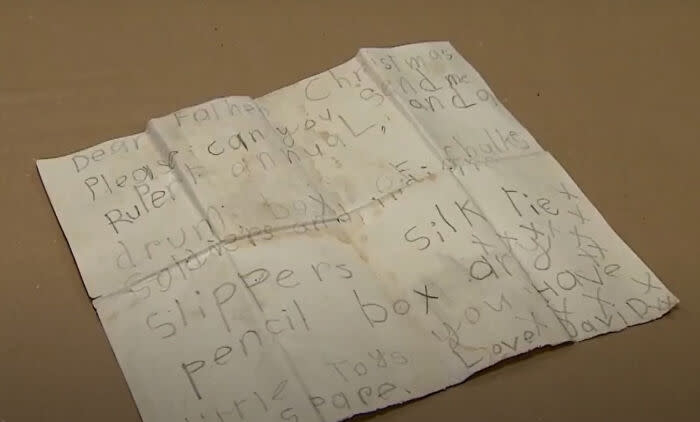
British builders found a 1943 letter written by a boy named David during the demolition of a chimney. The letter was to Santa and detailed a humble list of things he wanted for Christmas, such as toys and slippers. Contractor Lewis Shaw started the #FindDavid campaign on social media and successfully delivered the letter and wishlist to David.
David got his wishlist back, 70 years late. He was overwhelmed with emotion.
A Lost Mansion in Wellington
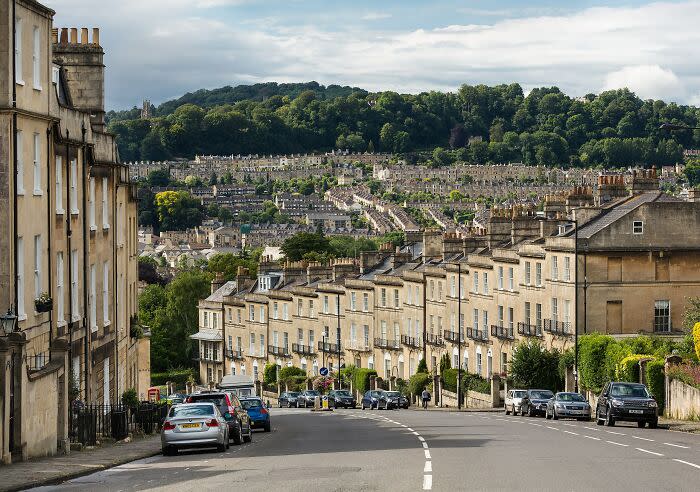
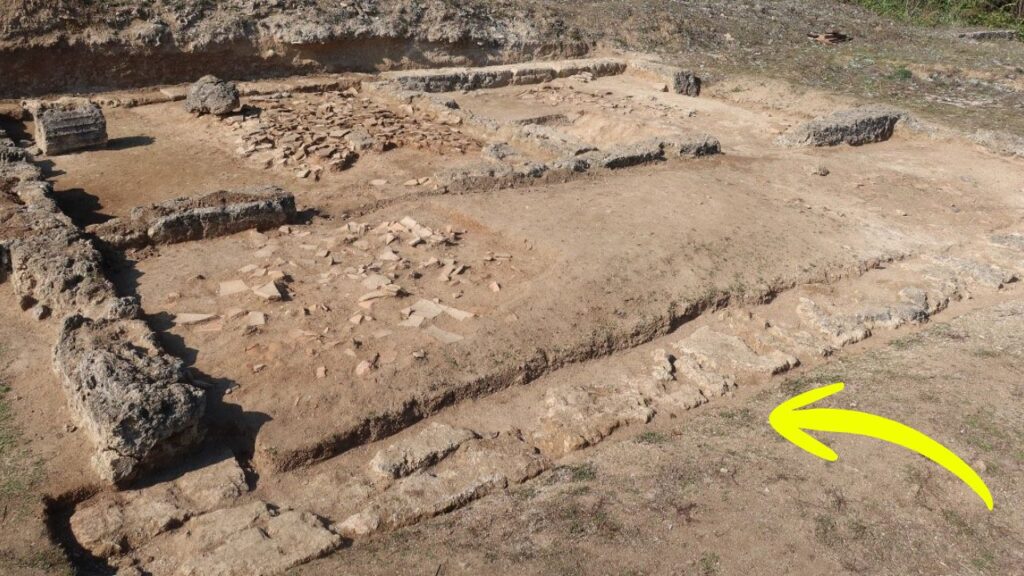
In 2013, at a construction site in Wellington, British archaeologists discovered the foundations of a 12th-century mansion no one knew existed. During the dig, they also uncovered ceramic roof tiles and floor tiles with intricate designs similar to the ones at Glastonbury Abbey. These suggested the mansion was of high status and historically significant.

History is hiding everywhere, even under our feet.
New York’s African Burial Ground
In 1991, a lower Manhattan excavation for a new federal building unearthed a 17th-century burial ground where enslaved Africans were interred between the 1690s and 1790s. The site is considered New York City’s earliest African American cemetery and was named a National Historic Landmark in 1993, followed by a National Monument in 2006.
A sacred place, finally honored. A testament to those who built the city in bondage.
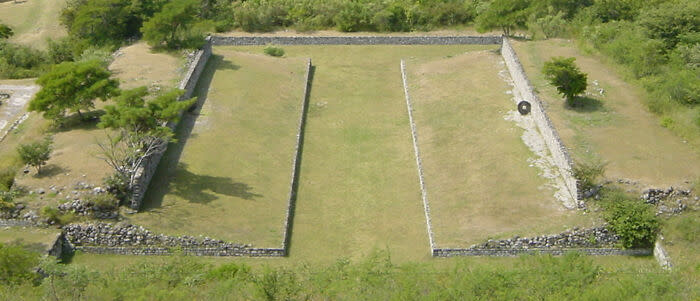
Mayan Ball Court Found Under Housing Project
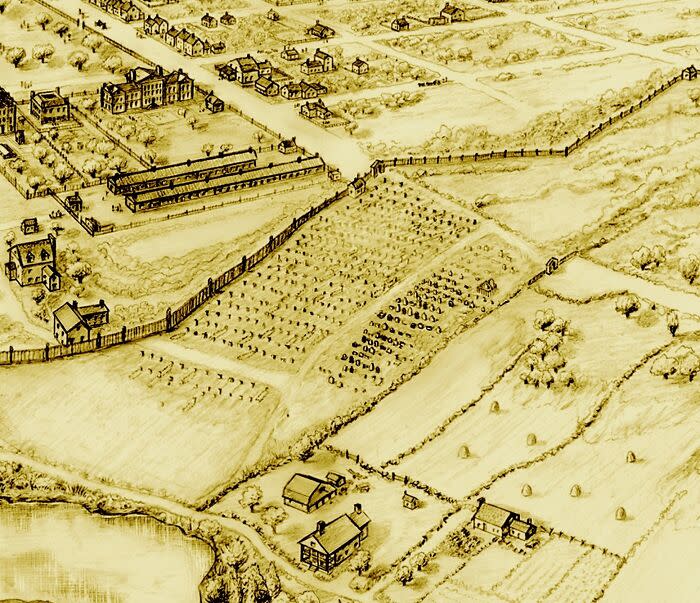
In 2006, construction workers discovered a 2,500-year-old Mayan ball court while working on construction for a housing project in Merida, Mexico. The court, described as 70% intact, is 82 ft long and 15 ft wide. Archaeologists also linked it to a ballgame which held deep cultural and religious meaning in Mayan society.
Where athletes once competed for glory and gods were honored.
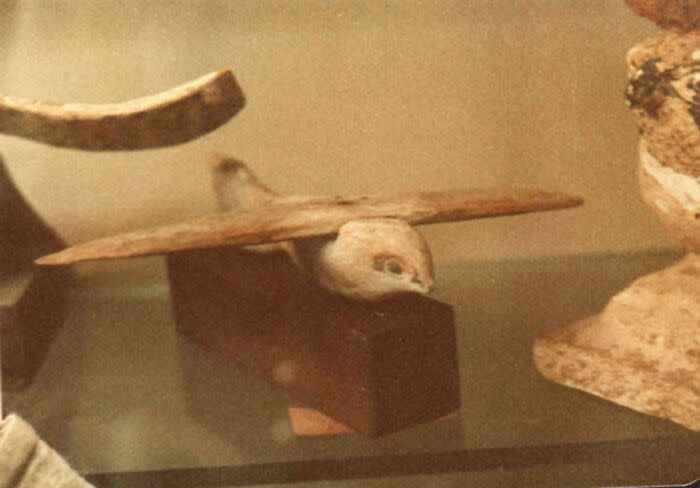
The Saqqara Bird: An Ancient Glider?
In the 1898 excavation of the tomb of Pa-di-l’men, the Saqqara Bird was discovered. The wooden model bird is dated to 200 BCE and has a wingspan of 18 cm. From a ceremonial object to a toy, the bird has many suggested purposes. Another hypothesis is that it is a model aircraft, but there is insufficient evidence to support this theory.
A bird? A toy? Or evidence of lost technology? The debate continues.
Philadelphia’s Forgotten Dead
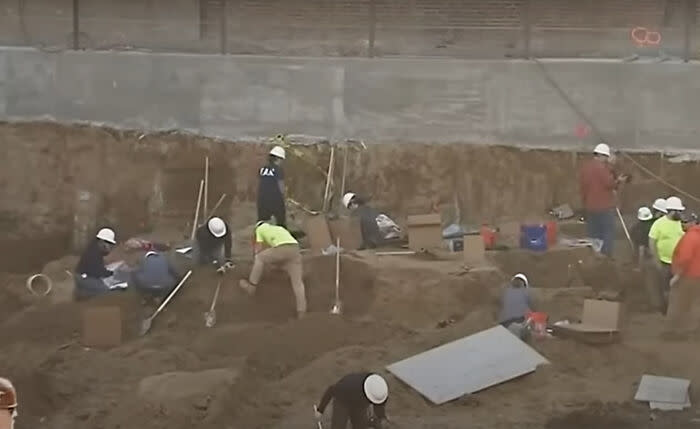
While building an apartment building in Philadelphia’s historic district in 2017, construction workers unearthed two dozen intact coffins and human remains. Experts dated the remains, belonging to over 60 individuals, to the 18th century. The site is believed to be a decommissioned burial ground for the First Baptist Church. When the church relocated in 1860, all remains should have been transferred. How or why these were left behind is unknown.
A congregation left behind. A mystery of faith and forgetting.
A Viking Sword in the Mountains
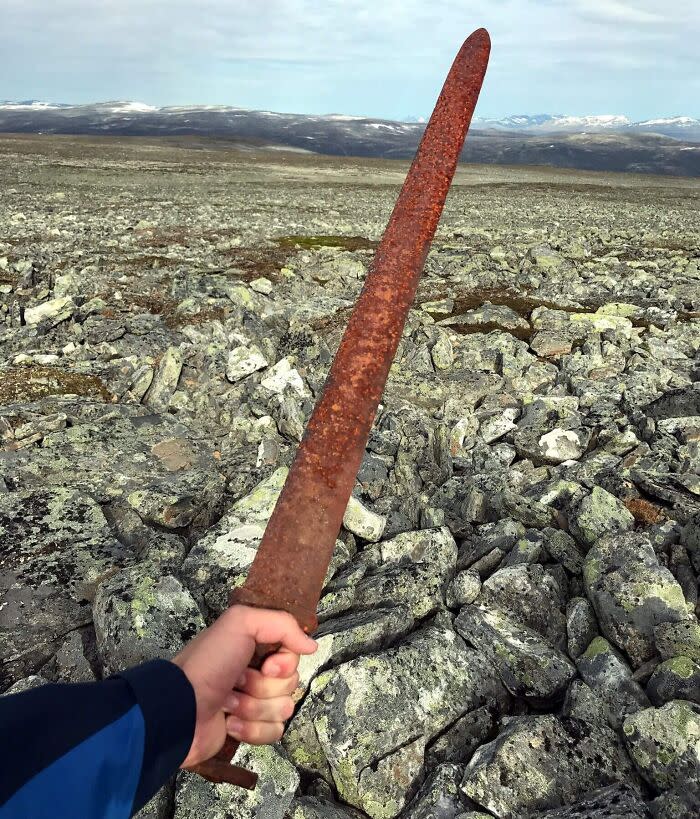
In 2017, reindeer hunters on a mountain in southern Norway discovered a Viking sword made of high-quality iron. Archaeologists believe the high altitude and cold, dry conditions helped preserve the sword. They also think the sword may have been lost over 1,100 years ago by a Viking journeying through the rough terrain during a blizzard.
A warrior’s weapon, lost in a storm, found by hunters.
Ptolemy IV’s Temple Found in Sewer Dig
In 2019, construction workers in Egypt discovered the long-lost temple of Pharaoh Ptolemy IV while drilling for a new sewage drain. The 2,200-year-old temple bears inscriptions reading “Ptolemy IV” along its limestone walls, together with imagery of animals and birds.
A pharaoh’s monument, found in a hole in the ground.
The Controversial Dropa Stones
Discovered in 1938 by Chinese professor Chi Pu Tei, the Dropa stones allegedly detail the story of an extraterrestrial spacecraft carrying Dropa people that crash-landed on Earth. Chinese archaeologists translated the stones’ hieroglyphic-type markings, and their findings were purportedly published. However, no records of this journal have ever been found, and others question the existence of both Chi Pu Tei and Tsum Um Nui.
A compelling story. A complete lack of evidence. A modern mystery.
The Christmas Day Bomb
On Christmas Day in 2016, 54,000 Augsburg residents had to be evacuated from their homes while explosives experts worked to defuse a RAF bomb from WWII found under a construction site. If detonated, the 2-ton bomb could have destroyed all buildings within a mile radius.
The past, literally, still exploding into the present.
Ceremonial Blade from the Earth
An Obsidian blade was discovered by the Wilder brothers after an earthquake in Northern California unearthed it. It is said to have been used ceremonially by the Karuk people. Some members of the Karok tribe claim these blades are still used today.
A sacred object, returned by the earth.
Buried in the French Quarter
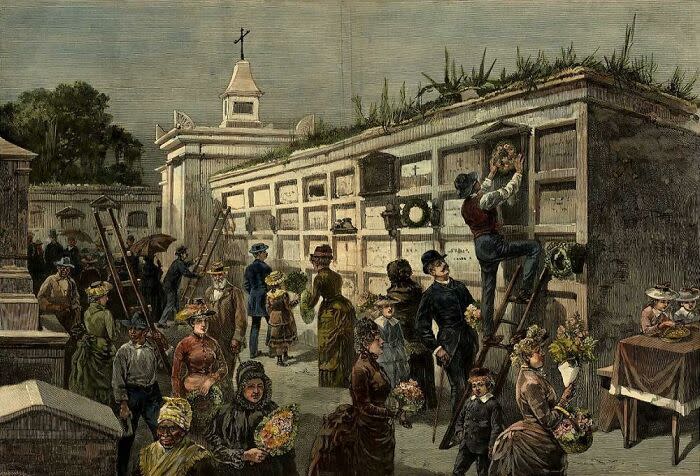
In 2011, an archaeologist named Ryan Gray uncovered a burial site at the French Quarter during a test dig for a pool installation at a private residence. The remains were part of the St. Peter Cemetery in New Orleans, where other skeletons were found in the 80s. Gray excavated all the coffins and transported them to Louisiana State University for further examination.
A quiet backyard held the remains of a city’s forgotten dead.
The Holiest of Relics: The Black Stone
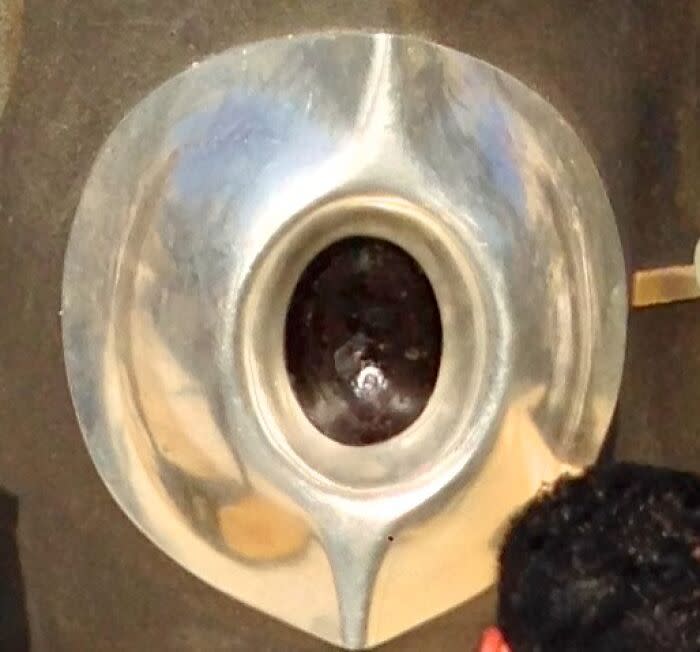
Located in the eastern corner of the Kaaba, the Black Stone dates back to the time of Adam and Eve and is an Islamic relic revered by Muslims. Believed to absorb the sins of all who touch it, the artifact plays a central role in some Islamic pilgrimage rituals.
For millions, it is the most sacred object on Earth. A focus of faith for over a millennium.
These artifacts are more than objects. They are bridges. They connect us to the people who came before—their joys, their fears, their hopes, and their daily lives. They remind us that history is not a distant, foreign land. It is a story we are all still writing. And sometimes, if we are lucky, it reaches out and touches us across the centuries.