The Forgotten Tongue of Kalašma: For over a century, archaeologists have sifted through the ruins of Hattusa, the capital of the mighty Hittite Empire in what is now modern Turkey. They have unearthed nearly 30,000 clay tablets—a vast library of cuneiform writing detailing the laws, treaties, and rituals of a Bronze Age superpower . Most are in Hittite, the oldest known Indo-European language. But hidden among them, a single tablet held a secret whispered for 3,000 years.
In 2023, researchers identified a completely new language within the text. It was the tongue of the land of Kalašma, a lost corner of the Hittite world. Its decipherment is now forcing a fundamental rethink of how languages, peoples, and cultures intertwined in the ancient world .
Table of Contents
The Astonishing Find: A Ritual in a Language No One Knew
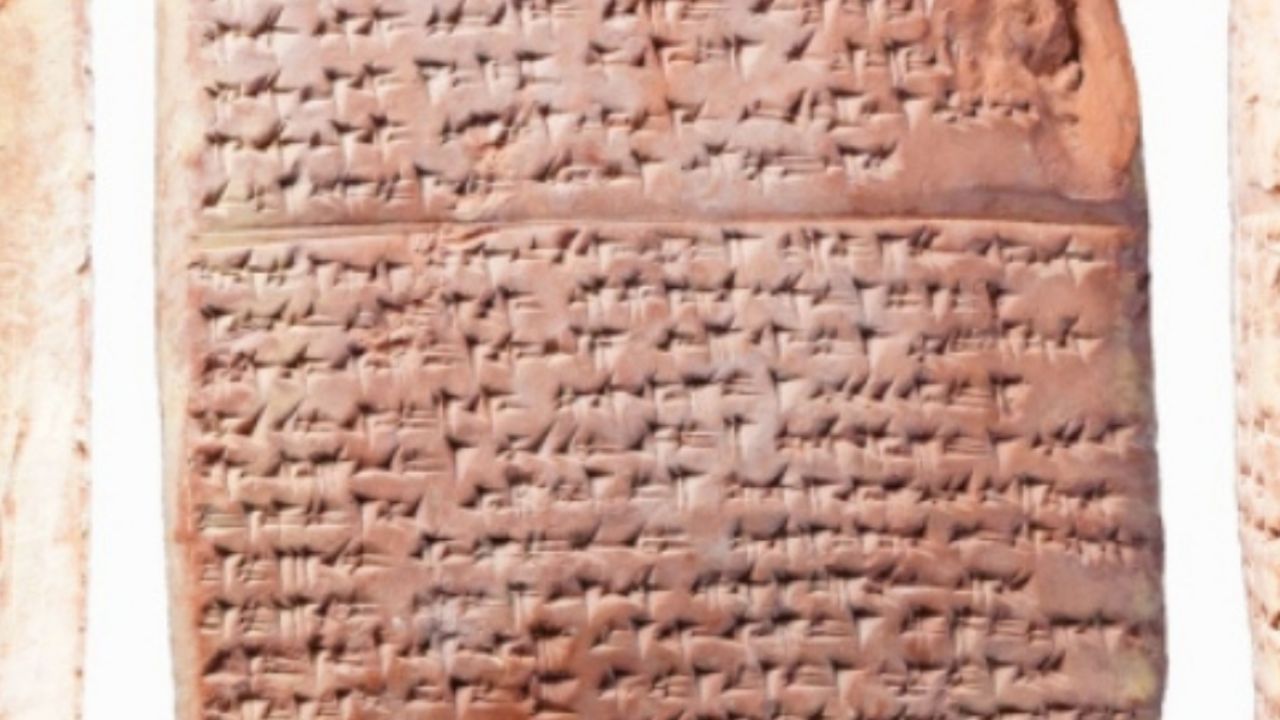
The discovery was not made on a new excavation, but within the archives of the ancient world itself. The tablet, catalogued as KBo 71.145, was unearthed at Boğazköy-Hattusha, a UNESCO World Heritage Site that has been excavated for over a century by the German Archaeological Institute, with current work led by Professor Andreas Schachner .
At first glance, it looked like many others. The opening lines, written in Hittite, were clear: it was a ritual text. But the Hittite introduction contained a remarkable phrase. It stated that the following words were written “in the language of the land of Kalašma” (URUka-la-aš-mi-li). What followed was a text in a language that no living person had ever heard spoken .
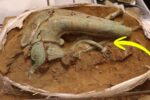
The tablet was sent for analysis to Professor Daniel Schwemer, the Chair of Ancient Near Eastern Studies at Julius-Maximilians-Universität Würzburg in Germany. He and his team recognized immediately that they were dealing with something unprecedented. The Hittites, it turns out, were meticulous record-keepers of the diverse cultures within and around their empire. “The Hittites were uniquely interested in recording rituals in foreign languages,” Schwemer explained . This tablet was proof of that fascination.
What the Tablet Reveals: A New Branch on the Language Tree
The true nature of the Kalašma language was unlocked by the expertise of leading philologists. Professor Elisabeth Rieken of Philipps-Universität Marburg, a specialist in ancient Anatolian languages, alongside Schwemer and Dr. Ilya Yakubovich, began the painstaking work of decipherment .
Their analysis, published in detail in late 2024, yielded a stunning conclusion: the language of Kalašma belongs to the Anatolian branch of the vast Indo-European language family. This places it in the same linguistic lineage as Hittite, Luwian, and Palaic.
But its precise place within the family is a fascinating puzzle. The land of Kalašma is believed to have been located on the northwestern fringe of the Hittite heartland, near the modern Turkish province of Bolu . This region was geographically closer to the area where Palaic was spoken. However, the linguistic features of the newly discovered text show it shares more characteristics with Luwian, a language spoken further to the south and west .
This unexpected discovery has electrified the linguistic community. It suggests that language distribution in Bronze Age Anatolia was far more complex than a simple geographic map would suggest. It hints at population movements, cultural spheres of influence, and layers of linguistic interaction that scholars are only now beginning to untangle .
Global Implications: The “Thousand Gods” and an Empire of Tolerance
The significance of the Kalašma tablet extends far beyond a single new language. It offers a profound glimpse into the nature of the Hittite Empire itself. The Hittites called their capital the home of the “Thousand Gods”. This was not mere hyperbole. As they conquered or made treaties with neighboring lands, they did not destroy their deities. Instead, they incorporated them into their own pantheon, building temples for them in Hattusa.
This practice, described by researchers as a form of “respect” that was also a powerful political tool, created an empire that was culturally and linguistically diverse . The Kalašma text, a ritual conjuration, was likely dictated by a native speaker from that land and meticulously written down by a Hittite scribe for inclusion in the royal archives. It demonstrates a remarkable level of interest in and respect for the traditions of subject peoples.
As Professor Schachner noted, this discovery provides an “interesting clue” to the empire’s success: “This people call themselves followers of the ‘Thousand Gods’… They could unite the people by placing other gods in their own temples and including other people living in Anatolia in their own community, showing them that they have a place in their system” . By giving a place to foreign gods, they gave a place to foreign peoples—and their languages.
What This Means for History: A Puzzle Still Being Solved
The decipherment of Kalašma is not an end, but a beginning. The full text is still being studied, and its grammar and vocabulary are slowly yielding their secrets. In early 2024, Rieken and Yakubovich presented their latest findings at a seminar at Harvard University, sharing images and new hypotheses with an eager scholarly audience . A comprehensive analysis was published in the journal Archäologischer Anzeiger in late 2024 .
The Kalašma language stands as a powerful testament to the fact that history is not a closed book. It is written in the ground, in shattered pots and buried cities, and on clay tablets waiting to be read. For 3,000 years, the voice of Kalašma was silent. Now, thanks to the dedication of scholars, it can finally be heard. It tells us that the world of the Bronze Age was one of unexpected connections, of cultural fluidity, and of an empire that found strength in its diversity . It is a voice that will be studied for generations to come.
In-Depth FAQs: Your Questions Answered
1. Where was the Kalašma language discovered?The only known text in the Kalašma language was discovered on a clay tablet at Boğazköy-Hattusha in modern-day Turkey. This site was the capital of the Hittite Empire during the Late Bronze Age and has been excavated for over a century by the German Archaeological Institute .
2. How did researchers decipher the language if it was unknown?The decipherment was led by expert philologists, primarily Professor Daniel Schwemer (University of Würzburg) and Professor Elisabeth Rieken (University of Marburg) . The tablet’s introduction was written in Hittite and explicitly stated that the following text was in “the language of Kalašma.” By comparing the grammatical structures, word roots, and syntax of this new text with known Anatolian languages like Hittite and Luwian, they were able to confirm it was a related but distinct Indo-European language .
3. Why is this discovery so important for linguists and historians?The discovery reveals that the linguistic landscape of the Hittite Empire was even more diverse than previously thought. The language of Kalašma is geographically closer to the Palaic-speaking region but linguistically more similar to Luwian. This challenges simple models of language distribution and opens new avenues for understanding population movements and cultural interactions in the Bronze Age .
4. What does the text on the tablet say?The text is a ritual incantation. The Hittite introduction identifies it as a ritual text, likely a conjuration, originating from the land of Kalašma. While the exact contents are still being analyzed, it adds to a large collection of foreign-language ritual texts found in the Hittite capital, demonstrating their interest in the traditions of neighboring and subject peoples .
5. Who were the Hittites, and why were they interested in other languages?The Hittites were a powerful ancient civilization that controlled much of Anatolia and the Near East from the 17th to the 12th century BCE. They are known for their religious tolerance, often incorporating foreign deities into their own pantheon. This openness extended to language, as they meticulously recorded rituals in various local tongues, seeing this as a way to understand and integrate the cultures within their diverse, multicultural empire .