For over two millennia, the story hovered between history and myth. Hannibal, the Carthaginian general, crossing the Alps with 37 war elephants. Roman soldiers, terrified by beasts they had never seen. Horses panicking at the smell and sight of monsters from Africa. The tale was immortalized in paintings, coins, and classical texts. But hard evidence? None existed.
Until now.
In southern Spain, near the city of Córdoba, archaeologists have uncovered a small elephant bone. It is roughly 10 centimeters long. It is unremarkable to the untrained eye. But to historians, it is a bombshell. This bone, dated to the exact period of the Second Punic War, confirms that Hannibal’s elephants were not legend. They were real. They were there. And they spread terror across the Roman world.
Table of Contents
The Astonishing Find: A Bone That Changes History
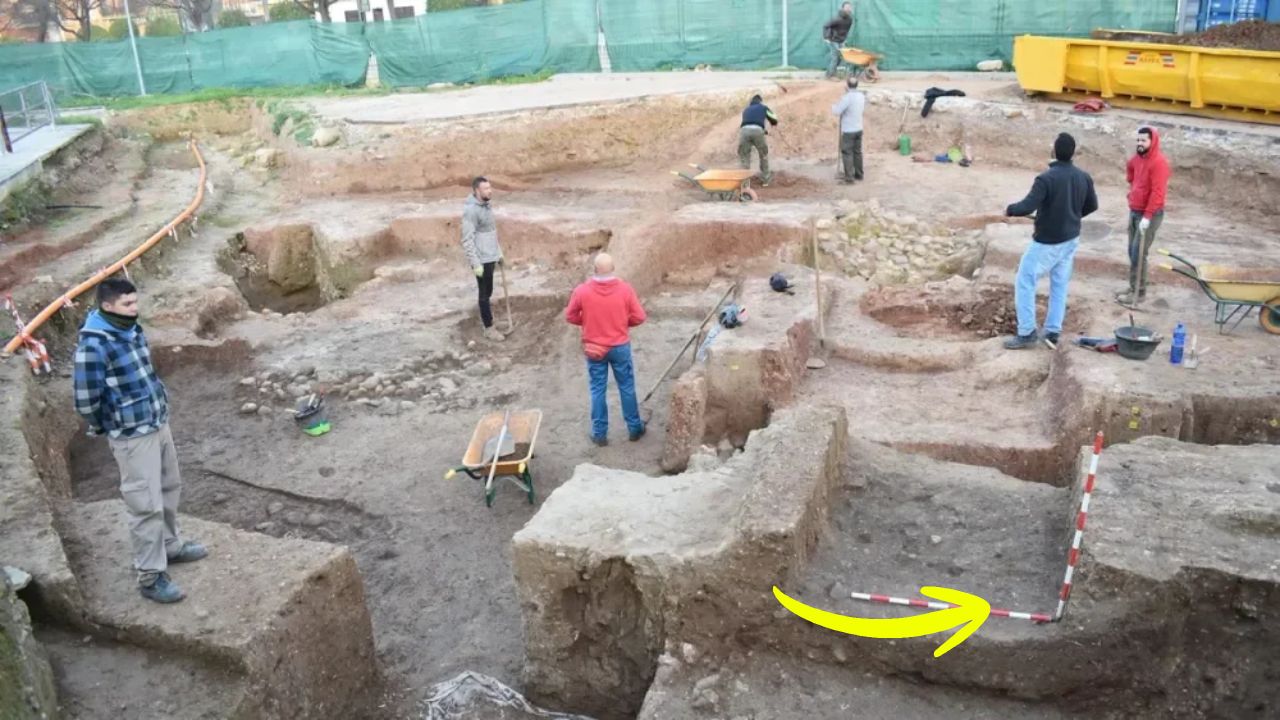
The discovery was made at Colina de los Quemados, a fortified Iron Age settlement in southern Spain. The site has long been known to archaeologists, but recent excavations have yielded extraordinary results.
The elephant bone is small—just 10cm—but its significance is enormous.
The research team, whose findings were published in an academic journal, emphasized the rarity of such a discovery:
“Beyond ivory, the discovery of elephant remains in European archaeological contexts is exceptionally rare. As non-native species and the largest living terrestrial animals, these imported beasts would have required transportation by ship.”
The bone is not from a native European elephant. Those had long vanished from the continent. It is from an African elephant, likely the North African forest elephant, a species now extinct. These were the very animals Hannibal deployed as living weapons of war.

The researchers ruled out alternative explanations. This was not a traded tusk or a random bone import. The transport of live animals was the only plausible scenario. As they noted:
“While the import of items such as skins or bones does not necessarily imply live animals, transport of osteological remains seems highly unlikely.”
The bone points unequivocally to a military event.
What Else the Site Revealed: The Arsenal of War
The elephant bone did not come alone. The same excavation uncovered a cache of military artifacts that paint a vivid picture of warfare in the third century BCE.
Archaeologists found 12 stone spheres, roughly 11cm in diameter and weighing about 1.4kg each. These are believed to be ammunition for torsion catapults known as lithoboloi—stone-throwing machines that could devastate enemy formations.
Nearby, a pointed metal top of a bolt from a scorpio siege engine was recovered. The scorpio was a giant mounted crossbow, capable of pinning soldiers to the ground with terrifying accuracy.
And then there was the coin: a Carthaginian bronze piece minted between 237 and 206 BCE, precisely the period of Hannibal’s campaigns.
The convergence of evidence is overwhelming. This was a battlefield. Elephants, catapults, siege engines, and Carthaginian currency all point to the same conclusion: Hannibal’s army passed through here.
Hannibal’s Masterstroke: Terror as a Weapon
Hannibal, from the imperial city of Carthage in modern Tunisia, is debated as one of the most successful military commanders of classical times. His campaign during the Second Punic War (218–201 BCE) aimed to dismantle Roman control of the Mediterranean.
His most audacious move was transporting his army—including elephants—from Carthage through Spain and France, then across the Alps into Italy. The journey was epic. Many elephants died in the mountains. But those that survived became psychological weapons.
At the Battle of the Trebia in 218 BCE, Hannibal deployed his remaining elephants against Roman forces. The effect was devastating.
The Greek historian Polybius, writing in the second century BCE, described how Roman horses panicked at the “smell and sight” of the elephants. Two centuries later, the Roman historian Livy wrote that the elephants spread “terror and confusion” among the legionaries.
Rome’s soldiers, drawn from Italian farms and towns, had never seen such creatures. They were as terrifying as any monster from myth. Hannibal understood this. He weaponized their fear.
Global Implications: Rewriting the Punic Wars
The discovery of the elephant bone does more than confirm a story. It rewrites our understanding of the Second Punic War’s logistics and impact.
Hannibal’s campaign required the transport of dozens of elephants across the Mediterranean by ship, then overland through hostile territory. This was an unprecedented logistical achievement. It demonstrates the sophistication of Carthaginian military organization and the lengths to which Hannibal would go to secure victory.
The bone also provides material evidence of the war’s geographical scope. The find site in southern Spain is far from the famous Alpine crossing. It shows that Hannibal’s path through the Iberian Peninsula was not just a corridor but a zone of military activity, complete with sieges, skirmishes, and the deployment of specialized siege equipment.

The presence of Carthaginian coinage confirms economic control or influence. Hannibal was not just passing through. He was campaigning, paying troops, and projecting power.
What This Means for History: From Myth to Reality
For generations, historians relied on classical texts to reconstruct Hannibal’s campaigns. Polybius and Livy provided vivid accounts, but they wrote decades or centuries after the events. Skeptics questioned whether the elephants were exaggerated, whether the stories were propaganda.
This tiny bone answers them.
The elephant was real. The terror was real. The campaign was real.
The researchers describe the bone as pointing “unequivocally to a military event.” It is a direct, physical link to one of history’s most celebrated military operations. It transforms Hannibal from a figure in books to a flesh-and-blood commander who marched living weapons across continents.
Hannibal’s campaigns are still studied in military academies today. His tactics, his logistics, his understanding of psychological warfare remain relevant. Now, cadets can also know that the elephants were not just legend. They were there.
The Legacy of the War Elephant
Hannibal’s elephants became symbols of his genius and his audacity. Coins minted during and after his lifetime depicted elephants, immortalizing their role. Roman writers, even as they celebrated Rome’s eventual victory, could not help but marvel at the beasts that had nearly brought their Republic to its knees.
The elephants themselves did not survive the war. Most died in battle, from disease, or during the harsh Alpine crossing. But their legacy endured. Rome, learning from its trauma, later deployed its own elephants in conquests. The terror weapon had been copied.
The tiny bone from Spain is a fragment of that legacy. It is a reminder that history is not just written in texts. It is buried in the ground, waiting to be found. And sometimes, the smallest discoveries have the biggest stories to tell.
In-Depth FAQs: Your Questions Answered
1. How can a single bone prove Hannibal used elephants in Spain?The bone is not alone. It was found alongside Carthaginian military artifacts: stone catapult balls, a scorpio siege engine bolt, and a Carthaginian coin from the exact period of Hannibal’s campaigns. The convergence of evidence at a single site—elephant remains plus military hardware plus Carthaginian currency—creates a powerful case that this was a military context involving Hannibal’s forces.
2. What kind of elephant was it?Analysis suggests the bone comes from a North African forest elephant (Loxodonta africana pharaoensis), a species now extinct. These elephants were smaller than modern African savanna elephants but still formidable in battle. They were native to the Atlas Mountains region of North Africa, where Carthage controlled territory.
3. Why is this discovery considered “unequivocal” evidence of a military event?The researchers use this language because the combination of finds cannot be explained by peaceful trade or accidental presence. Elephants were not native to Spain. Military hardware of the types found are not domestic items. A Carthaginian coin is not casual currency. The only coherent explanation is that Hannibal’s army, with its elephants and siege equipment, was operating in this area during the Second Punic War.
4. Did Hannibal’s elephants actually fight, or were they just for show?They definitely fought. Ancient sources describe their use in multiple battles, most famously at the Battle of the Trebia in 218 BCE. Their primary role was to break enemy formations, panic cavalry horses, and create chaos. They were often stationed on the flanks or in front of the main line to disrupt the enemy before the infantry engaged.
5. What happened to Hannibal’s elephants after the war?Most died during the campaign. The Alpine crossing killed many. Others succumbed to disease, cold, or battle wounds. By the end of the Second Punic War, Hannibal had no elephants left. However, Carthage continued to use war elephants in later conflicts, and the tradition spread to other Mediterranean powers, including Rome, which deployed elephants in its own conquests after learning their value from their former enemies.