
Meet Earth’s Deadliest Crocodile : Deep in the sun-baked swamps of Florida’s Everglades, a silent killer patrols the brackish waters, its ancient eyes scanning for the next unwary victim.
Often overshadowed by flashier global predators, the American crocodile claims its spot as one of Earth’s deadliest reptiles right here on U.S. soil, blending raw power with a knack for surprise attacks.
Table of Contents
A Predator Forged in Prehistory
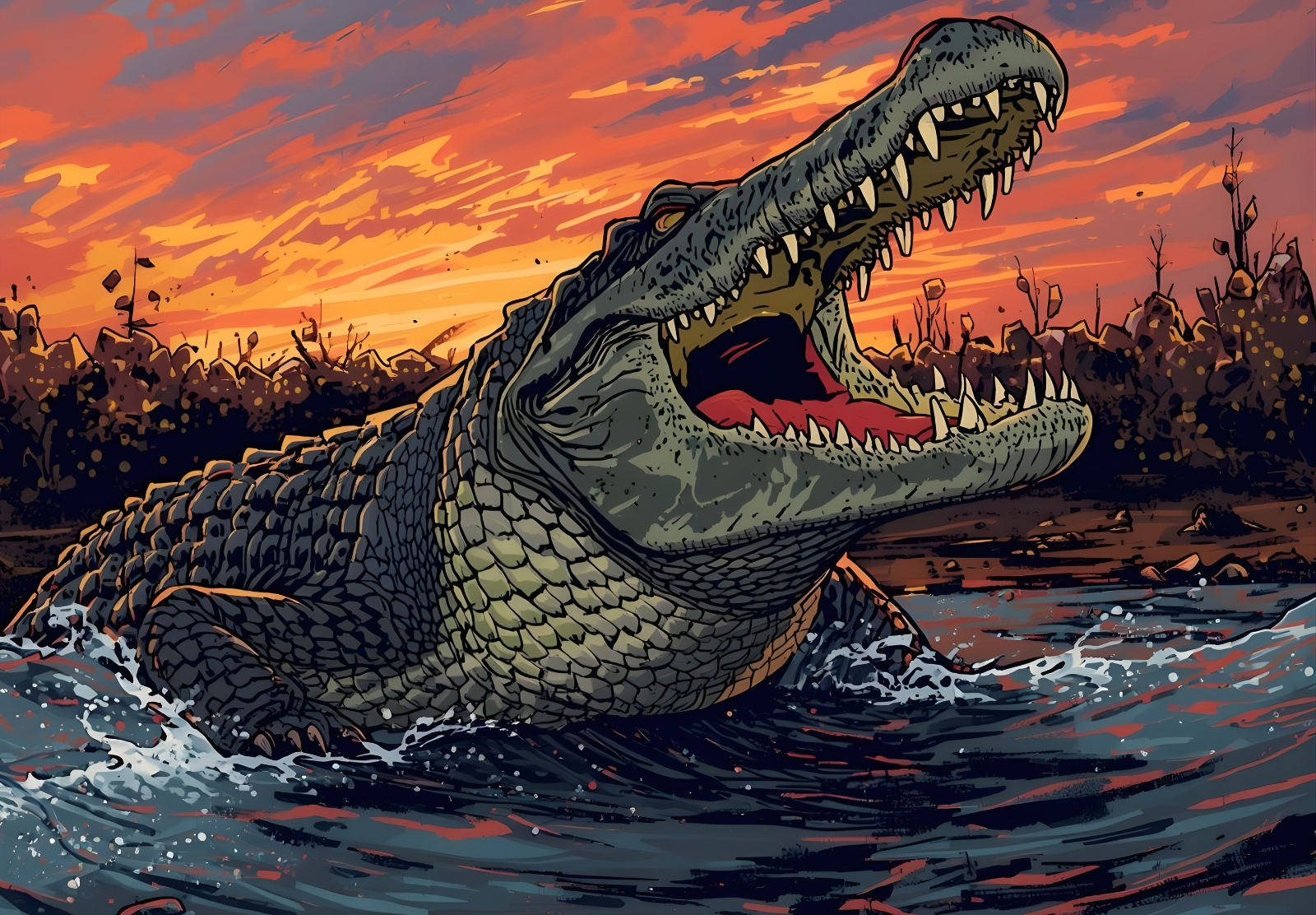
Picture this: a beast unchanged since dinosaurs roamed, gliding through mangrove mazes with jaws that snap like steel traps.
The American crocodile, or Crocodylus acutus, stretches up to 14 feet in the wild, with rare monsters pushing 20 feet and over 2,000 pounds of muscle.
Males dominate at 13 feet on average, females topping out around 10, their V-shaped snouts packed with visible teeth even when clamped shut—unlike the blunter-nosed alligators sharing their turf.
These crocs aren’t just big; they’re built for ambush. Their gray-green hides camouflage perfectly in murky shallows, nostrils, eyes, and ears perched high like periscopes.
They explode from stillness at 20 mph in water, dragging prey under in a death roll that crushes bone. Hatchlings start small at 10 inches, but survivors balloon fast, feasting on crabs, fish, and birds before graduating to deer or stray dogs.
Why “Deadliest”? Stats Don’t Lie
Forget the Nile or saltwater crocs racking up hundreds of kills yearly abroad—the American crocodile tops the fatality charts among Americas’ crocs and ranks fourth globally, behind only those overseas titans and the mugger.

It’s responsible for more human deaths than any other croc species from Alaska to Argentina, with shy demeanor belying a lethal edge in close encounters.
In Florida alone, where wild populations hit 2,000 strong, attacks spike as numbers rebound. From 1995-2017, Mexico’s Cancun logged 36 bites, many severe.
U.S. incidents? A 68-year-old sailor chomped while swimming post-capsize in Everglades National Park, airlifted with gashes.
“Croczilla,” a 14-foot behemoth, prowls the same waters, dodging capture but eyeing boaters. These aren’t defensive nips; predatory intent fuels many, especially at dusk when crocs hunt hardest.
Florida’s Deadly Hotspot: Everglades Showdown
The Everglades isn’t just alligator alley—it’s croc central, the only U.S. spot with breeding populations of both species side-by-side.
Mangrove swamps and coastal creeks suit their saltwater tolerance, letting them thrive where gators falter. Turkey Point’s canals host record nests—33 in 2022, hundreds of hatchlings tagged.
Human sprawl collides here daily. Kayakers paddle too close, anglers dangle bait, pets splash unsupervised—prime targets.

A 2014 Coral Gables duo learned the hard way: a 12-foot croc bit shoulders and hands before fleeing, first documented wild Florida attack. As restoration pumps freshwater back, croc numbers climb, shrinking safe zones.
Record Breakers and Monster Sightings
Back in 1961, Florida wildlife officers wrestled a 15-foot-5-inch giant from Everglades murk—1,200 pounds of fury, the biggest verified North American croc.
“Croczilla” edges close at 14 feet, snapped grinning for cameras in 2023. Captive legends like “Papillon” hit 14 feet-1 inch, 1,100 pounds at 80+ years.
These U.S. bruisers lag global giants like the 20-foot Philippine saltwater record-holder, but size amplifies danger—bigger jaws mean deadlier grips.
Females nest aggressively, guarding mounds of 30-70 eggs; moms ferry hatchlings in mouths, but survival’s grim—only 16% reach adulthood amid birds, pythons, and rivals.
Humans vs. Crocs: A Tense Standoff
Encroaching suburbs fuel clashes. Roadkill claims two-thirds of Florida deaths, poaching 10%. Yet attacks persist: two U.S. tourists mauled off Mexico’s Puerto Vallarta, legs and torsos torn. Crocs view waders as meals, not threats—unlike defensive gators.
Conservation flipped the script. Endangered in 1975 with dozens left, protections and Everglades restoration ballooned numbers to 2,000 adults, downlisted to threatened. Still, sea rise, pythons, and hypersaline spikes loom.
The Hunt: Jaws of Terror
Nocturnal stalkers, they vibrate jaws to stun fish schools or lunge from banks, rolling prey underwater till drowned.

Diet spans fiddler crabs for juveniles to mullet, raccoons, even sea turtles in Costa Rica. In Florida, 65% marine chow keeps them salty and strong. Apex status means sharks steer clear.
Mating bellows echo fall nights; nests hatch summer rains, moms aiding escapes. But fire ants, raccoons, and bears raid eggs relentlessly.
Conservation Comeback and Ongoing Battles
Florida’s multi-species plan and CERP restore flows, boosting nests. Turkey Point’s 512 hatchlings set records. Public education urges 5-yard buffers, no feeding—yet myths paint crocs as brainless killers.
Threats persist: development shreds mangroves, climate alters salinity, invasives steal prey. Volunteers monitor, advocate; success hinges on coexistence.
Meet Earth’s Deadliest Crocodile
From Everglades shadows to record hauls, the American crocodile embodies raw, unyielding danger in America’s wild heart—a survivor whose quiet menace demands respect.
As populations surge, so do risks; vigilance ensures humans and these prehistoric powerhouses share the swamps without tragedy. Conservation triumphs shine, but the wild edge persists—feed the awe, not the crocs.
SCIENCE MARVELS – READ MORE : Orcas and Dolphins Team Up: Stunning New Evidence Shows Ocean Predators Now Hunting Together Across Global Waters in a Surprising Shift of Marine Behavior
FAQ
Q: What’s the biggest American croc ever caught in the U.S.?A: A 15-foot-5-inch, 1,200-pound monster nabbed in the Florida Everglades in 1961.
Q: How do you tell crocs from gators? A: Crocs have V-snouts with visible teeth closed; gators U-snouts, teeth hidden. Crocs love brackish water.
Q: Are Everglades crocs aggressive? A: Shy usually, but they attack if provoked or hunting—stay 5 yards back, no swimming.
Q: Why did crocs nearly vanish in Florida? A: Hide hunting in the 1900s wiped nests; protections since 1975 rebuilt to 2,000 adults.
Q: Can crocs live in saltwater? A: Yes, uniquely tolerant among U.S. reptiles, thriving in mangroves and bays.



Latest Comments