
Discover Remarkable Evidence of Early Human Life : Imagine stumbling upon footprints in a sun-baked desert that could rewrite the story of how humans first set foot on this continent.
Recent discoveries at White Sands National Park in New Mexico have done just that, pushing back the timeline of human presence by thousands of years.
Table of Contents
A Desert’s Hidden Secrets
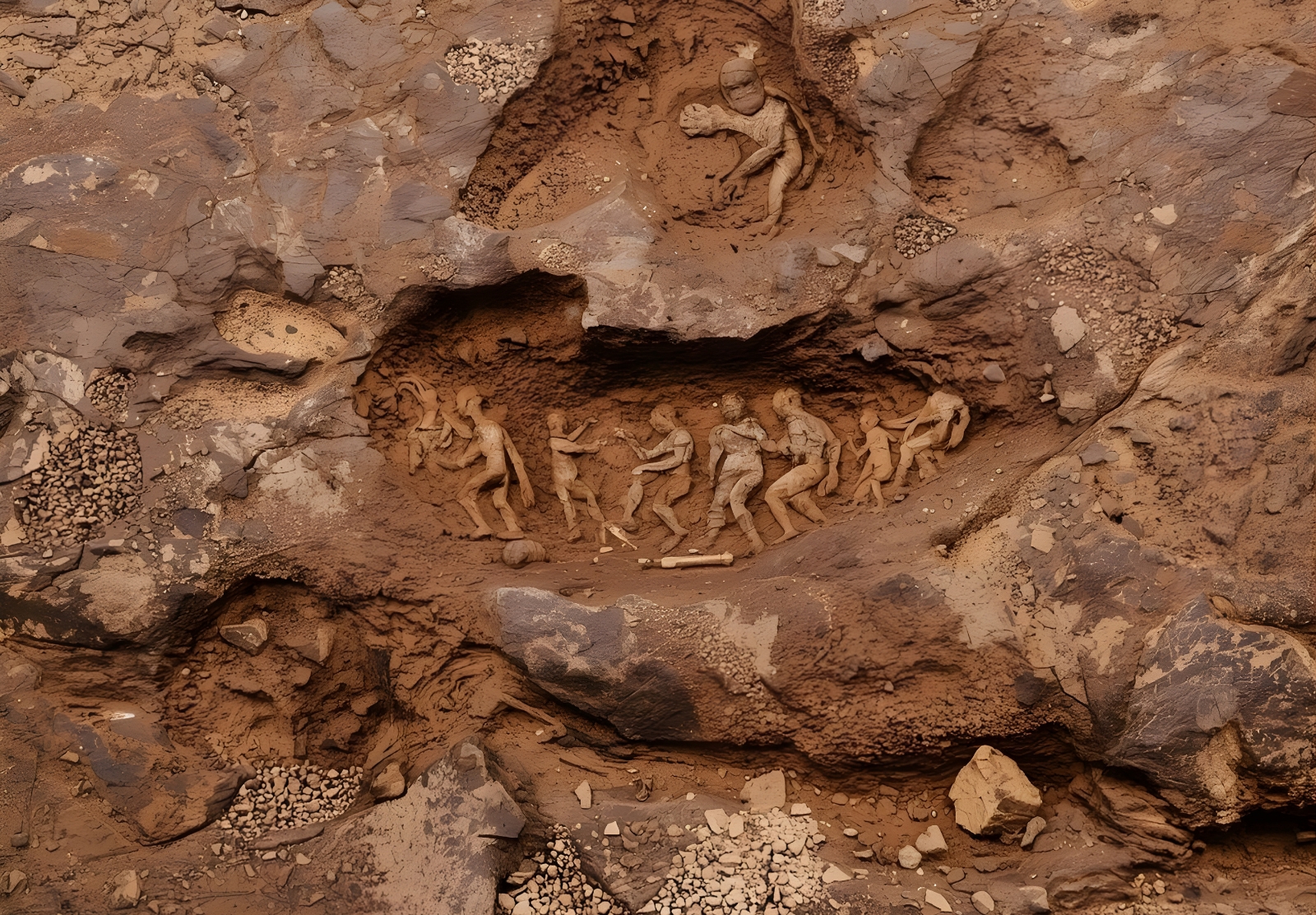
White Sands isn’t your typical beach getaway—it’s a vast expanse of shimmering gypsum dunes, remnants of ancient lakes that dried up millennia ago.
Back in 2012, archaeologist Vance Holliday from the University of Arizona explored the area, unaware that buried nearby were human tracks preserved in soft clay.
These footprints first came to light in excavations around 2019, but skeptics questioned their age. Dated initially to 21,000-23,000 years ago using seeds and pollen, critics argued those methods were unreliable.
Defying the Clovis Consensus
For decades, the Clovis culture ruled as the earliest known humans in North America, arriving around 13,000 years ago via a Bering Land Bridge from Siberia. Artifacts from a site near Clovis, New Mexico, defined this era, shaping textbooks and museum displays.
The White Sands find shatters that narrative. If confirmed, these people roamed during the Last Glacial Maximum, when massive ice sheets covered much of the northern hemisphere, making migration seem impossible.

Layers of Proof Stack Up
Fast forward to recent studies: researchers returned in 2022 and 2023, digging new trenches to analyze the site’s geology.
This time, they turned to the mud itself surrounding the footprints, using radiocarbon dating at an independent lab.
The mud clocked in at 20,700 to 22,400 years old—spot-on with prior estimates. Now, three materials (seeds, pollen, mud) from three labs yield 55 consistent dates. “It’s a remarkably consistent record,” Holliday noted, after nearly 50 years studying migrations.
Holliday admits the lack of tools or campsites raises eyebrows. But these trackways suggest quick passages—maybe a family crossing a stream in seconds. Hunter-gatherers wouldn’t litter precious stone tools in unfamiliar territory.
Echoes from Other Sites
White Sands isn’t alone. At the Gault site in Texas, archaeologists unearthed pre-Clovis projectile points dated 16,000-20,000 years old, hinting at an established population before Clovis spread.
In Oregon’s Paisley Caves, human coprolites (fossilized feces) confirm occupation 12,400 years ago via DNA and biomarkers, predating Clovis.

Even bolder claims emerge from California’s Cerutti Mastodon site, where smashed bones dated to 130,000 years ago bear hammer marks, though controversy swirls without consensus.
Idaho’s Cooper’s Ferry site yielded artifacts up to 16,500 years old, challenging the land bridge theory with possible Pacific coastal routes.
What Were They Like?
Picture these early arrivals: small bands navigating a icy world of megafauna like mammoths and giant sloths. The footprints reveal adults, teens, and even a child’s print overlapping a mammoth track—evidence of interaction with beasts now extinct.
They likely followed coastal or ice-free corridors, adapting to harsh climates. Genetic studies suggest multiple waves, not a single migration, blending Asian and possibly other ancestries.
Rewriting Migration Maps
This evidence demands a rethink. Traditional models posit a post-Ice Age sprint south; now, humans braved glaciers or hugged shores far earlier. Sites cluster along ancient waterways, pointing to resourceful explorers.
Climate data aligns: during the LGM, refugia—ice-free pockets—existed in the southwest, sustaining life amid frozen expanses.
Challenges and Criticisms
Not everyone’s convinced. Some demand bones or villages, dismissing footprints as animal prints or dates as contaminated. Yet multiple labs and methods counter that, making dismissal tough.

Holliday calls it “serendipity in the extreme” if all data erred consistently. Ongoing digs may unearth more, but for now, the evidence mounts.
Implications for Human History
These finds humanize our ancestors—not ice-age supermen, but resilient families leaving faint traces. They bridge Old and New Worlds earlier, enriching Native American heritage narratives.
As tech like quartz dating refines ages, expect more shocks. White Sands proves deserts guard secrets, waiting for the right eyes.
Discover Remarkable Evidence of Early Human Life
The White Sands footprints stand as remarkable proof that humans roamed North America far earlier than thought, challenging long-held beliefs with rock-solid dating across methods and sites.
This shifts our view from a late arrival to deep-rooted presence, urging deeper exploration of America’s ancient story. As digs continue, these silent tracks whisper of bold journeys that shaped us all.
SCIENCE MARVELS – READ MORE : 5000-Year-Old Dog Fossil Unearthed: Archaeologists Reveal New Clues About Early Human Life and Pet Domestication History
FAQ
Q: How sure are scientists about the White Sands dates? A: Very—55 radiocarbon dates from seeds, pollen, and mud across three labs align precisely at 21,000-23,000 years.
Q: Why no tools with the footprints? A: Trackways suggest brief visits; nomads conserved resources, avoiding waste in remote areas.

Q: Does this prove coastal migration? A: It supports alternatives to the Bering model, like Pacific routes, backed by sites like Cooper’s Ferry.
Q: What’s next for research? A: More trenches, genetic analysis, and scans to reveal full trackways and potential artifacts.







Latest Comments