
5000-Year-Old Dog Fossil : Archaeologists working on a routine dig in the rolling hills of Illinois stumbled upon something extraordinary last week—a nearly complete skeleton of a dog dating back 5,000 years.
The find, announced by the University of Chicago’s archaeology team, came during excavations near the Kaskaskia River, where workers were surveying for a new highway expansion.
This large male canine, standing about 20 inches at the shoulder, appears to have been intentionally buried, suggesting deep cultural significance for the ancient people who lived there.
Table of Contents
The Dig That Changed Everything
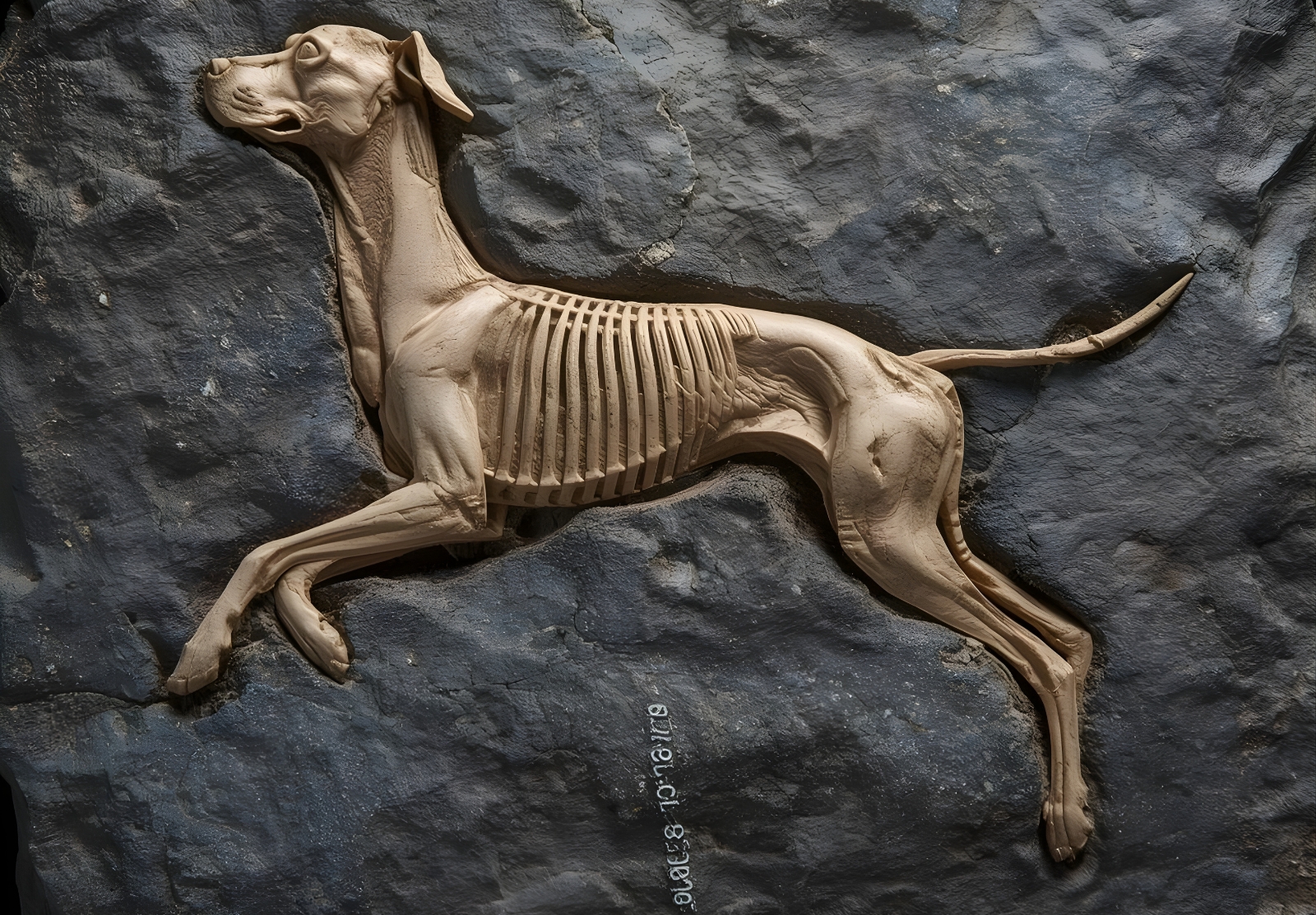
It started as a standard salvage operation ahead of construction. Crews from the Midwest Archaeological Center had been sifting through layers of sediment for weeks, unearthing tools and pottery from the Archaic period.
Then, on a crisp February morning, a worker’s trowel hit something hard. Brushing away the dirt revealed a skull—crushed but intact—followed by ribs, vertebrae, and paws.
The team halted work immediately, carefully mapping the site. Over the next 48 hours, they uncovered the full skeleton, laid out as if the dog had simply curled up to sleep.
Nearby artifacts included stone points and a polished bone tool, possibly a dagger or comb, placed near the paws.
Carbon dating confirmed the age at around 3,000 BCE, placing it firmly in the Late Archaic era when hunter-gatherers roamed the Midwest.

Vasquez noted the burial’s uniqueness: “Dogs were partners in the hunt, but burying one like this—with grave goods—speaks to ritual or status.”
What the Bones Tell Us
Preliminary analysis paints a picture of a robust animal, weighing about 60 pounds with powerful jaws suited for tearing meat. Isotope studies on the teeth reveal a diet heavy in fish and small game, mirroring what humans ate at the time.
Scars on the bones suggest an active life, perhaps pulling sleds or guarding camps, much like modern working dogs.
DNA sampling, still underway at a lab in Alaska, could link this pup to early domesticated breeds from Siberia that crossed into North America over 15,000 years ago. Experts believe it belonged to a lineage of medium-sized hounds used by migratory tribes.
The crushed skull raises questions—was it a sacrificial act, or did the dog die from injury? Either way, the careful positioning indicates reverence.
Echoes of Ancient Bonds
This isn’t the first ancient dog find in the U.S., but it’s among the best preserved from 5,000 years ago. Older remains, like a 10,000-year-old fragment from an Alaskan cave, show dogs arrived with the first humans.
In Illinois, the Koster site yielded even earlier burials from 8,500 years back, often with signs of violence or punishment.

Across the Midwest, dog burials cluster around rivers and lakes, hinting at water-related rituals. Some speculate dogs symbolized loyalty in the afterlife, buried to guide owners’ spirits.
This new discovery adds to that narrative, potentially rewriting how we view Archaic social structures.Comparisons to European finds, like a recent Swedish bog dog with a bone dagger, highlight global patterns in canine companionship.
Scientific Breakthroughs Unlocked
Researchers are buzzing about the opportunities. Advanced imaging via CT scans has revealed healed fractures on the legs, evidence of a tough existence. Geneticists hope to sequence the full genome, tracing migrations from Asia through the Bering Strait.
The site also yielded human tools—arrowheads, nets, and cooking stones—suggesting a semi-permanent settlement. Pollen analysis shows a lush environment of oaks and grasses, teeming with deer and fish.
Funding from the National Science Foundation will support further digs this spring, promising more insights into pre-Columbian life.
Cultural Reverence in Stone Age America
For Native American communities, such finds carry weight. The Peoria Tribe of Illinois, consulted early, views the dog as a spiritual kin. “Our stories speak of wolf brothers who hunted with ancestors,” said tribal elder Maria Thunderhawk.
Repatriation laws ensure sacred handling, but science and tradition can coexist. Public exhibits at the Field Museum will share the story respectfully.
This burial challenges old ideas that dogs were mere tools; here, one got a hero’s send-off.

Preservation Secrets Revealed
Why did the bones survive? The anaerobic mud sealed them away from oxygen, preventing decay. Similar to Swedish bogs, the Kaskaskia site’s chemistry acted like a natural freezer.
Climate data shows repeated flooding kept the layer stable for millennia.Conservators are stabilizing the skeleton now, using lasers to document every fragment.
Modern Implications for Pet Lovers
Today’s dog owners might see echoes in their Labs and Huskies. This ancient pooch shared traits with breeds like the Carolina Dog, a primitive survivor.
Vets note similar dental wear from raw diets.The find boosts interest in archaeogenetics, potentially aiding conservation of rare breeds.
5000-Year-Old Dog Fossil
This 5,000-year-old dog fossil not only rewrites pages of American prehistory but reminds us of enduring human-animal ties.
As analysis continues, it promises revelations about migration, rituals, and resilience. In a world of fleeting connections, this loyal companion endures, bridging 5,000 years of shared history.
SCIENCE MARVELS – READ MORE : Discover Remarkable Evidence of Early Human Life, Changing Everything We Know About Ancient Civilizations and Human Evolution on Earth
Frequently Asked Questions
Q: Where exactly was the fossil found? A: Near the Kaskaskia River in southern Illinois, during a highway project.
Q: How old is the dog precisely? A: Radiocarbon dating pegs it at approximately 5,000 years, or 3,000 BCE.
Q: Was the dog domesticated? A: Yes, DNA links it to early Siberian lines brought by humans.
Q: What caused the skull crush? A: Likely perimortem injury, not post-burial damage.
Q: Will it be displayed publicly? A: Yes, at the Field Museum after conservation.
Q: Any similar U.S. finds? A: Yes, older ones in Alaska and Illinois, but fewer complete burials.






Latest Comments