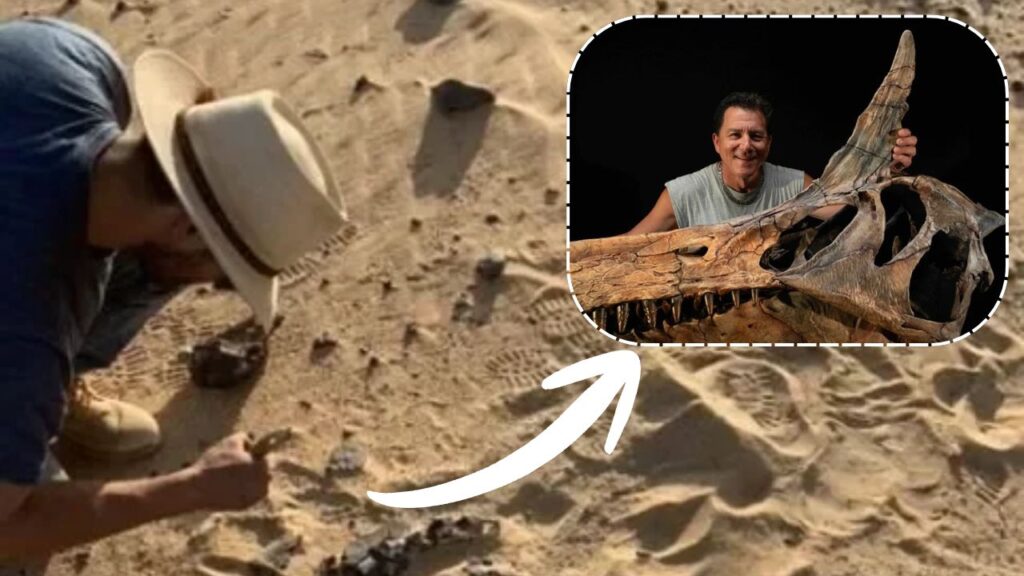
Paleontologists Discover Colossal Dinosaur : Paleontologists have announced a groundbreaking discovery of fossils belonging to a colossal new sauropod dinosaur species in Big Bend National Park, Texas.
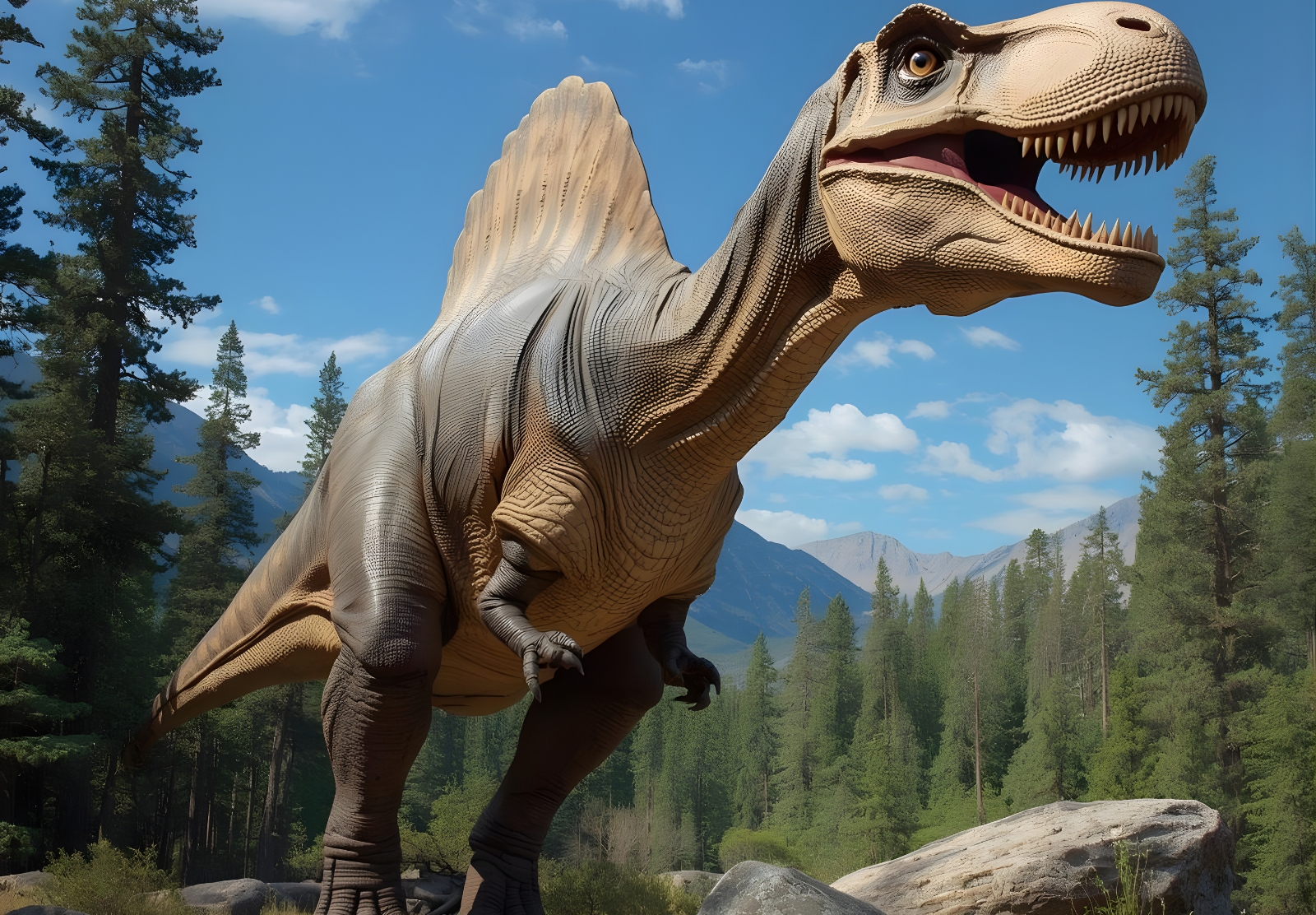
This massive creature, dubbed Gigantotitanus texensis, promises to rewrite chapters of North American prehistory with its unprecedented size.
Table of Contents
The Thrilling Discovery
It started with a routine field trip in March 2025. Students and faculty from Sul Ross State University, led by geologists Dr. Jesse Kelsch and Dr. Thomas Shiller, were surveying Cretaceous rock formations in Big Bend National Park.
What they spotted protruding from the earth was no ordinary bone—a massive vertebra from what turned out to be Gigantotitanus texensis, a long-necked titan that dwarfed even the famed Alamosaurus.
The team carefully extracted the fossil, part of a larger skeleton that hints at a beast stretching over 90 feet long and weighing upwards of 90 tons.
This isn’t just another find; preliminary analysis shows unique features in the vertebrae structure, setting it apart as a novel species within the titanosaurs.
Park rangers and university experts collaborated to secure the site, shielding it from erosion and potential looters.

Excitement rippled through the paleontology world as CT scans revealed preserved air sacs and growth rings, offering clues to its rapid maturation.
Dr. Shiller called it “the holy grail for sauropod hunters,” noting how the bone’s density suggests an adult specimen in its prime.
A Giant Among Giants
Gigantotitanus texensis lived during the Late Cretaceous, about 69 million years ago, right before the asteroid wiped out the dinosaurs.
Estimated at 30 meters long with a neck rivaling a giraffe’s but scaled up enormously, it likely munched on treetops in lush floodplains, its pillar-like legs supporting a body heavier than 12 elephants.
Compared to Alamosaurus, North America’s previous size champ at around 70-80 feet and 80 tons, this new species boasts broader neural spines and thicker limb bones, indicating even greater mass.
Scientists believe it migrated from South America via land bridges, explaining its titanosaurs traits amid a diverse ecosystem of T. rex relatives and duck-billed hadrosaurs.
Its discovery challenges old theories on sauropod limits in North America. “We always thought Alamosaurus was the peak, but this pushes the envelope,” said one researcher involved.

The fossils, now at Sul Ross’s paleontology lab, are yielding data on bone microstructure that could reveal diet and movement patterns.
Digging into the Details
Excavation wasn’t easy. The Big Bend site’s harsh terrain—scorching days, flash floods—demanded precision. The team used pneumatic tools and plaster jackets to lift the 500-pound vertebra without damage.
Further digs uncovered partial ribs and a shoulder blade, enough for 3D modeling that simulates the full beast.
Morphological studies confirm distinctions: Gigantotitanus had more robust caudal vertebrae, suggesting a powerful tail for balance while rearing up to feed.
Isotope analysis of surrounding sediments points to a wetter climate than today, supporting mega-herbivores like this one.
This builds on recent hauls, like the Dinosaur National Monument diplodocus parts unearthed under a parking lot in 2025—the first there in a century. But Gigantotitanus steals the show with its scale, potentially the largest land animal ever in the USA.

Rewriting the Fossil Record
This find fills gaps in Late Cretaceous diversity. North America was a sauropod hotspot then, but few complete giants survived erosion or glaciation.
Gigantotitanus suggests titanosaurs thrived longer and larger here, coexisting with predators in swampy realms.It impacts migration models too.
Bones match South American cousins like Argentinosaurus, bolstering evidence of faunal exchange before the end-Cretaceous extinction.
Paleoecologists now model food webs where this colossus dominated, trampling forests and fertilizing soils with its waste.
Public reaction has been electric. Social media buzzes with renders of the beast towering over modern landmarks. Museums eye replicas for exhibits, while kids’ books gear up for a new star.
Paleontologists Discover Colossal Dinosaur : Expert Voices and Future Plans
Dr. Kelsch emphasized collaboration: “Students spotting this changed their lives—and ours.” Peer-reviewed papers are pending, but early leaks have sparked debate on classification.
Next steps include full skeleton hunts in Big Bend and isotope tests for growth rates. Partnerships with the Smithsonian aim to display casts nationwide. Funding from the National Science Foundation will support more surveys, potentially unearthing herd mates.
Challenges remain: Protecting sites from climate change and tourism. Yet, this discovery reignites wonder in dinosaurs as living, breathing engines of ancient worlds.
SCIENCE MARVELS – READ MORE : Viking Skull Discovery in 1,000-Year-Old Mass Grave Reveals Groundbreaking Evidence of Primitive Yet Skilled Brain Surgery in Early Norse Times
Frequently Asked Questions
What makes Gigantotitanus texensis ‘colossal’? Its projected size exceeds previous North American records, with vertebrae indicating a body mass over 90 tons.
When and where was it found? March 2025 in Big Bend National Park, Texas, by Sul Ross University team.
Is it bigger than T. rex? Yes, far taller and heavier, though T. rex was a predator half the length.
Will we see it in museums soon? Casts are planned; originals under study at Sul Ross lab.
How does this change dinosaur history? It proves larger titanosaurs roamed USA late into Cretaceous, boosting diversity views.