
Unidentified Mars Rock Baffles Experts : NASA’s Perseverance rover has stumbled upon a bizarre rock on Mars that defies everything scientists know about the Red Planet’s geology, sparking wild speculation among experts.
Dubbed “Phippsaksla,” this 31-inch boulder stands out like a sore thumb amid the flat, fractured terrain, and its odd metallic makeup has everyone scratching their heads.
Table of Contents
Rover’s Unexpected Find in Jezero Crater
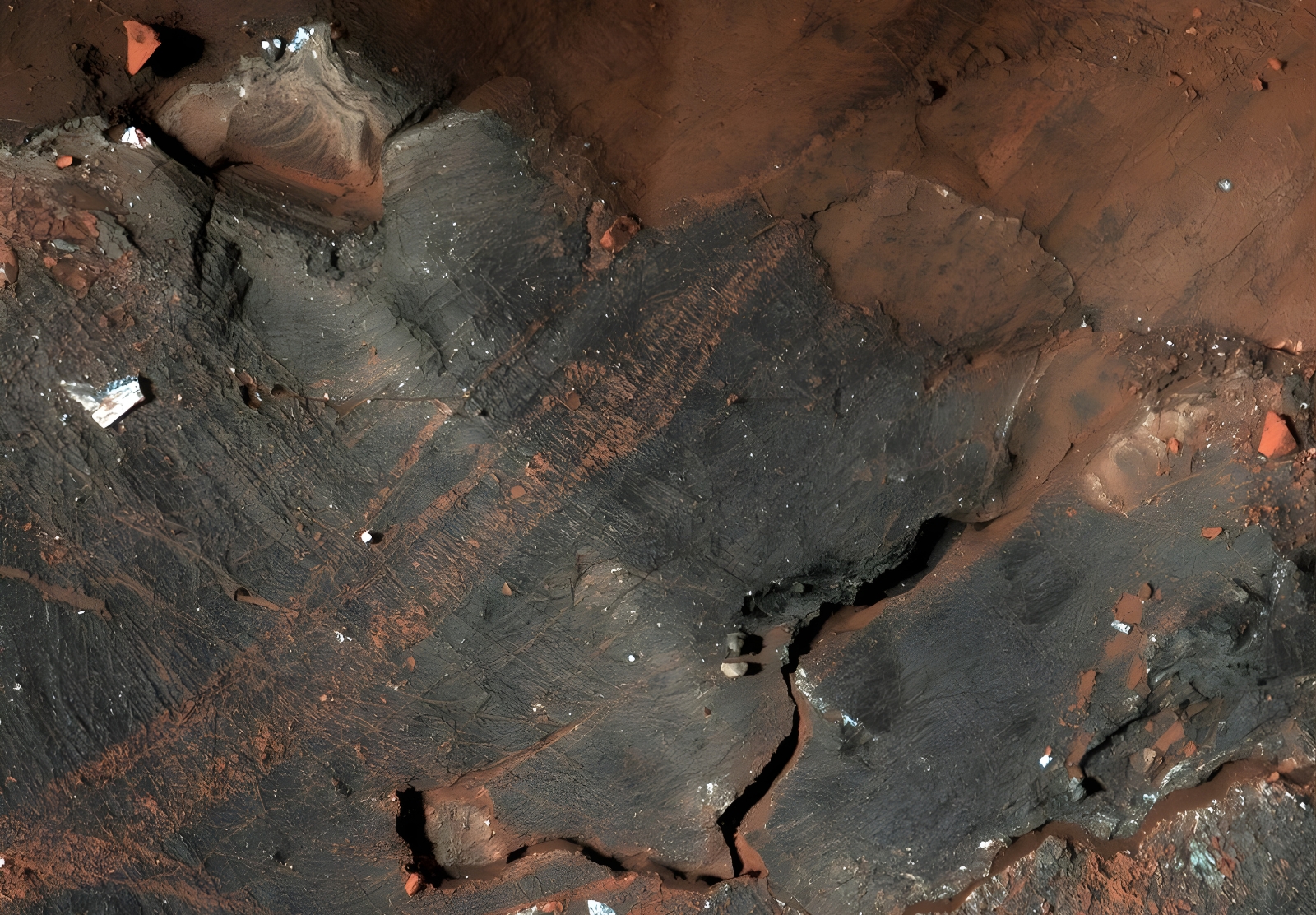
Picture this: Perseverance, cruising through the dusty Vernodden region just outside Jezero Crater on September 19, 2025—Martian day 1,629—spots something that doesn’t belong.
The rover’s cameras catch a lumpy, sculpted rock rising high above the low-lying bedrock around it, almost like it was plopped there by some cosmic prankster.
Team members at NASA’s Jet Propulsion Laboratory immediately flagged it for a closer look, knowing it screamed “anomaly” from a mile away.
What makes Phippsaksla so weird? It’s not the shape alone—though that high-standing profile sets it apart from the shattered slabs nearby—but the chemistry revealed by the rover’s SuperCam laser.
Zapping the rock showed sky-high levels of iron and nickel, a combo rare in native Martian stones but screaming “meteorite” from iron-nickel types forged in asteroid cores.

For four years, Perseverance scoured Jezero for signs of ancient life, finding spider eggs, skull-like floats, and even potential biosignatures in speckled rocks, but never a visitor like this.
Why This Rock Doesn’t Fit Martian Norms
Mars rovers have history with meteorites—Opportunity and Spirit nabbed some early on, Curiosity snagged “Lebanon” in 2014 and “Cacao” in 2023—but Perseverance? Nothing until now.
Jezero, a 28-mile-wide crater that once held a lake, is littered with impact scars, yet no iron-nickel intruders showed up inside.
Experts like Purdue geochemist Candice Bedford puzzle over why: the crater’s age matches Gale, where Curiosity thrives, so meteorites should have rained down.
Phippsaksla perches on ancient impact bedrock, hinting it crash-landed eons ago, maybe billions of years back.
Its metal-rich guts mirror Earth’s core alloys, fueling chatter about interstellar origins beyond our solar system. But hold up—not everyone’s sold.
Without drilling or sample return, it’s educated guesswork; more SuperCam blasts and Mastcam-Z scans are queued to nail down if it’s truly alien hardware or a Martian oddity tricked out by weird geology.

Expert Reactions: Thrill and Skepticism Collide
The discovery hit like a thunderbolt, delayed by a U.S. government shutdown that sidelined NASA posts until November 13, 2025. Bedford called it a “stranger in our midst,” capturing the buzz as scientists debate its story.
Some whisper of biosignatures tying into Cheyava Falls’ leopard spots—potential microbial handiwork from 3 billion years ago—but Phippsaksla’s metallic sheen points squarely to space rocks.
Planetary geologists are divided. Optimists see a window into asteroid guts, clues to solar system formation when heavy metals sank into cores.
Skeptics urge caution: Mars’ wild weathering or hidden volcanic tricks could mimic meteorite signals. Social media exploded with “alien artifact” memes, but pros stick to science, eyeing how this fits Perseverance’s sample haul for Earth’s return via Mars Sample Return mission.
Bigger Picture: What It Means for Mars Exploration
This isn’t just a shiny pebble; it’s a game-changer for understanding Mars’ bombardment history. Meteorites like Phippsaksla record impacts that sculpted the planet, maybe delivering water or organics key to life.
Perseverance, now climbing Jezero’s rim for primordial rocks, might uncover kin to Freya Castle’s stripes or Mount Washburn boulders—hints of deep-uplifted ancients.

Tying into 2026 vibes, with President Trump’s reelection pushing space agendas, NASA’s eyeing budget boosts for rover ops.
If confirmed, Phippsaksla joins a elite club, urging more rim hunts where exotic floats pop up like Witch Hazel Hill’s skulls. It reminds us Mars hides secrets in plain sight, from potential life in mudstones to cosmic hitchhikers, keeping the dream of Martian mysteries alive.
Unidentified Mars Rock Baffles Experts Road Ahead: Tests and Sample Dreams
The team’s not done—proximal science awaits, with plans for multispectral imaging and maybe a scrape if wheels allow.
Confirmation could rewrite rover legacies, proving Jezero’s rim as meteorite magnet. Meanwhile, Perseverance presses on, collecting tubes for the 2030s return, where Earth labs could dissect Phippsaksla’s twin.
Imagine the payoff: isotope ratios unveiling its birth in a shattered asteroid, or traces of volatiles from Mars’ wet past.
Critics gripe about shutdown delays, but rover autonomy shone, zapping away unmanned. As 2026 unfolds, this rock fuels hype for human boots, turning bafflement into breakthrough.
Key FactDetailsSourceNamePhippsakslaSize31 inches (80 cm) acrossLocationVernodden, outside Jezero Crater CompositionHigh iron-nickel Discovery DateSept.
19, 2025 (Sol 1629) Likely OriginMeteorite from asteroid corePrevious Rovers’ FindsLebanon (Curiosity), others by Spirit/Opportunity
SCIENCE MARVELS – READ MORE : Astronomers Spot Long‑Lost Lunar Object, Reviving Decades‑Old Space Mystery and Offering New Clues About Moon’s Forgotten History
FAQ
What makes Phippsaksla so unusual? Its sculpted shape towers over flat bedrock, with iron-nickel levels screaming meteorite, not Mars-native.
Is it confirmed as a meteorite? Not yet—needs more scans, but chemistry strongly suggests yes.
Why no meteorites in Jezero before? Unexpected given crater age and impacts; rim might be hotspot.
Could it hold life clues? Unlikely due to metal nature, but fits broader hunt like Cheyava Falls biosignatures.
What’s next for Perseverance? Rim ascent for ancient rocks, sample collection amid 2026 mission pushes.







Latest Comments